

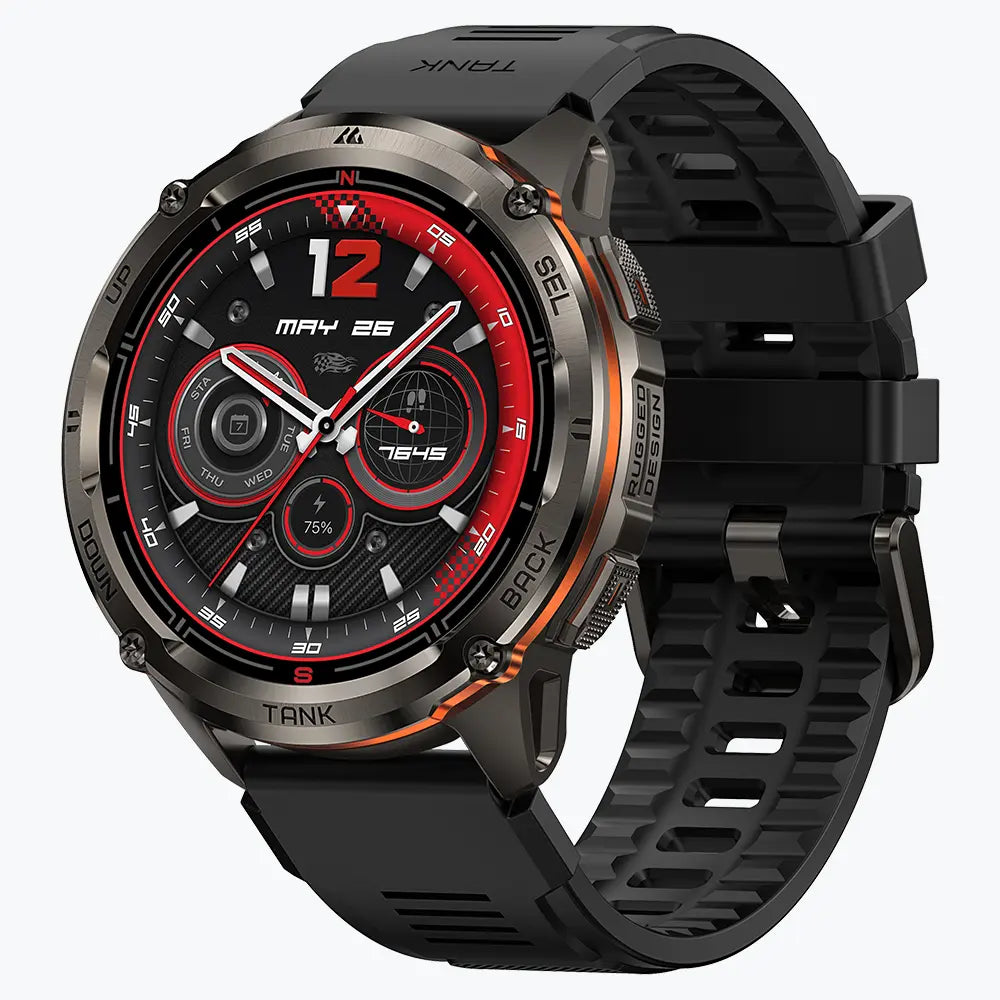
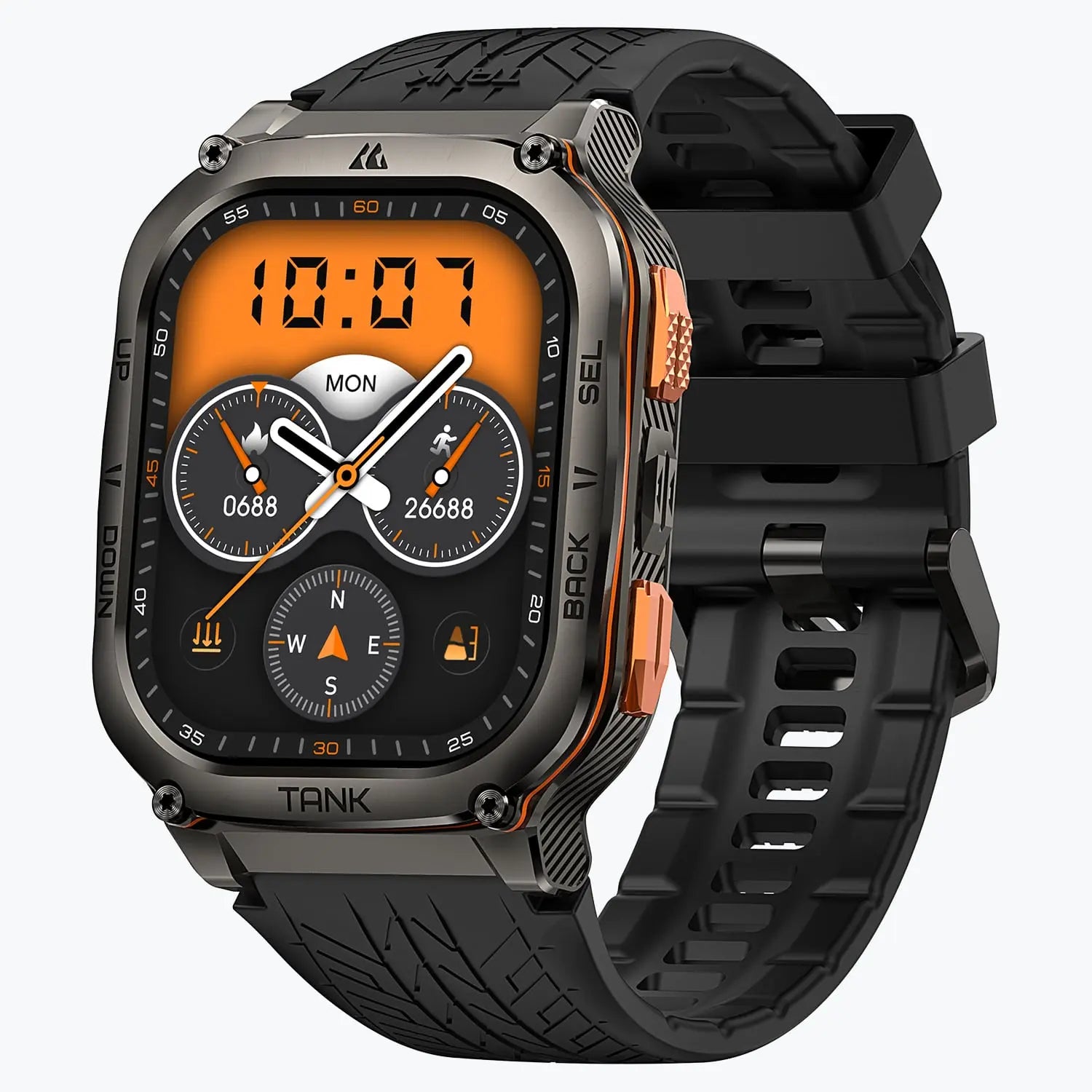


For most buyers, a lightweight rugged smartwatch is the better choice because it provides enough protection for daily wear and outdoor recreation without sacrificing comfort.
A heavy-duty smartwatch is worth the extra weight and cost only when repeated impacts, mud, severe weather, or demanding work create a genuine need for stronger construction. The right choice is not the toughest watch available; it is the lightest watch that can reliably handle your actual environment.

Lightweight vs Heavy-Duty Rugged Smartwatch: Quick Answer
Choose lightweight when you need verified everyday protection and expect to wear the watch continuously. Choose heavy-duty when harsh exposure is routine and reducing the risk of physical damage matters more than minimizing wrist weight.
Lightweight Wins for Everyday Wear and Most Outdoor Activities
A well-designed lightweight rugged smartwatch can still provide reinforced glass, metal protection, water and dust resistance, environmental testing, GPS, and long battery life.
It is the better default because its protection is easier to use every day. There is little value in carrying additional case mass if the watch rarely encounters conditions that require it.
Heavy-Duty Makes Sense for Repeated Job-Site Exposure
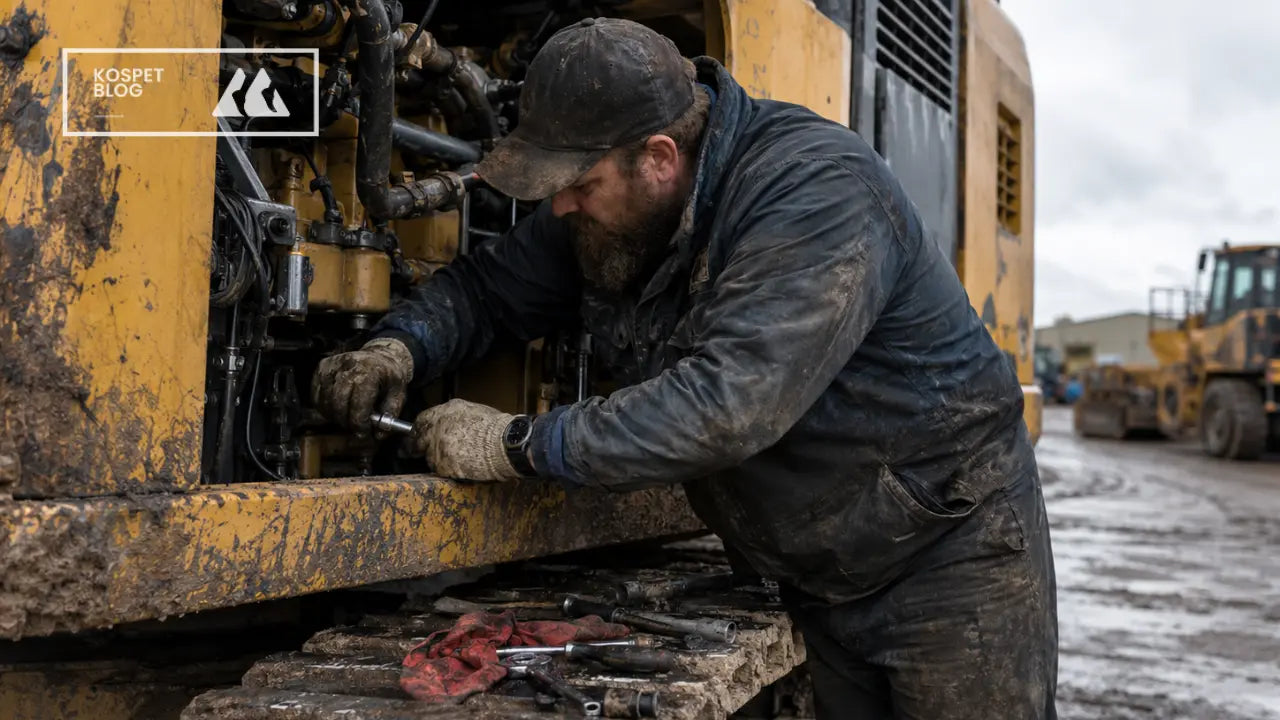
A heavy-duty smartwatch becomes worthwhile when it regularly contacts tools, machinery, rocks, mud, or high-pressure water. More substantial construction and additional physical controls may also help users who operate the watch with gloves or wet hands.
The extra weight should solve a recurring problem. A heavy appearance by itself is not evidence that the watch is more suitable for you.
Round or Square? Compare Like for Like
Case shape and protection level are separate decisions. Compare lightweight and heavy-duty models with similar screen shapes before deciding whether the heavier construction is justified.
First determine how much protection you need. Then choose the round or square design that fits your wrist and display preference.
Lightweight vs Heavy-Duty Rugged Smartwatch: Key Differences
The main tradeoff is everyday wearability versus additional structural protection. Heavy-duty models are not automatically smarter, longer-lasting, or better equipped than lightweight alternatives.
| Decision factor | Lightweight rugged smartwatch | Heavy-duty rugged smartwatch |
|---|---|---|
| Weight | Lower wrist load | More noticeable case mass |
| Comfort | Better for continuous wear, exercise, and sleep | Better suited to task-specific or shift-based use |
| Construction | Lighter combinations of metal and polymer | Greater emphasis on reinforced metal structures |
| Controls | Often relies more on touchscreen operation | May provide additional buttons for gloves or wet conditions |
| Protection | Can still offer verified impact, water, and dust resistance | May add stronger sealing or work-oriented protection |
| Battery | Can equal or outperform heavier models | Weight does not guarantee longer runtime |
| Features | Can include the same GPS, health, sports, and communication tools | Added mass may provide no software advantage |
| Budget | Better value when its verified protection already covers your environment | Extra cost is justified only when stronger construction solves a real risk |
| Best fit | Daily wear and recreational use | Repeated harsh or occupational exposure |
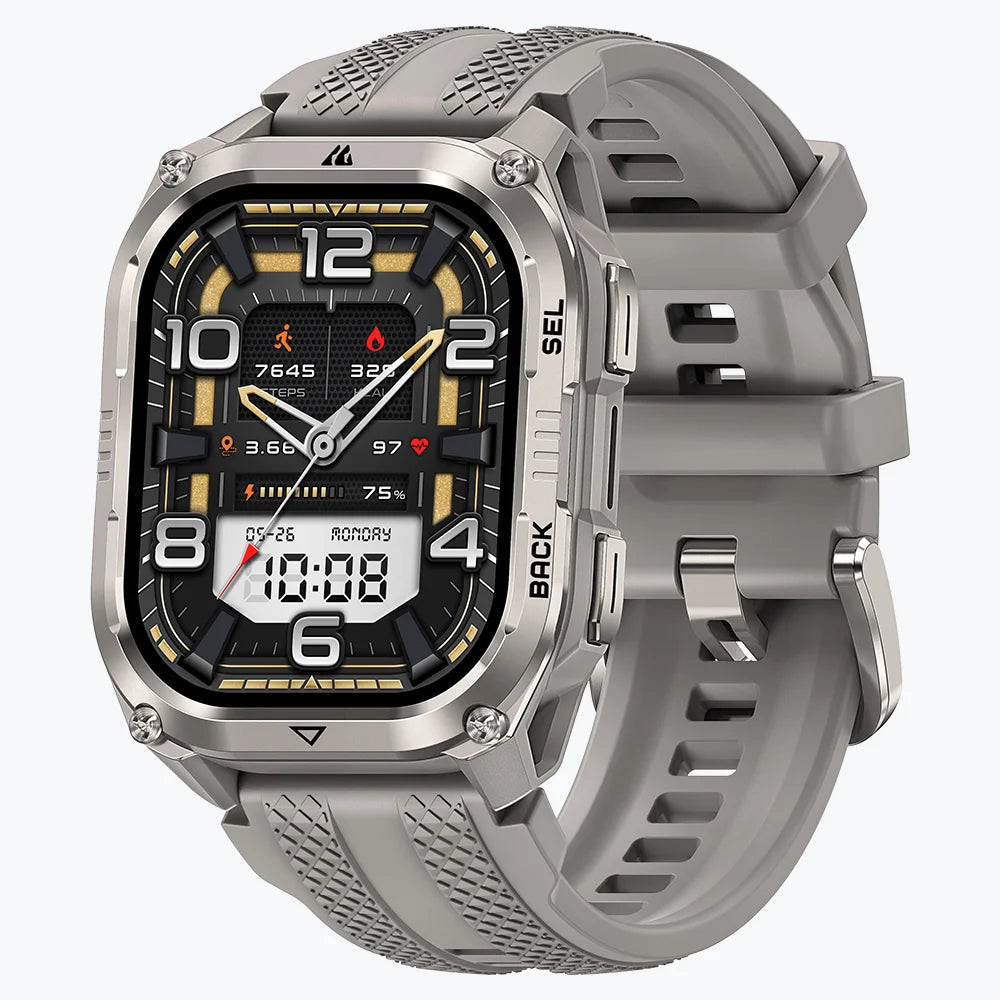
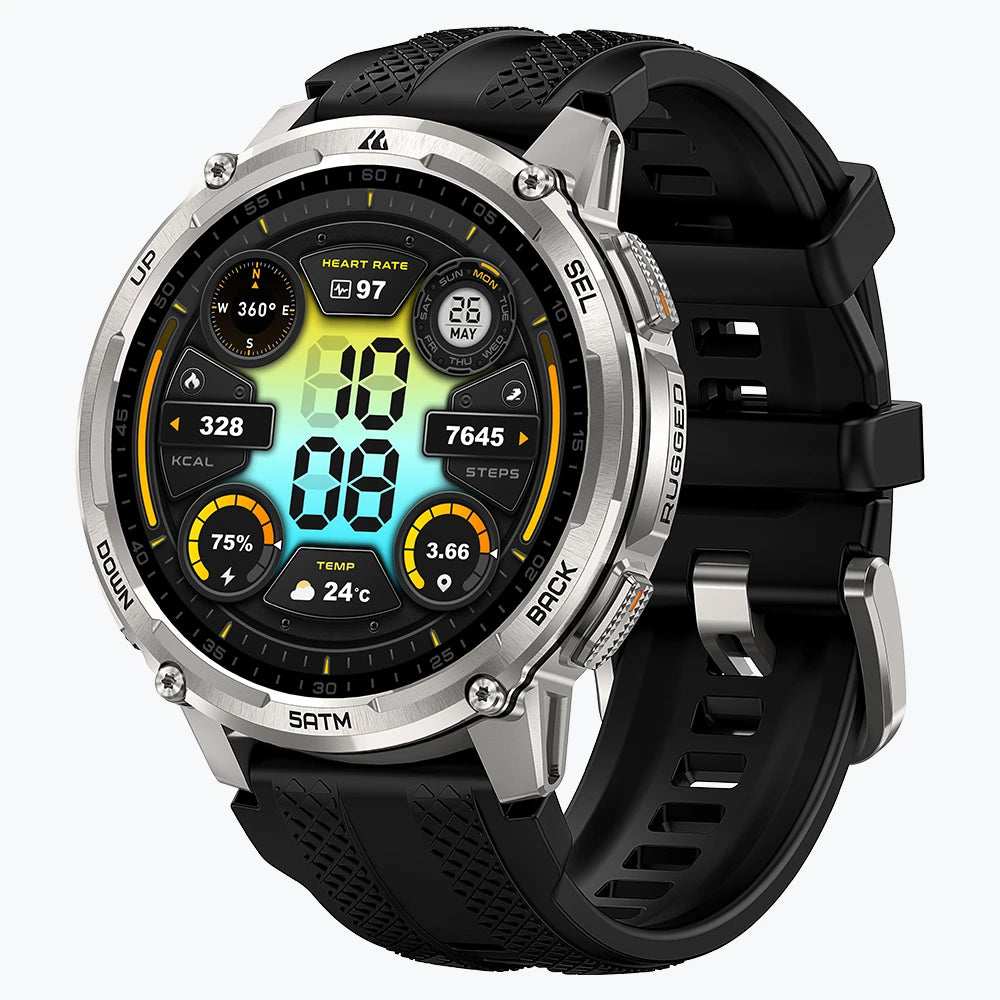
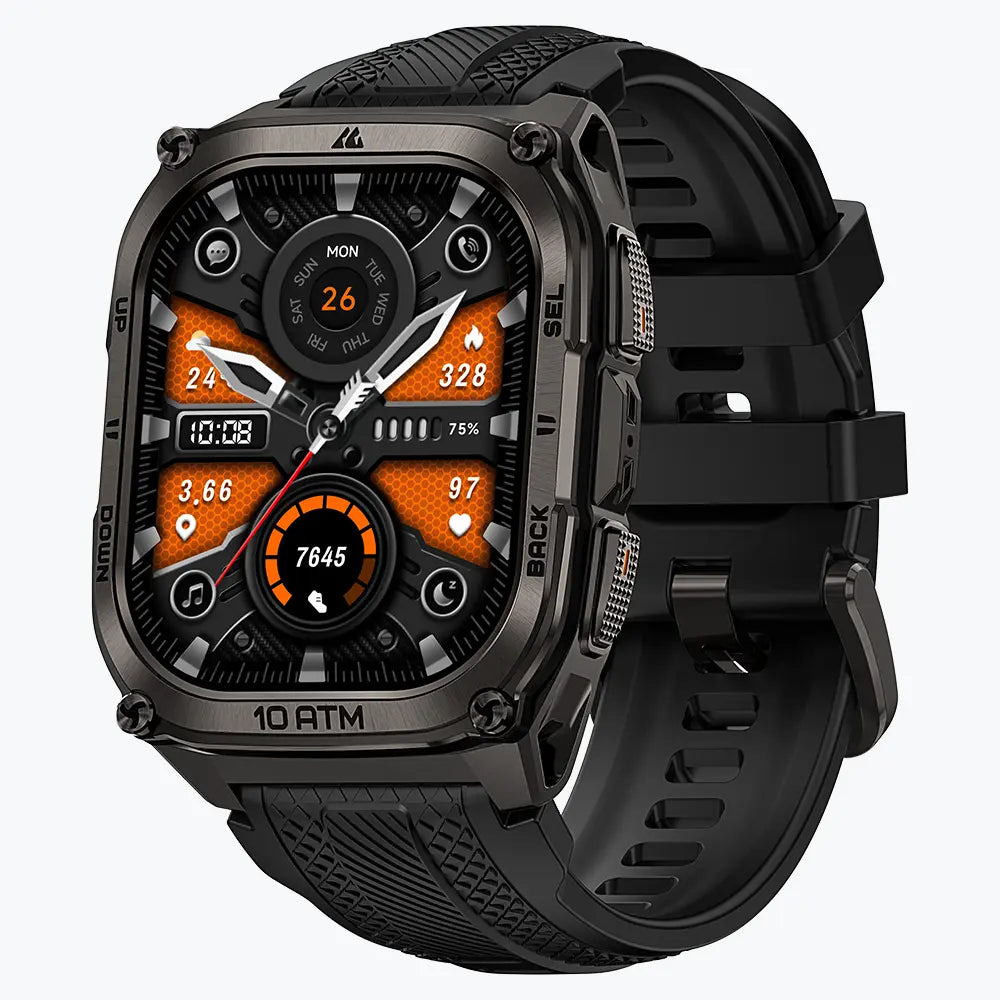
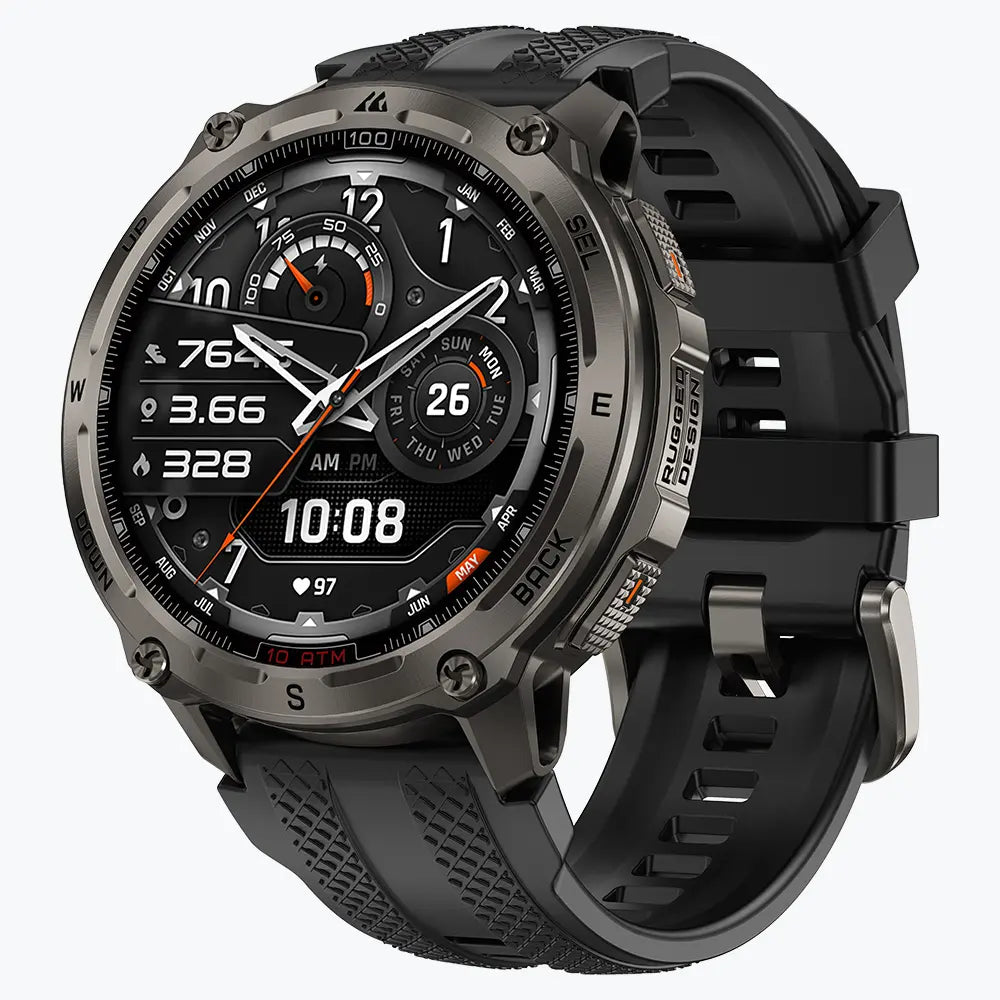
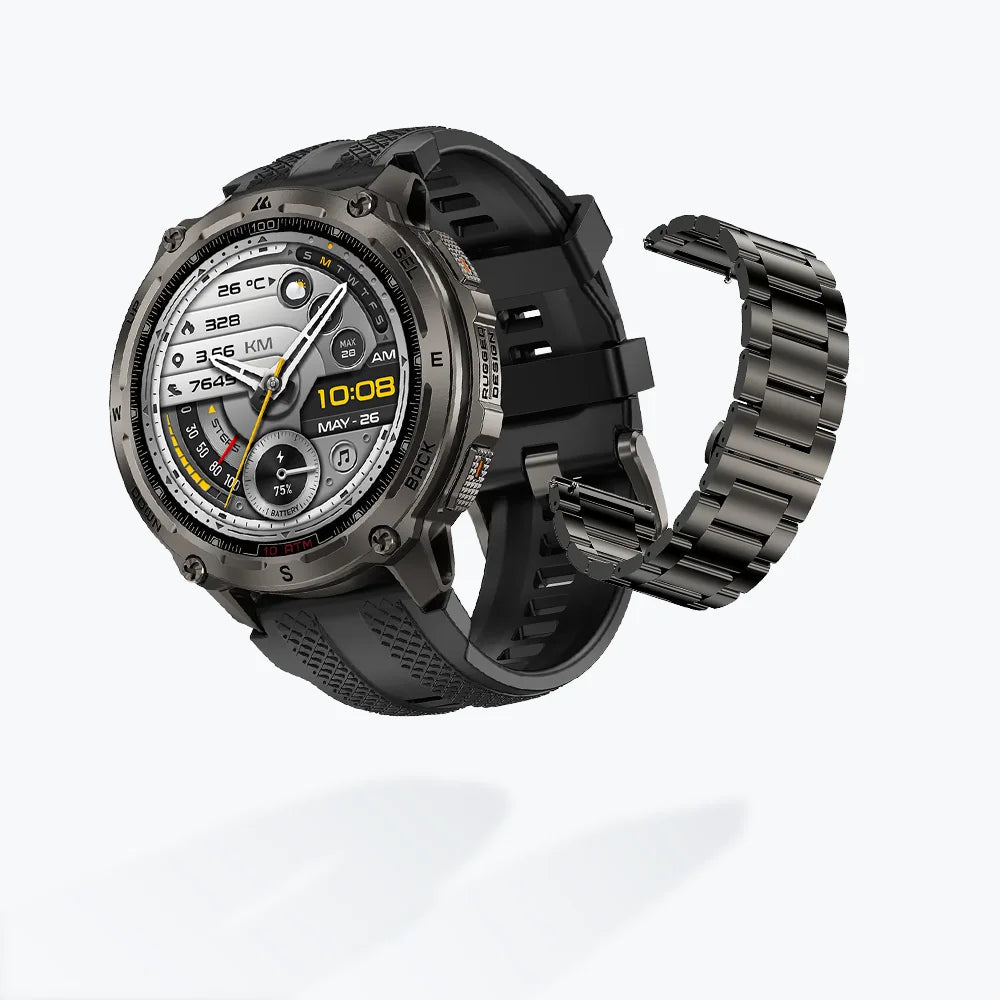
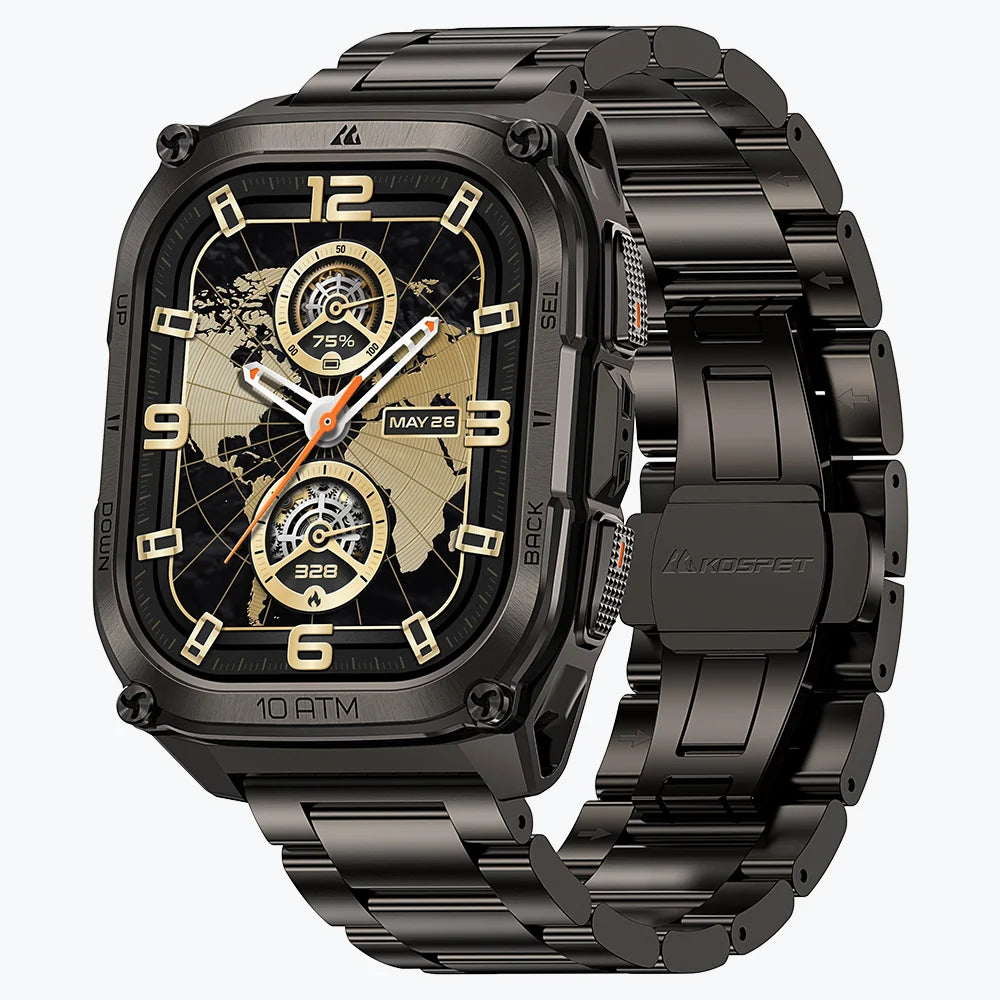
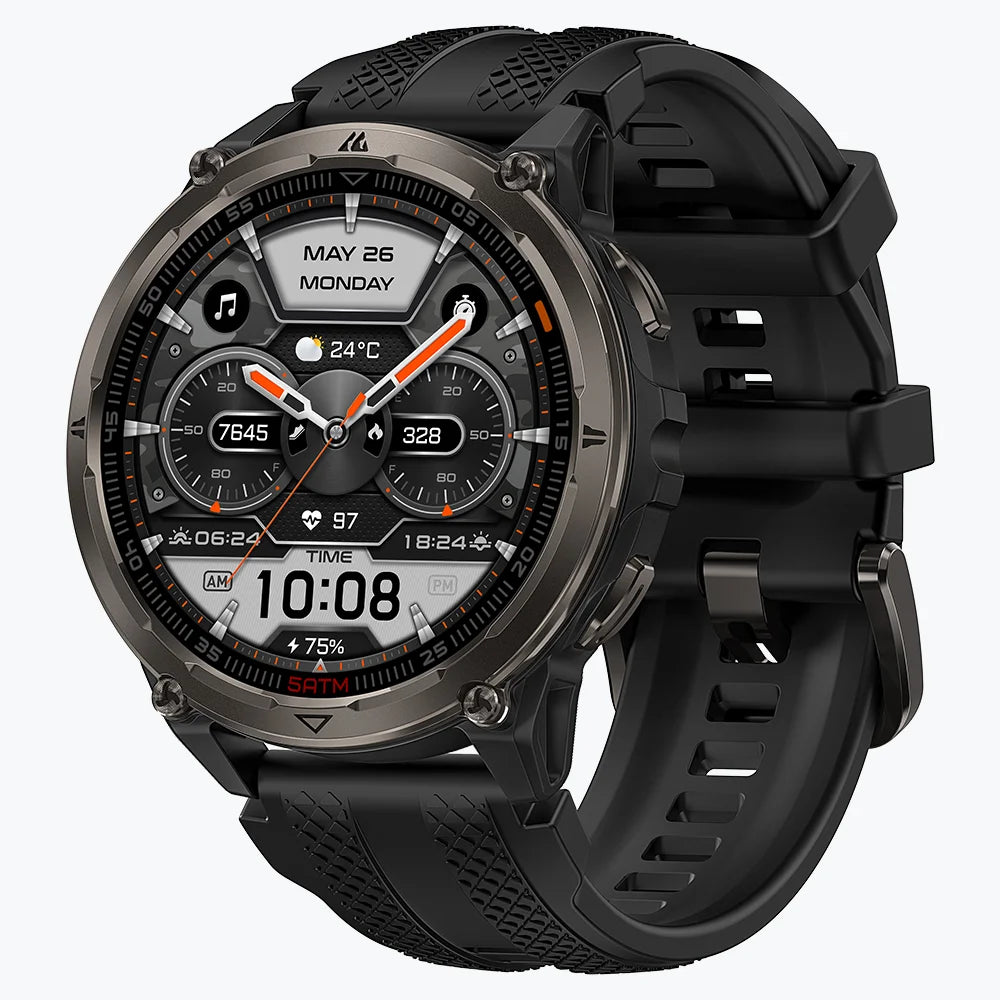
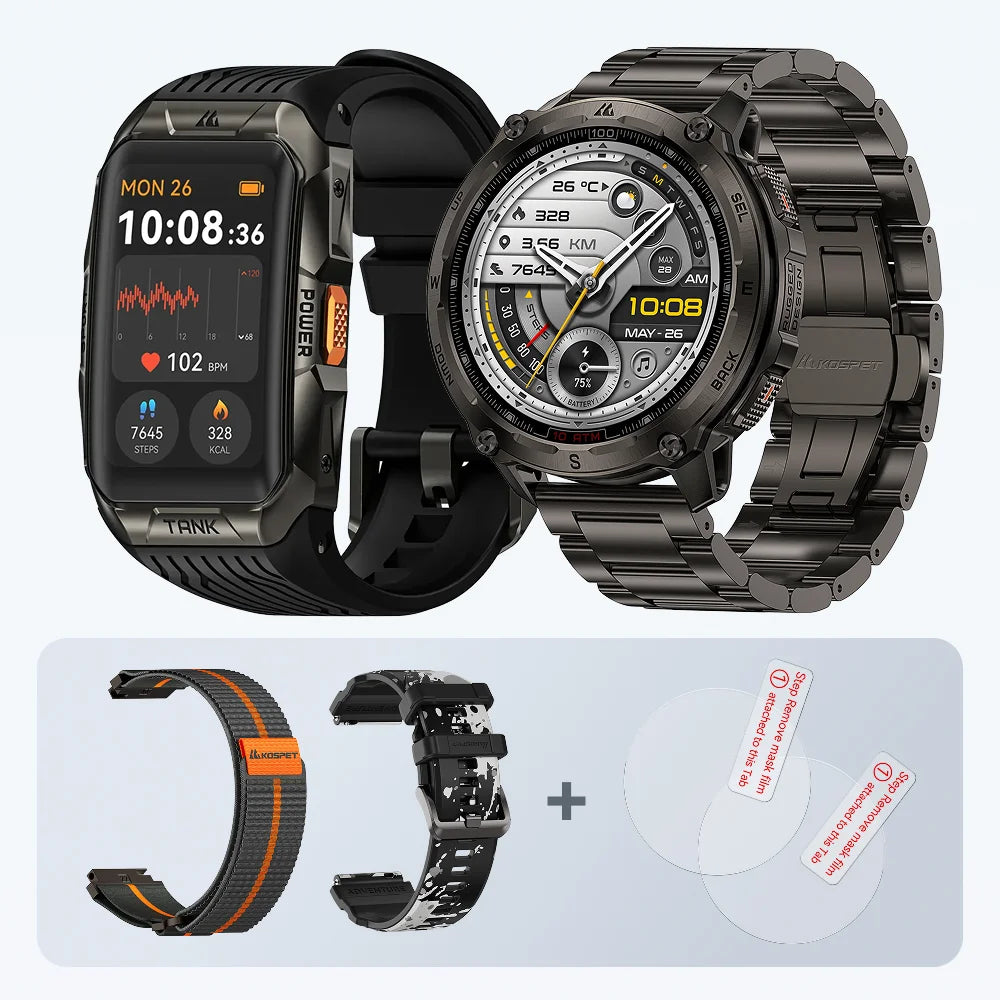
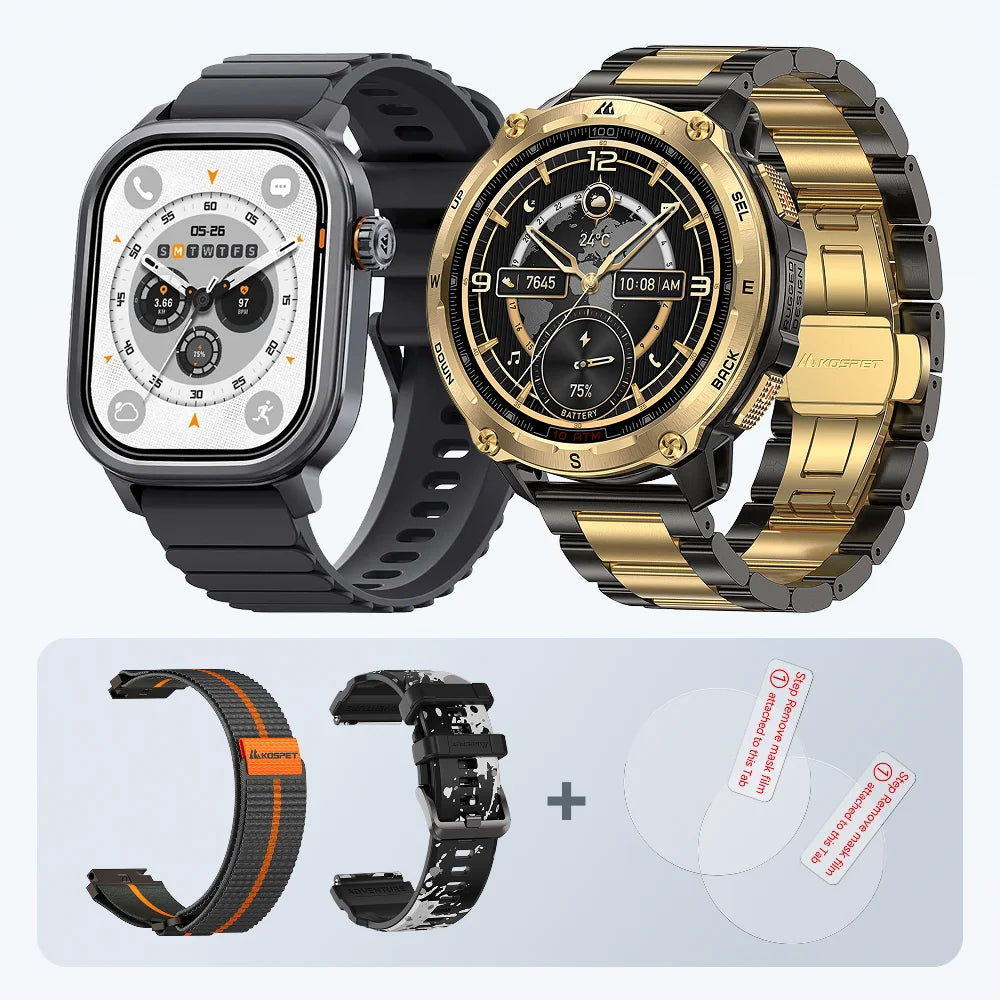
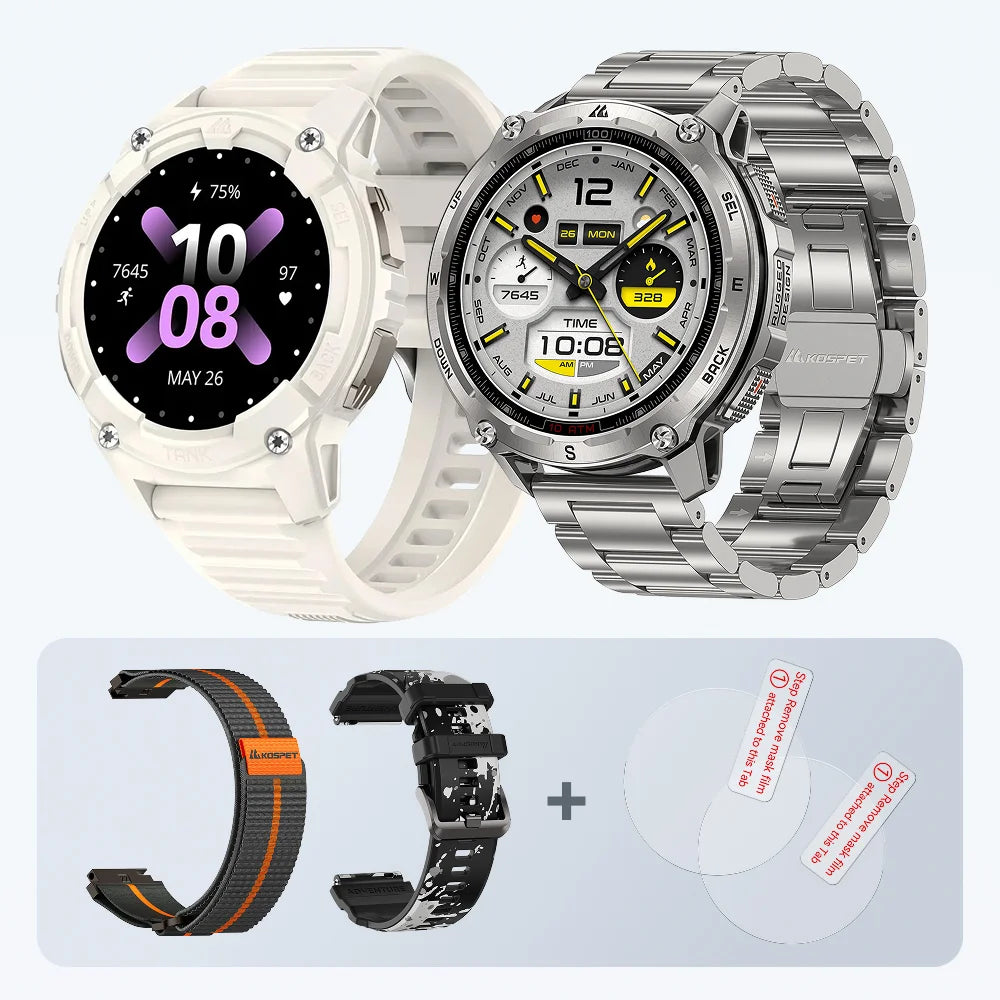
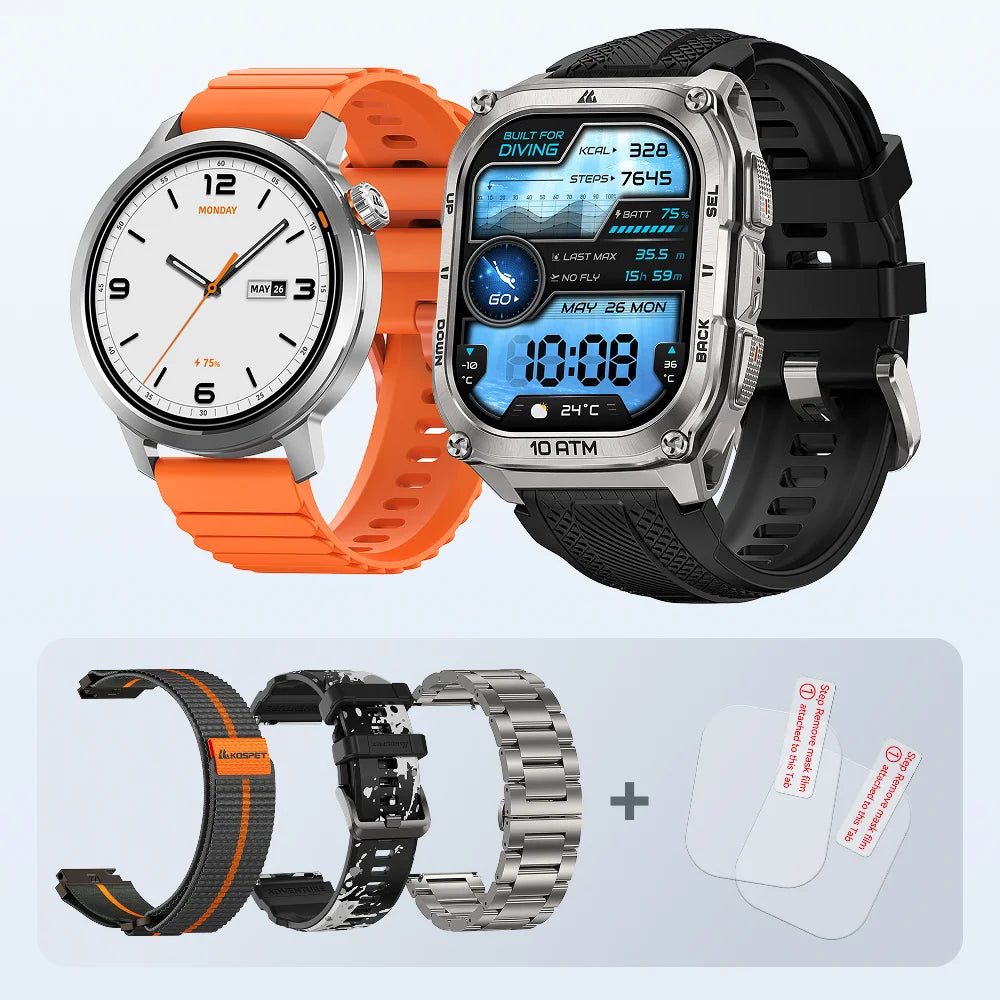
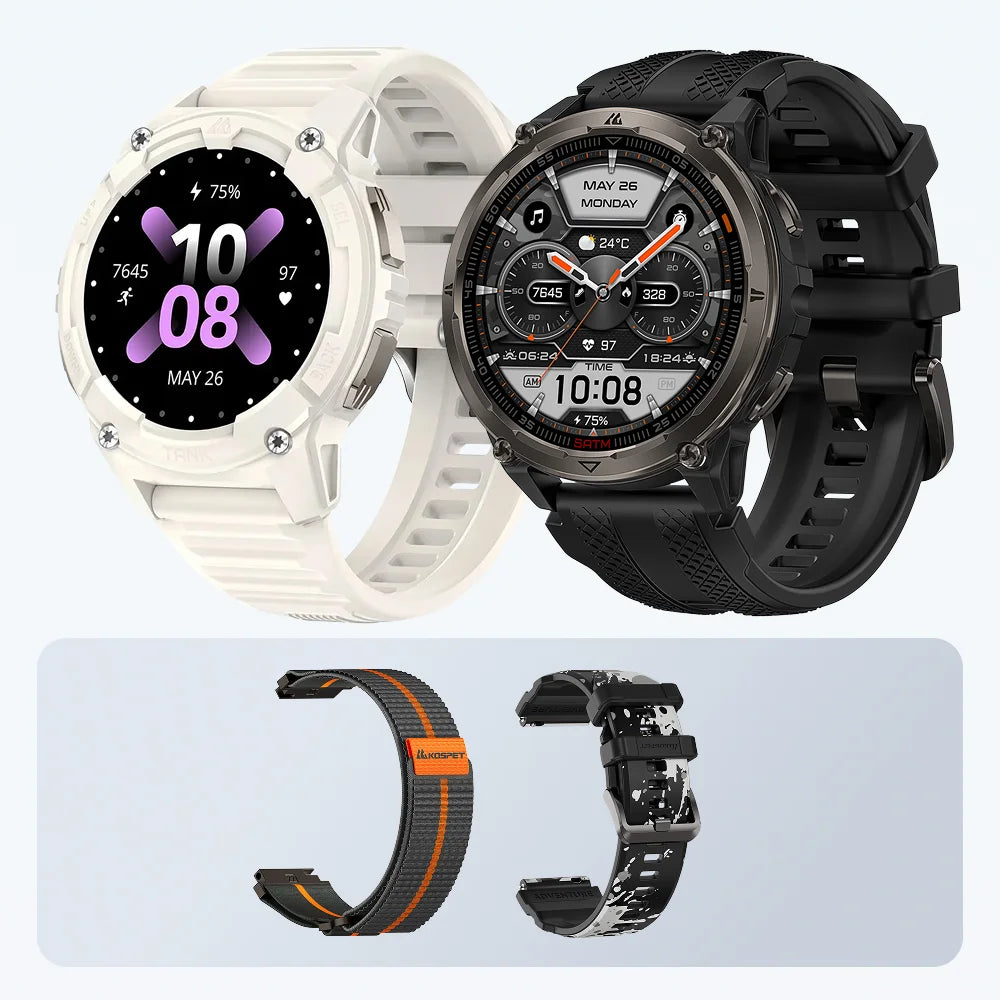
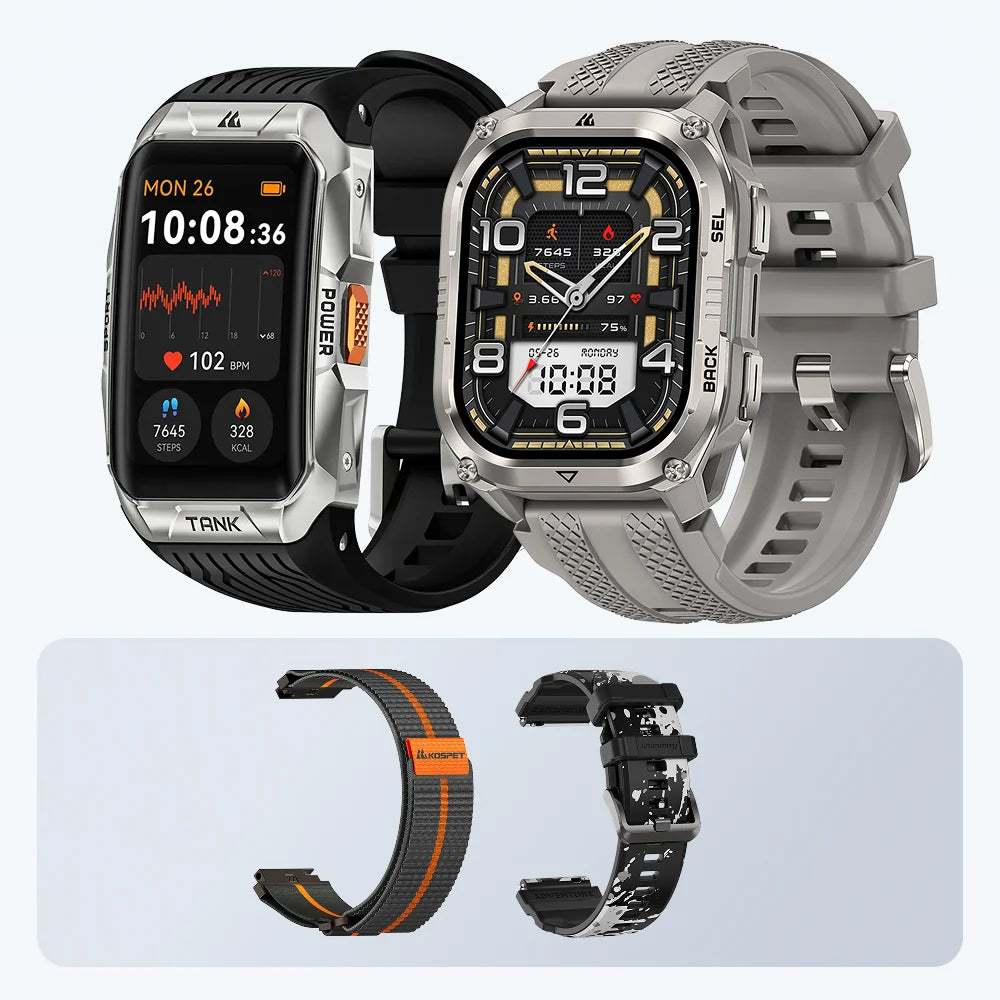
KOSPET’s current range provides a practical example:
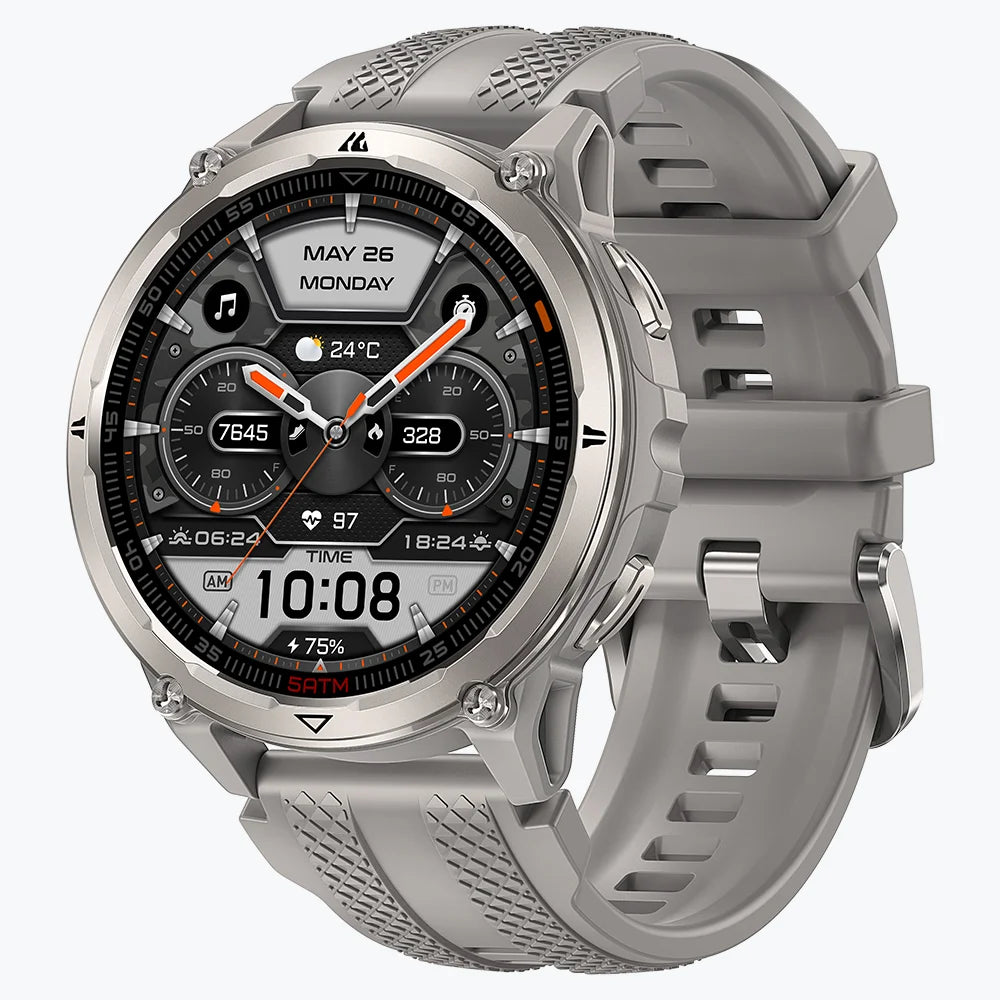
KOSPET ORB 2 Smartwatch
$129.00 CAD
| Product | Type | Weight without strap | Buttons | Protection |
|---|---|---|---|---|
| KOSPET ORB 2 | Lightweight, round | 41 g | 2 | 5 ATM and IP69 |
| KOSPET PULSE 2 | Lightweight, square | 40.5 g | 2 | 5 ATM and IP69 |
| KOSPET TANK T4C | Heavy-duty, round | 60.7 g | 4 | 5 ATM and IP69K |
| KOSPET TANK M4C | Heavy-duty, square | 65.5 g | 4 | 5 ATM and IP69K |
All four provide dual-band positioning, more than 170 sports modes, health and sleep tracking, Bluetooth calling, an LED flashlight, and short-range walkie-talkie communication. The heavier models mainly change the structure, sealing, and controls—not the core smartwatch experience.
This is also the clearest budget rule: if a lightweight model already has verified protection for your normal environment, paying more for a heavier model produces little practical value.
How Much Does Rugged Smartwatch Weight Affect Daily Comfort?
Weight matters most when wearing time and wrist movement increase. A heavy watch may feel acceptable during a short task but become more noticeable during running, sleep, or a full day of continuous health tracking.
Comfort depends on several connected factors:
- Total body weight and weight distribution.
- Case thickness and whether it catches on clothing.
- Wrist width relative to the case.
- Strap flexibility, ventilation, and adjustment.
- How tightly the watch must be worn for stable sensor contact.
- The amount of arm movement involved in the activity.
A 2024 comparative study of smartwatch comfort involving 41 participants found that wrist width, watch weight, dial size, and strap design influenced the wearing experience. It does not establish a universal maximum weight, but it confirms that comfort cannot be judged by durability specifications alone.
Prioritize lower weight if you intend to wear the watch during sleep, running, repetitive exercise, or throughout the entire day. Accept more weight only when the added structure has a clear purpose and the watch will mainly function as work equipment.
Does a Heavier Rugged Smartwatch Provide Better Durability?
Not necessarily. Weight is not a durability rating. Real protection must be evaluated through disclosed test methods, water and dust ratings, materials, structural design, and manufacturer-approved uses.
Use the following evidence hierarchy:
| Claim or specification | What it can demonstrate | What it does not prove |
|---|---|---|
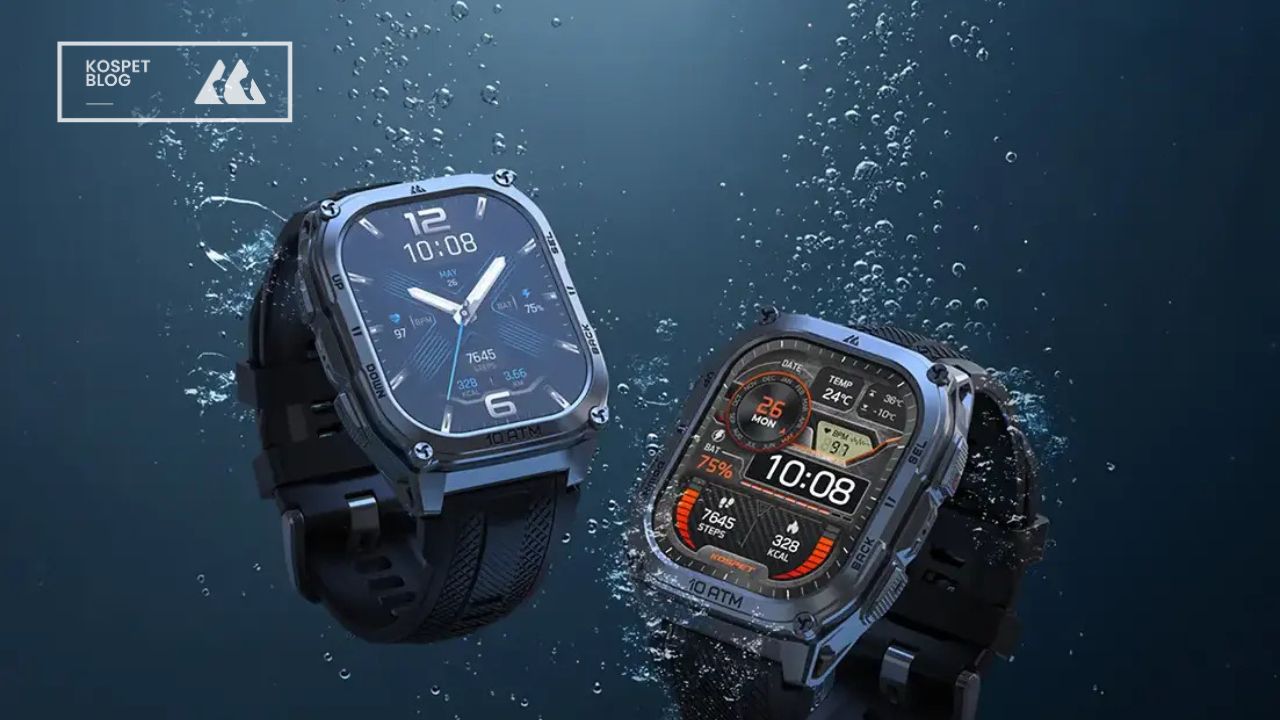
| ATM water-resistance rating | Resistance under defined water-pressure tests | Unlimited use at the stated depth, high-pressure jets, or hot steam |
| IP rating | Protection against specified solid and water ingress | Impact resistance or suitability for every water activity |
| Named MIL-STD-810H method | Testing against a particular environmental condition | One universal “military certification” |
| Metal case or reinforced bezel | Potentially stronger physical construction | Successful shock, vibration, or drop testing |
| “Military-style” or “tactical” design | Visual positioning | Measured durability |
The U.S. government’s official MIL-STD-810 listing describes environmental engineering and laboratory methods tailored to particular equipment requirements. Buyers should therefore look for the specific methods used, the testing organization, and the conditions passed.
The ISO 22810 water-resistance standard similarly defines requirements and test methods for water-resistant watches. Always follow the manufacturer’s permitted activities instead of treating an ATM number as approval for diving, high-pressure cleaning, hot showers, or saunas.
Match the evidence to the hazard:
-
For rain, sweat, trail dust, and occasional bumps, a lightweight watch with verified ratings may be sufficient.
-
For repeated tool strikes, rock contact, mud, or high-pressure water, stronger work-oriented construction becomes more valuable.
-
For diving, hazardous workplaces, or professional rescue use, confirm the exact activity-specific approval rather than relying on the word “rugged.”
Does a Heavy-Duty Rugged Smartwatch Have Better Battery Life?
No. Battery life depends on capacity, display use, GPS, sensors, calls, software efficiency, and temperature—not the weight category of the watch.
Compare the runtime that matches your intended use:
- Typical-use days for everyday wear.
- Heavy-use days for frequent calls and notifications.
- Continuous GPS hours for running and hiking.
- AOD runtime if the screen remains active.
- Flashlight or communication runtime for field work.
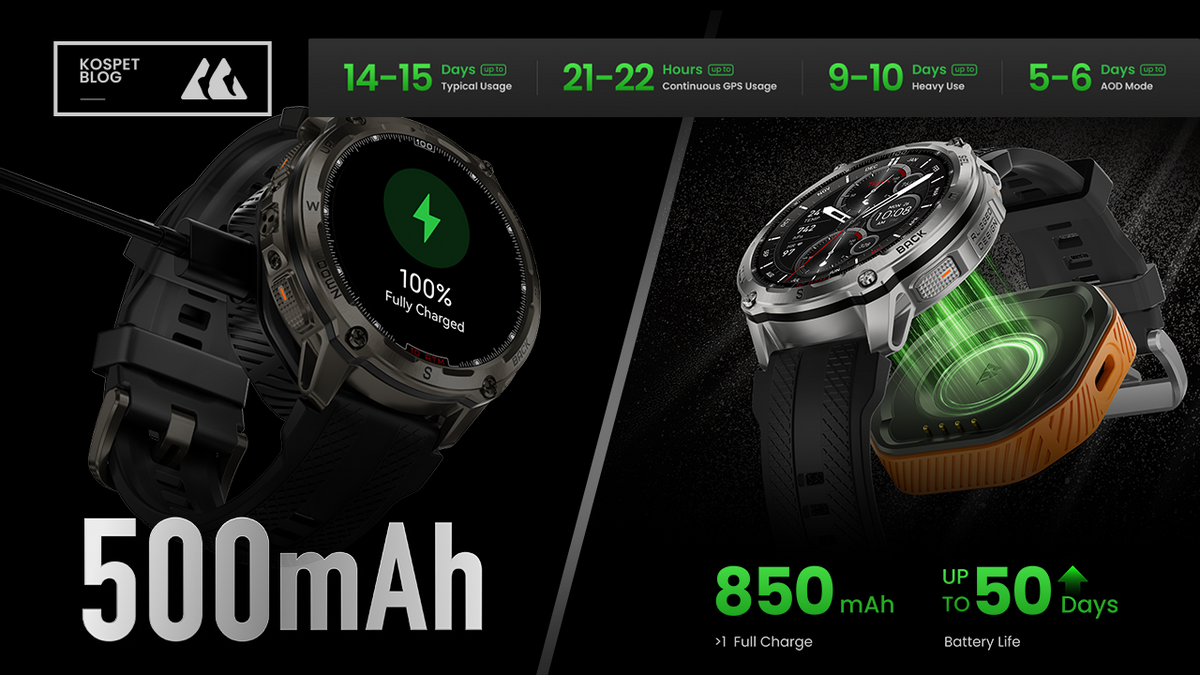
KOSPET’s published figures demonstrate why weight is an unreliable battery shortcut:
| Comparison | Lightweight model | Heavy-duty model | Result |
|---|---|---|---|
| Round | ORB 2: up to 16 days typical use and 25 hours continuous GPS | TANK T4C: up to 15 days typical use and 21 hours continuous GPS | The lighter model leads in both figures |
| Square | PULSE 2: up to 15 days typical use and 23 hours continuous GPS | TANK M4C: up to 16 days typical use and 21 hours continuous GPS | The heavy model gains one typical-use day, while the light model has longer GPS runtime |
These are manufacturer laboratory estimates, so actual results will vary. They still establish an important buying principle: never assume that a larger or heavier rugged smartwatch will last longer.
Best Rugged Smartwatch Type for Different Activities
Lightweight models are better for most daily, fitness, and recreational activities. Heavy-duty models become the better match when repeated physical exposure or occupational consequences justify the additional structure.
| Activity or environment | Better type | Reason | KOSPET example |
|---|---|---|---|
| Daily wear and sleep tracking | Lightweight | Lower weight supports continuous wear | ORB 2 or PULSE 2 |
| Running and gym training | Lightweight | Less mass during repetitive movement | ORB 2 or PULSE 2 |
| Day hiking and casual camping | Lightweight | Verified everyday protection is usually sufficient | ORB 2 or PULSE 2 |
| Fishing and normal wet-weather use | Lightweight with suitable water protection | Heavy construction is unnecessary without harsher exposure | ORB 2 or PULSE 2 |
| Multi-day trekking | Lightweight or balanced | Prioritize GPS runtime, fit, and route conditions | ORB 2 for lower weight; T4C if repeated harsh exposure is expected |
| Technical climbing and rescue | Heavy-duty when contact is frequent | Rock and equipment contact increase physical risk | TANK T4C or TANK M4C |
| Construction and maintenance | Heavy-duty | Tools, concrete, mud, and gloves justify reinforced controls and sealing | TANK T4C or TANK M4C |
| High-pressure or muddy work | Heavy-duty with an appropriate ingress rating | Ordinary water resistance may not cover the exposure | TANK T4C or TANK M4C |
Users who want both durability and all-day comfort should look for a lightweight model with documented environmental testing, reinforced glass, suitable water resistance, and enough battery life for the intended activity. “Balanced” does not have to mean heavier; it means carrying no more protection than the environment requires.
FAQs
Can a Protective Case Turn a Lightweight Smartwatch Into a Heavy-Duty Model?
No. A protective case or screen film may reduce scratches and minor impact damage, but it does not change the watch’s original water sealing, internal structure, button design, or environmental test results.Accessories can supplement verified protection. They cannot create ratings the watch itself does not have.
Can a Rugged Smartwatch Replace Dedicated Emergency or Navigation Equipment?
Not unless the device is explicitly designed and approved for that purpose. Smartwatch GPS, short-range communication, health alerts, and route tracking depend on battery life, signal availability, software, and sensor limitations.For remote expeditions or safety-critical work, use the watch as a convenient secondary tool rather than the only navigation, communication, or emergency device.
What Should You Check in the Warranty Before Buying a Rugged Smartwatch?
Check whether the warranty covers accidental impact, water damage, the display, battery failure, straps, and charging accessories. Also review the warranty period, regional repair availability, replacement fees, shipping responsibility, and exclusions for activities such as diving or high-temperature water exposure.
A rugged product description does not automatically mean every type of physical or liquid damage is covered.