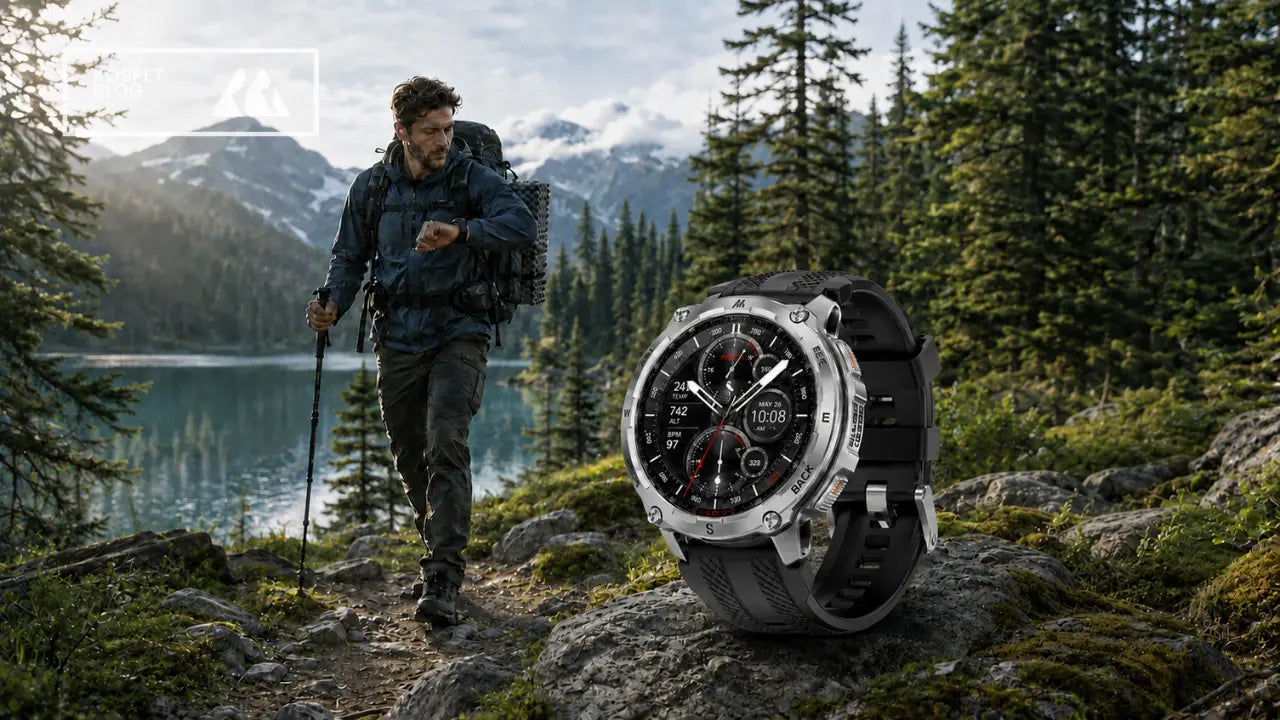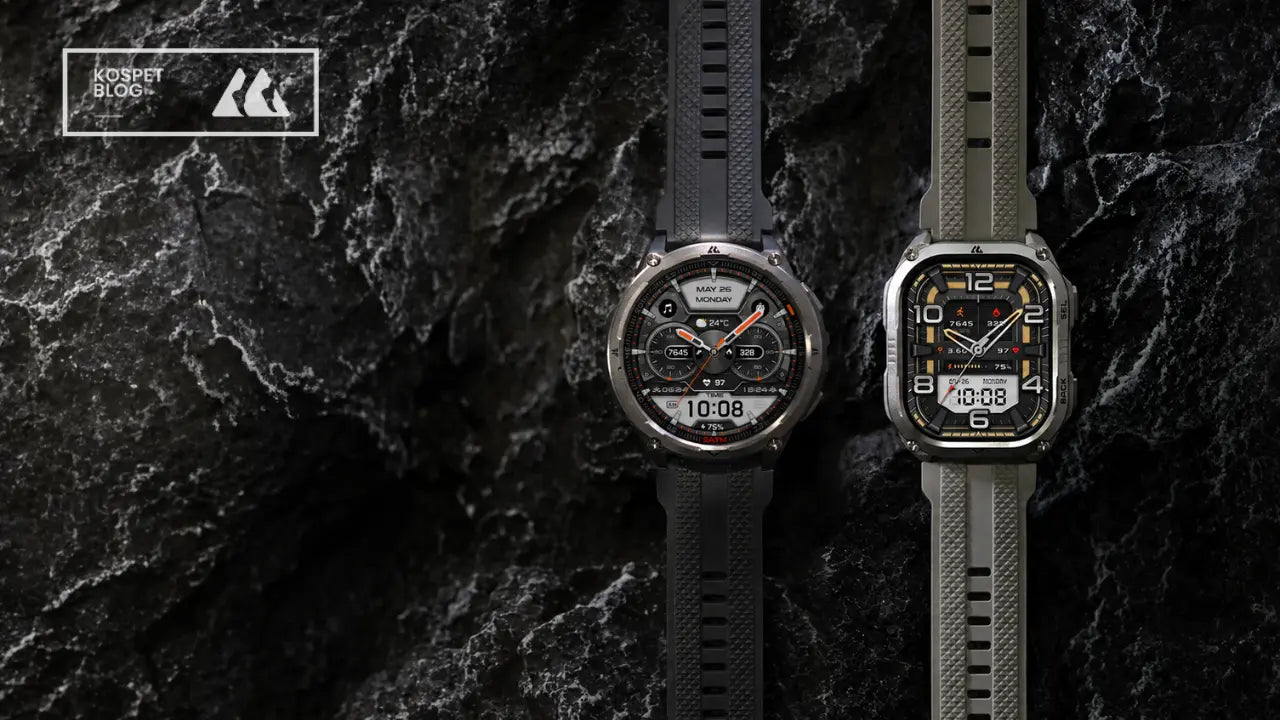

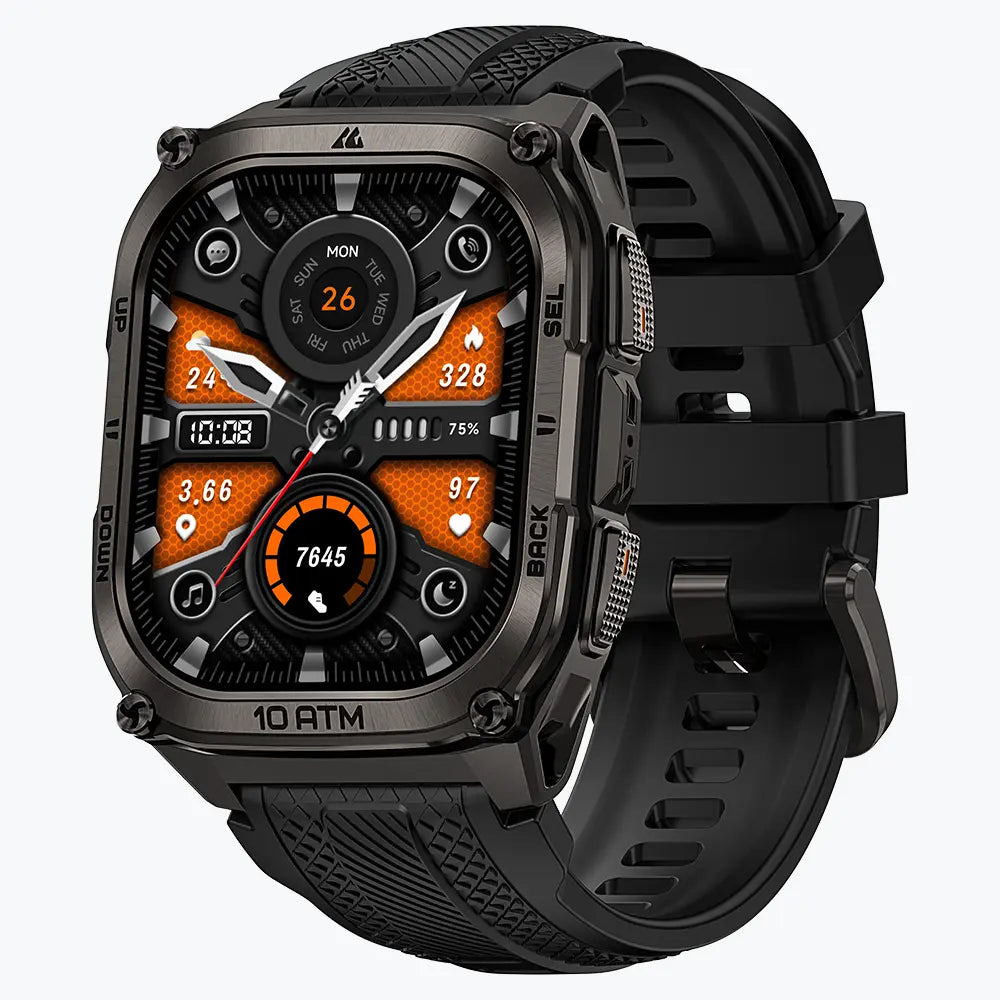
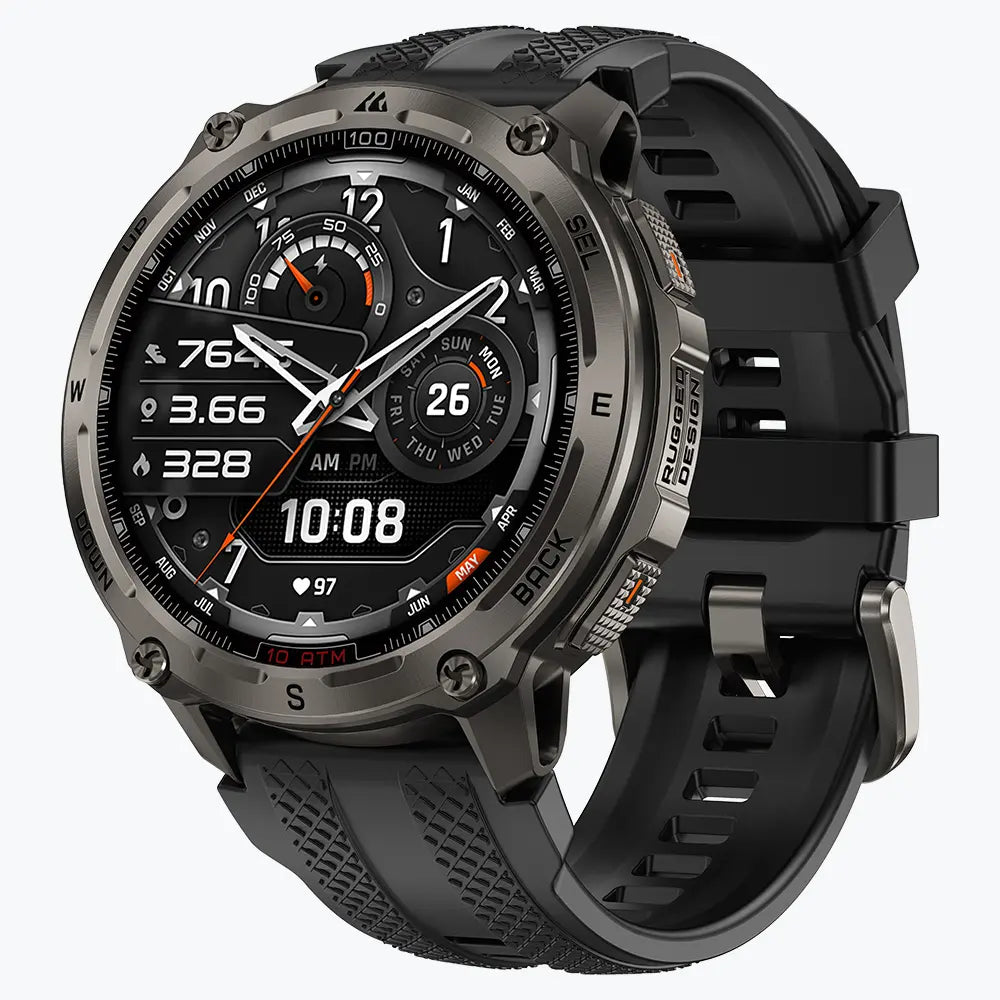
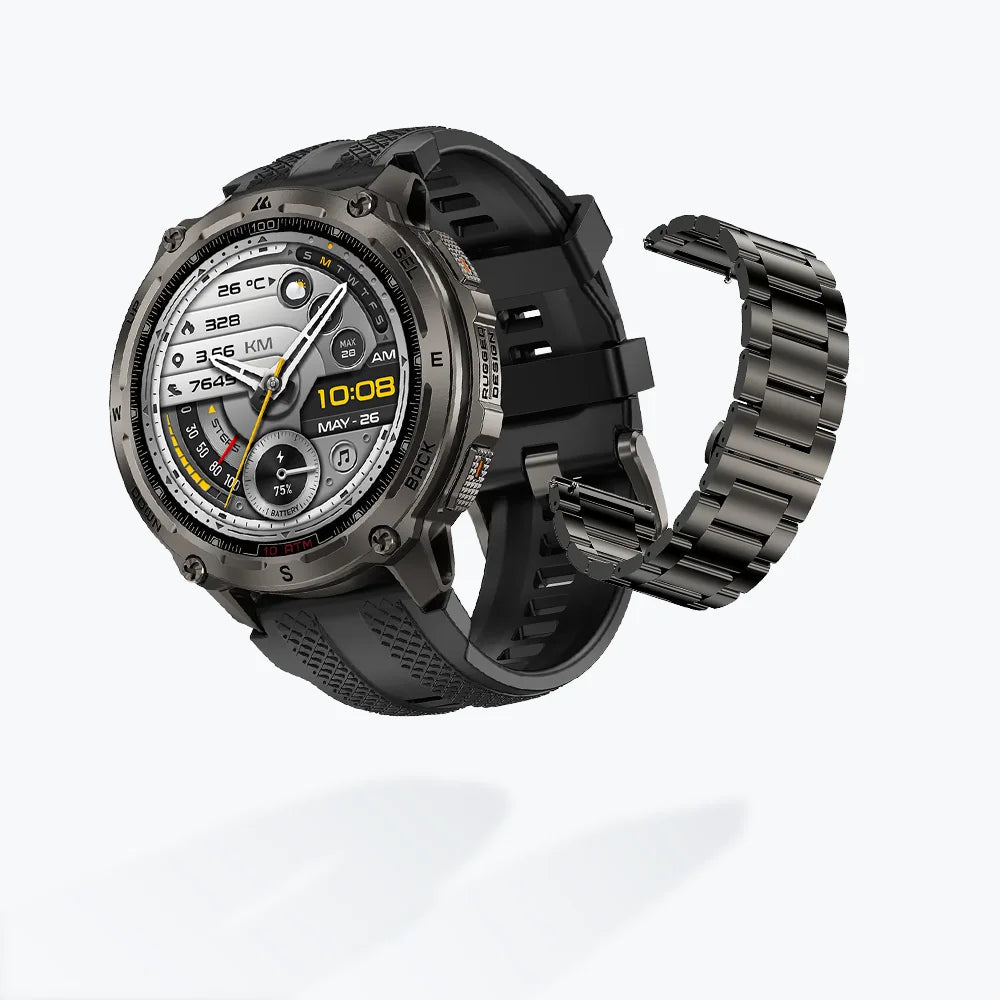

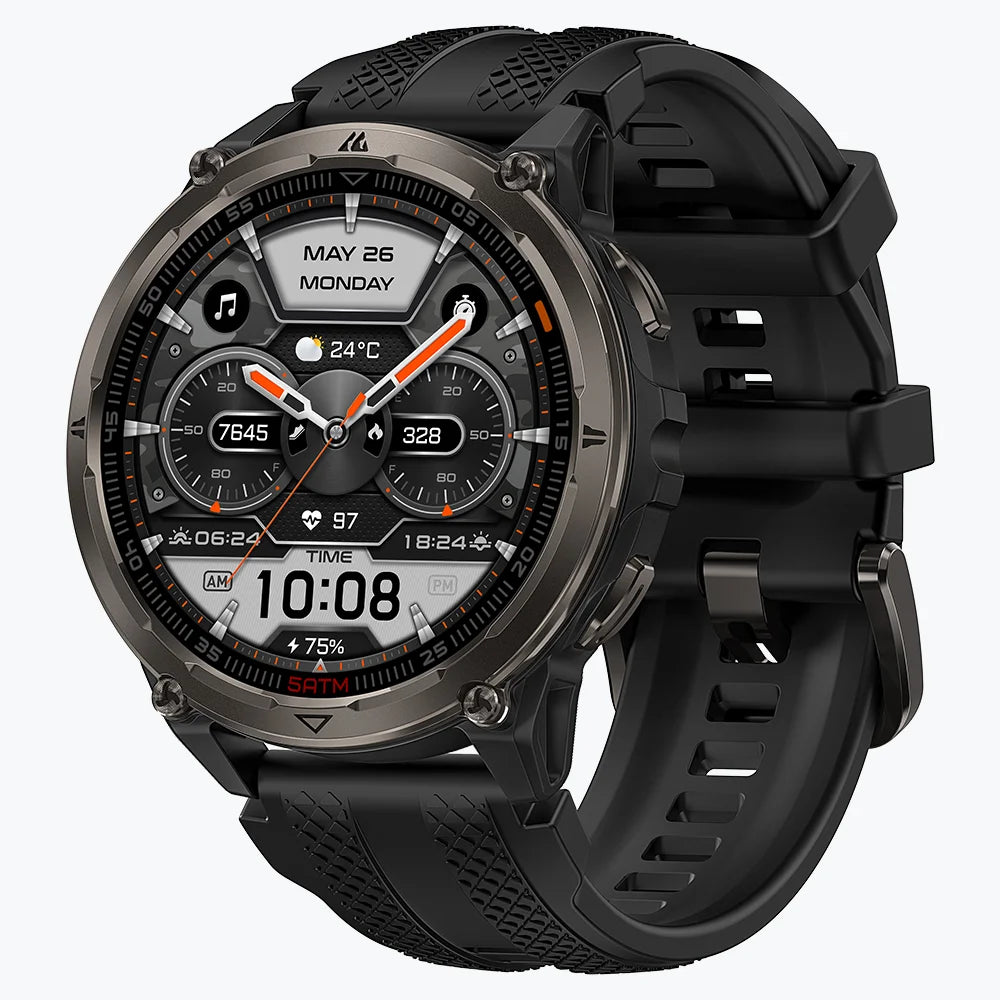

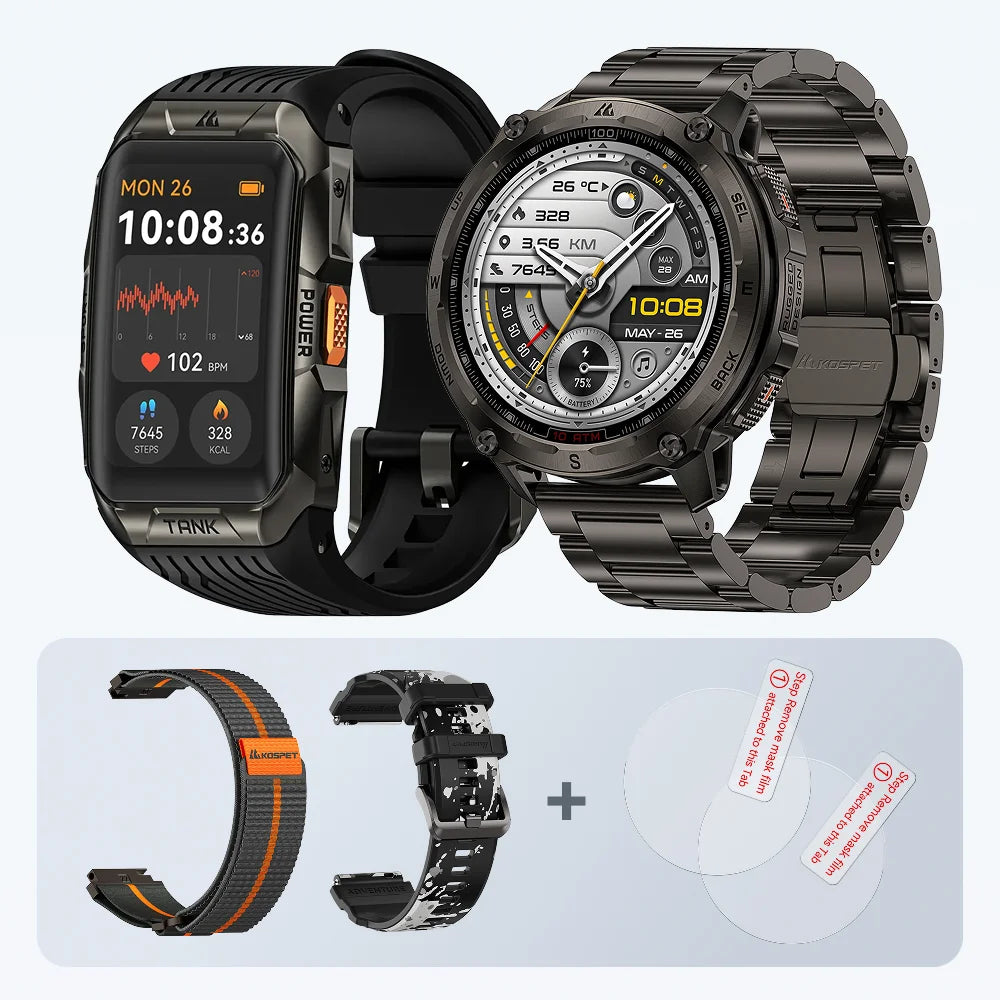


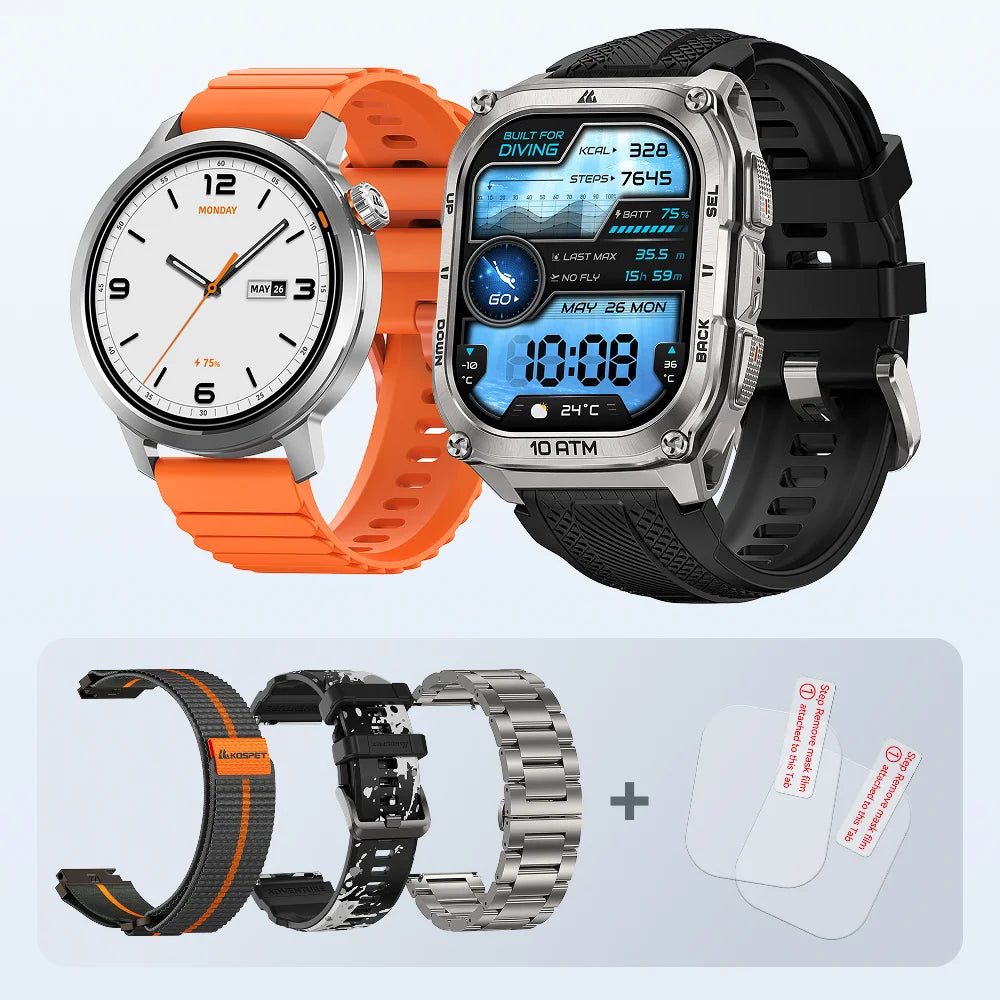
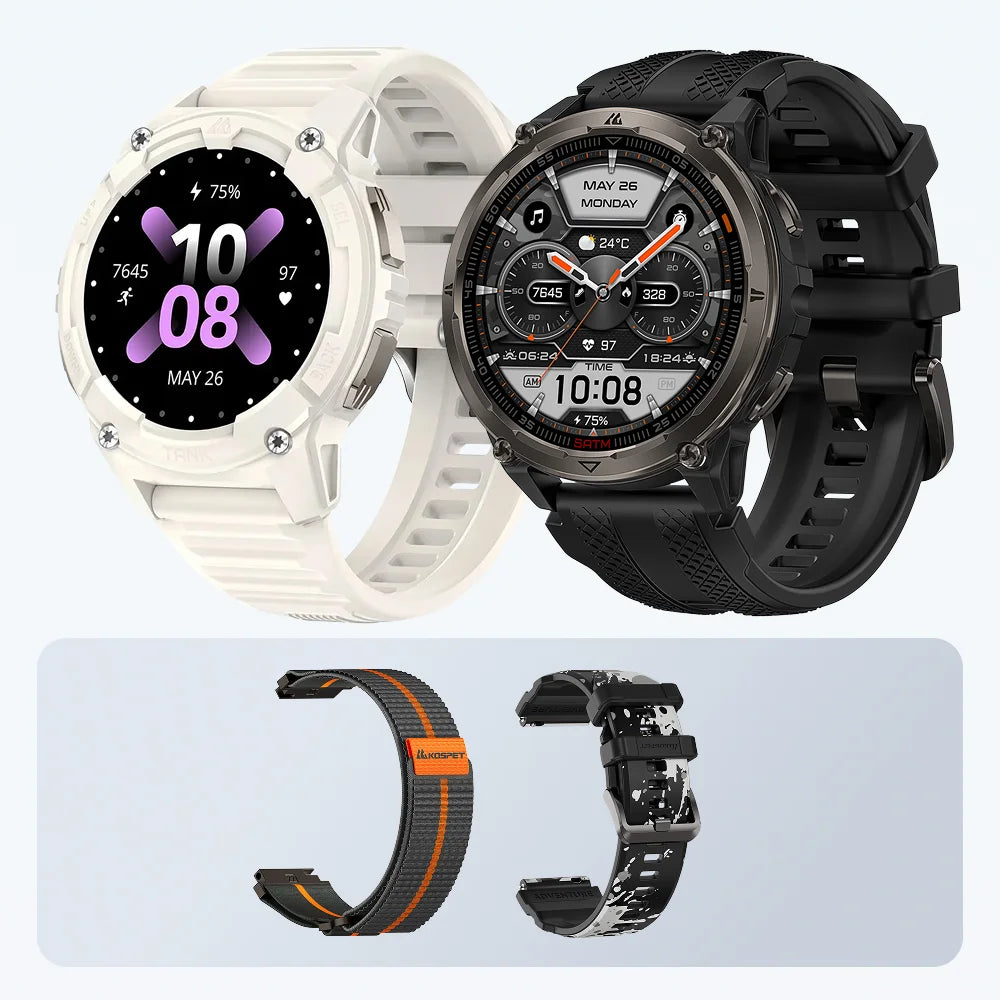
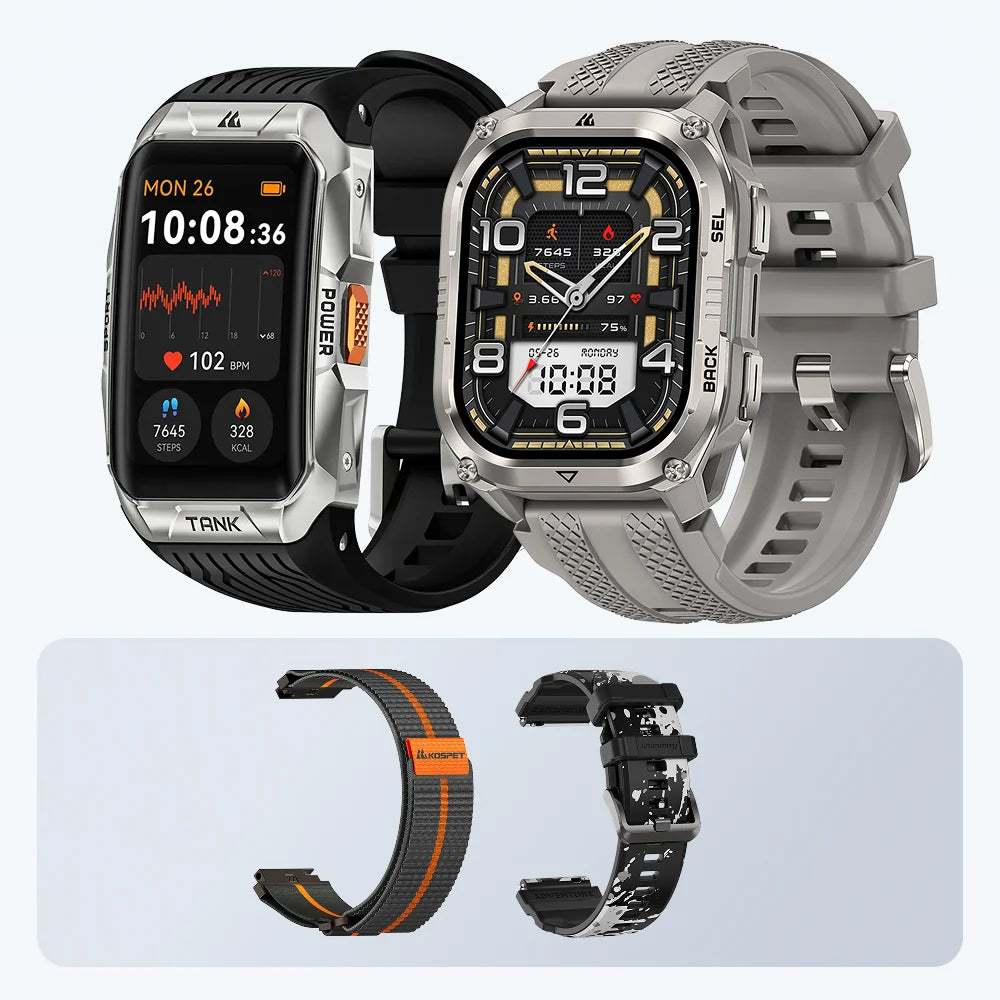
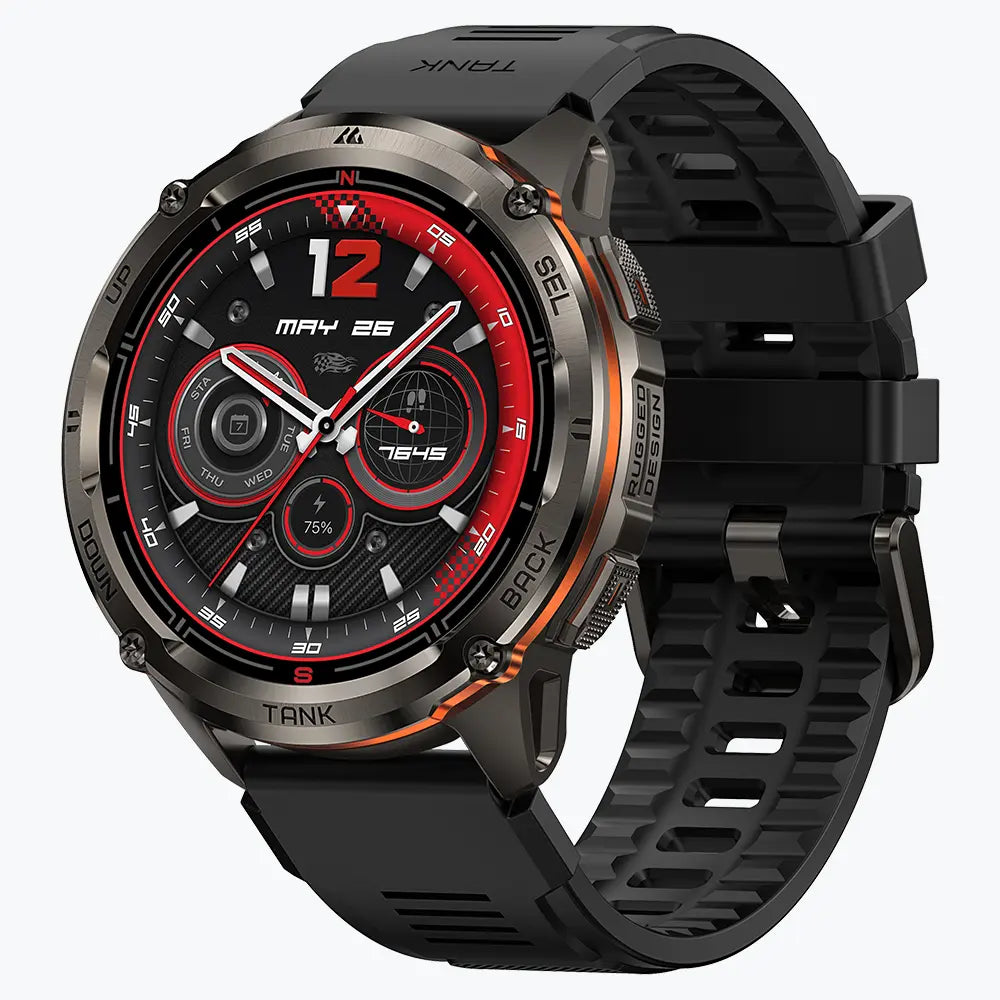
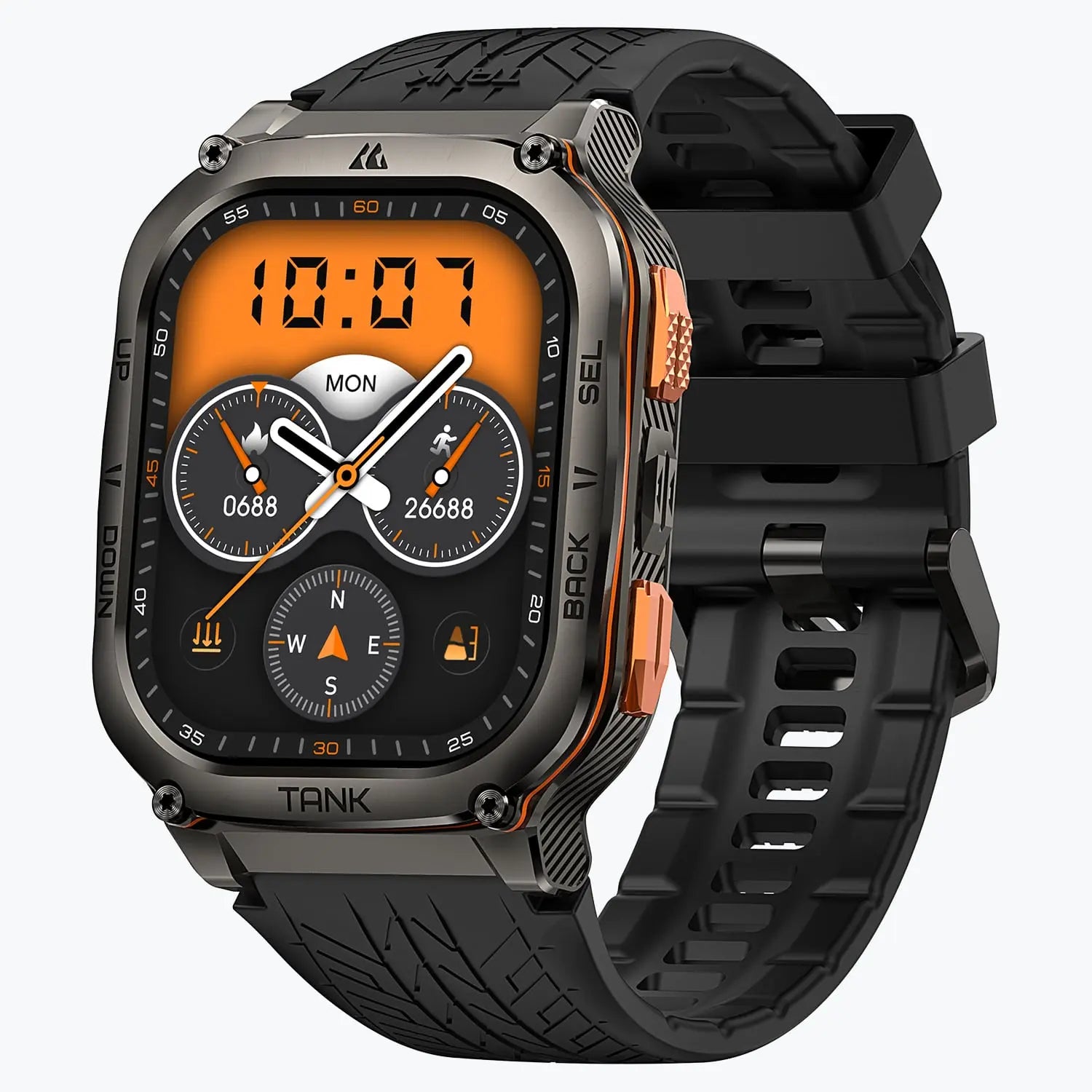


Under typical daily use, KOSPET smartwatches are rated for up to 14–16 days. Heavy use brings that range to 8–11 days, AOD to about 5–6 days, and continuous GPS to 21–35 hours. Offline maps add display and navigation work, so GPS-only endurance should remain your upper planning boundary.
To choose the right rugged smartwatch, start with the feature that will run longest during your hike, run, ride or workday, then leave capacity for everything used alongside it.
How Do Daily Use, AOD, GPS and Offline Maps Change Battery Life?
Typical use offers the longest interval between charges. Heavy use and AOD shorten it, while continuous GPS changes planning from days to hours. Map use adds a variable display and processing load.
| Usage pattern | KOSPET reference | Use this figure when… |
|---|---|---|
| Typical daily use | Up to 14–16 days | You mainly use notifications, health tracking and occasional short workouts |
| Heavy daily use | Up to 8–11 days | You make more calls, wake the display often and record workouts regularly |
| AOD enabled | Up to 5–6 days | You want the time and watch face continuously visible |
| Continuous GPS | Up to 21–35 hours | You record a hike, run or ride without stopping GPS |
| GPS with offline maps | Below the GPS-only ceiling | You track continuously and also check, pan or zoom a stored map |
Daily and AOD figures describe calendar use; GPS figures describe one continuous session. For a 20-hour trail event, use the GPS rating—not the 15-day daily-use rating.
What Does Daily Use Mean for Charging Frequency?
For notifications, health monitoring and a few short workouts, plan around the 14–16-day typical-use range. If your routine includes frequent calls, repeated screen checks, regular workout recording or music control, the 8–11-day heavy-use range is the more useful reference.
Frequent screen wakes, calls and sensor sessions accumulate across the day. An outdoor workout adds sustained demand because GPS stays active throughout the recording.
Individual use can fall between the published categories. An independent TANK M4 review recorded 39% battery use over one week, including two 45-minute runs (IOL review). A TANK M4 and M3 Ultra owner reported charging every 7–10 days and using GPS more often on the M4 because of its maps (Reddit owner discussion). These are usage examples, not promised results.
How Does AOD Affect Rugged Smartwatch Battery Life?
With Always-On Display enabled, the published charging interval is about 5–6 days across the KOSPET smartwatches compared here. AOD therefore matters more to everyday charging frequency than an occasional short workout.
The display remains visible even when you are not actively checking it, using capacity that could otherwise support longer GPS tracking.
For normal wear, choose AOD if glanceable information is worth more frequent charging. Before an all-day hike, turn it off or schedule selected hours. Raise-to-wake keeps the screen off at rest while preserving quick access.
How Does Continuous GPS Affect Rugged Smartwatch Battery Life?
Continuous GPS reduces the relevant endurance window to 21–35 hours. The TANK T4, M4, T4C and M4C are rated for up to 21–22 hours, while the T3 ULTRA 2 and M3 ULTRA are rated for up to 35 hours.
GPS repeatedly calculates position while recording distance, pace and route data. Higher accuracy and more frequent updates increase demand, as explained in Android Developers’ battery guidance. Poor satellite visibility and frequent screen checks can shorten field time.
Treat GPS endurance as an upper boundary. A 6-hour hike fits well within either range; a 20-hour event sits close to a 21–22-hour limit once navigation and outdoor conditions are included.
How Do Offline Maps Affect Rugged Smartwatch Battery Life?
Offline maps do not have one fixed battery cost. Storing a map does not keep GPS running, but using the map during an activity adds screen and processing demand to continuous position tracking.
- Map downloaded, navigation closed: battery behavior remains close to the current daily-use pattern.
- GPS active with occasional map checks: GPS is the main continuous load, with extra margin needed for the display.
- GPS active with frequent panning, zooming or route checks: navigation creates the highest combined demand covered in this article.
The TANK T4 and M4 support downloaded maps and GPX or KML route import through Apexmove. Routes work without mobile data, but GNSS, the display and navigation processing still use power. See KOSPET’s offline navigation guide.
For longer outings, verify the route before leaving and open the map mainly at junctions. “Offline” removes the need for mobile data, not battery power.
How Long Will a Rugged Smartwatch Last for Your Activity Pattern?
Plan around the most power-intensive feature that stays active, then leave headroom for everything running beside it.see KOSPET smartwatches battery life.
| Activity pattern | Best planning reference | Practical judgment |
|---|---|---|
| Normal daily wear, AOD off | 14–16 typical-use days | Suitable for notifications, health tracking and short workouts |
| Daily wear with AOD | 5–6 AOD days | Plan for roughly weekly charging; GPS workouts will shorten the interval |
| 6–10-hour hike, AOD off | 21–35 GPS hours | Within every listed GPS rating; T4 or M4 adds onboard offline maps |
| 20-hour endurance activity | 21–22 or 35 GPS hours | A 21–22-hour rating leaves little field margin; 35 hours provides more headroom |
| Three days with 6 GPS hours per day | 18 GPS hours plus daily use | Feasible on paper, but maps and daily functions reduce the margin; carry backup power |
| More than 21–35 hours of continuous tracking | Planned recharging | Exceeds the published continuous-GPS range of at least one option |
Daily use and GPS are not separate reserves; every active feature draws from the same battery.
Which KOSPET Rugged Smartwatch Fits Your Battery Needs?
Choose the TANK T4 or M4 when offline maps are essential, the T3 ULTRA 2 or M3 ULTRA when longer continuous GPS matters most, and the T4C or M4C when rugged daily wear is the priority and onboard maps are not required.
| KOSPET smartwatch | Published battery reference | Offline maps | Best fit |
|---|---|---|---|
| TANK T4 / TANK M4 | 14–15 days typical; 21–22 hours GPS | Yes | Hiking, running and cycling with routes available on the wrist |
| TANK T3 ULTRA 2 / TANK M3 ULTRA | 15 days typical; 35 hours GPS | Not listed | Longer continuous activity recording when full maps are not essential |
| TANK T4C / TANK M4C | 15–16 days typical; 21 hours GPS | Not listed | Outdoor work and daily wear with round or square display choices |
How Can You Reduce Battery Drain on a Long Hike?
Reserve battery for GPS and navigation by reducing display and communication loads before departure.
- Charge fully. Begin with the complete GPS window available.
- Disable or schedule AOD. Use raise-to-wake instead.
- Prepare the route. Download the map and verify the GPX or KML file.
- Check maps at decision points. Use the activity-data screen elsewhere.
- Reduce secondary loads. Limit calls, music, alerts and screen wakes.
- Check before returning. Recharge or shorten the route while the choice remains safe.
For a trip near the T4 or M4 GPS limit, the 850mAh KOSPET Power Pocket can provide more than one full charge. In remote areas, carry a physical map and compass as recommended by the U.S. National Park Service.
FAQs
Can AOD and GPS run together for an all-day hike?
Yes, but KOSPET does not publish a separate combined runtime. Turn off AOD when maximum GPS and navigation endurance matters more than keeping the display continuously visible.
Do offline maps drain battery when the map screen is closed?
The stored map does not activate GPS by itself. During a recorded activity, GPS remains the main continuous load; opening and operating the map adds screen and processing use.
Can a rugged smartwatch cover a three-day trip without charging?
It may if total GPS time stays comfortably below the published limit. Six GPS hours per day equals 18 hours, but daily functions and map checks reduce the remaining margin, so carry charging support.