

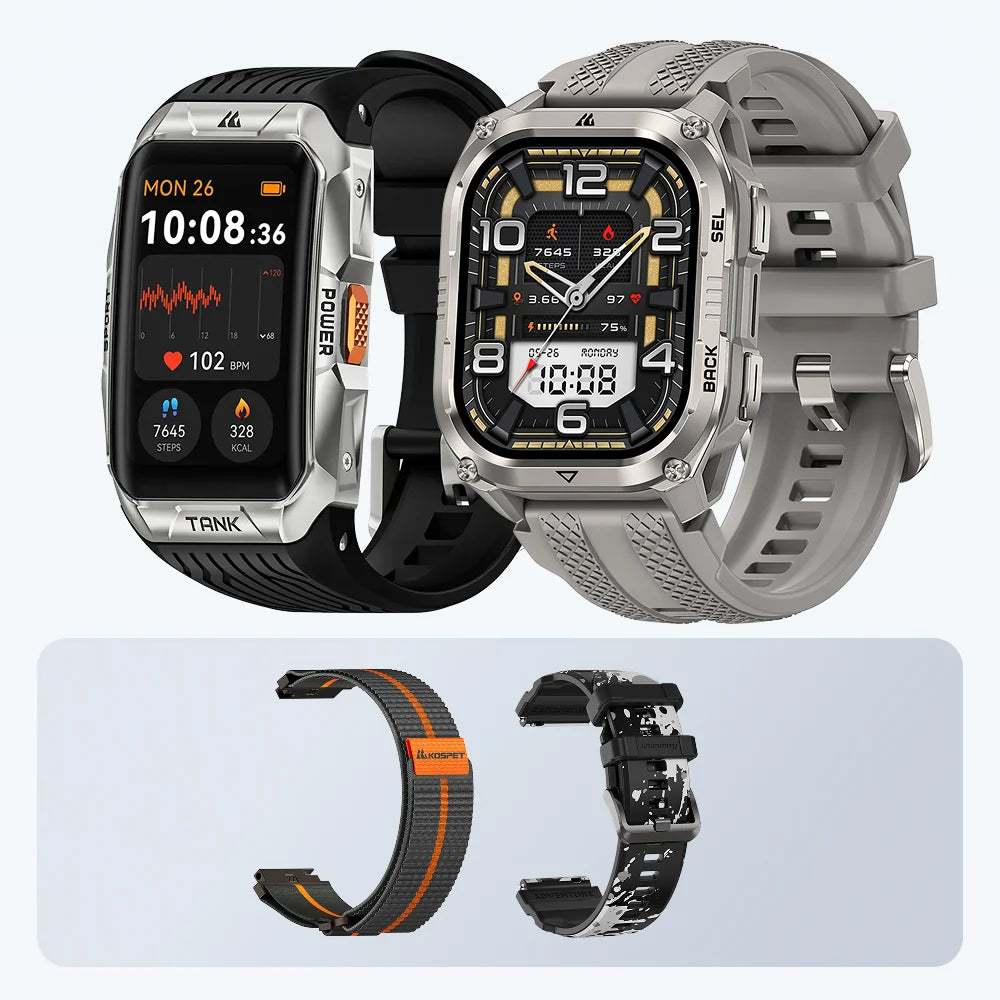
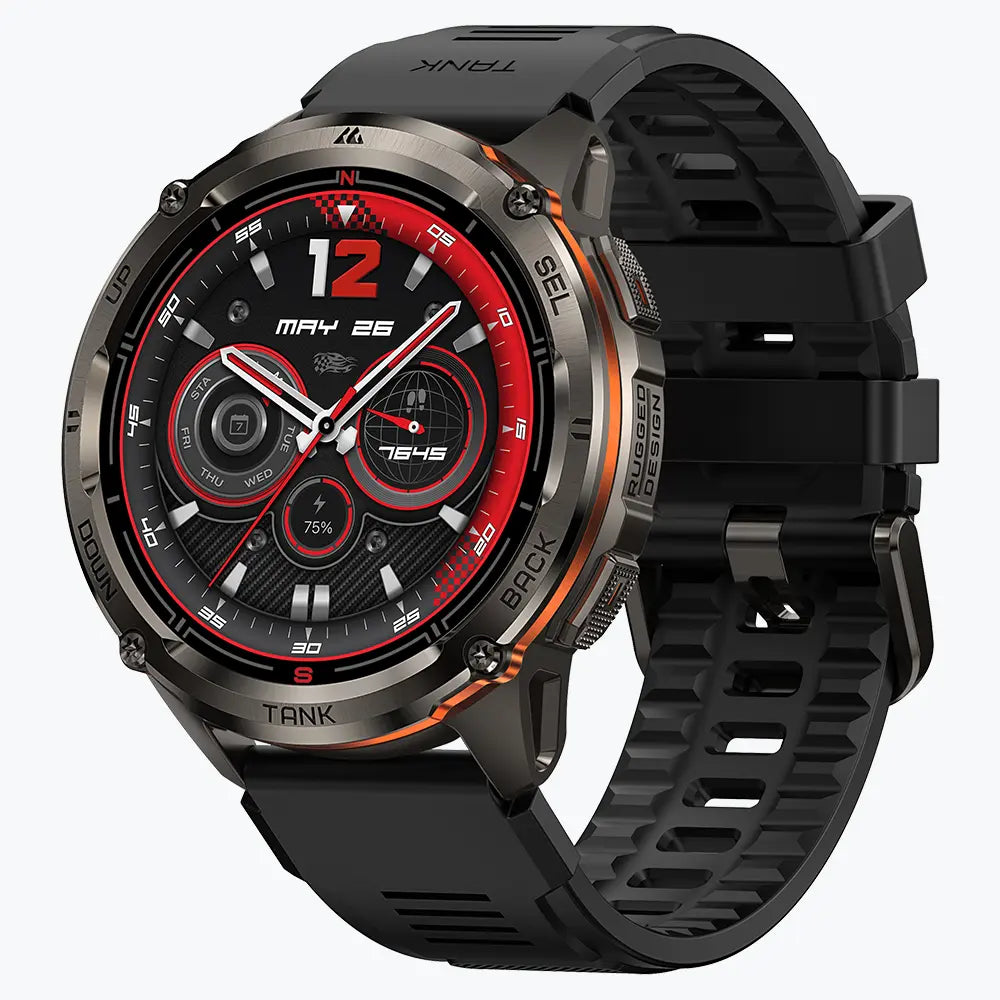


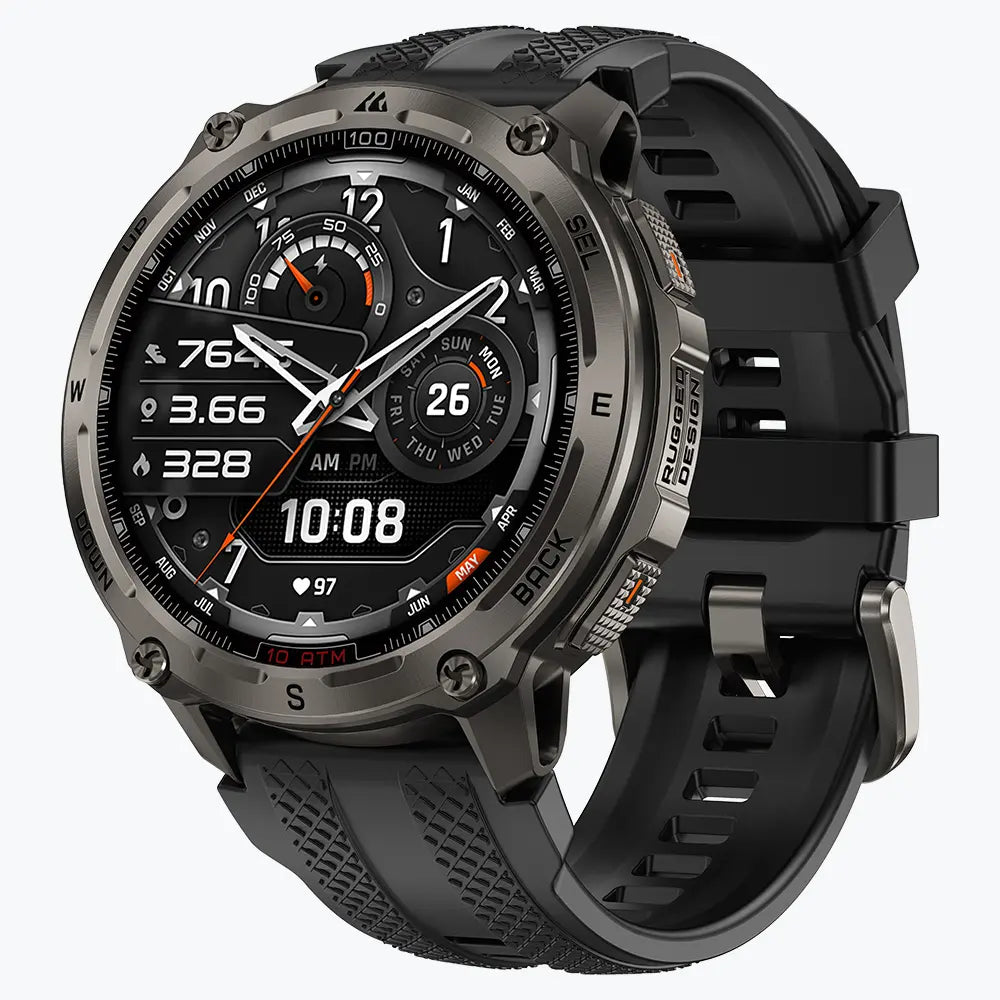
Durability ratings are selection tools, not a ranking system. IP codes describe protection against dust and water ingress. ATM ratings measure resistance to water pressure. MIL-STD-810H refers to selected environmental tests. None of these labels proves that a smartwatch can survive every outdoor hazard.
The right approach starts with the activity. Outdoor workers need dust protection and impact-resistant construction. Hikers need dependable controls, navigation, and battery life. Swimmers require activity-specific water approval. Extreme-weather users must check operating limits as well as laboratory tests.
Takeaway: Identify the main hazard, find the rating that measures it, and examine everything the test leaves out. Construction, maintenance rules, and warranty exclusions remain part of the buying decision.
After understanding these limits, buyers can browse a rugged smartwatch collection and compare models by use case instead of choosing the longest specification list.

How Rugged Smartwatch Durability Ratings Work
IP, ATM, and MIL-STD-810H measure different forms of protection. Reading them as interchangeable claims leads to poor comparisons.
| Rating | What it measures | What remains unknown |
|---|---|---|
| IP | Dust and water entering the enclosure | Shock, scratches, swimming suitability, and strap strength |
| ATM | Resistance to water pressure | Dust protection, impact resistance, and dive certification |
| MIL-STD-810H | Selected environmental test methods | Whether every test was completed or independently verified |
The strongest product claim identifies the standard, test conditions, and specific model evaluated.
IP Ratings for Dust and Water Protection
An IP code contains two positions. The first numeral describes protection against solid objects. The second covers water.
An X means that no rating has been declared for that position. It does not mean the product has zero protection. The format is defined by IEC 60529.
| IP code | What it tells you |
|---|---|
| IP6X | The enclosure carries the highest listed dust-protection level |
| IP67 | Dust protection plus temporary immersion under defined conditions |
| IP68 | Dust protection plus immersion under conditions stated by the manufacturer |
| IP69/IP69K | Protection against specified high-pressure water exposure |
The code applies to the enclosure. It does not evaluate screen scratches, bezel deformation, broken buttons, loose lugs, or strap failure.
IP68 also lacks one universal immersion depth. The brand must state the depth and duration used for the product. The IEC IP guide explains the rating structure, while the product manual defines practical limits.
Check four details before accepting an IP claim:
- Which numeral applies to dust?
- Which numeral applies to water?
- What depth and duration were tested?
- Which activities does the manufacturer approve?
ATM Ratings for Swimming and Water Sports
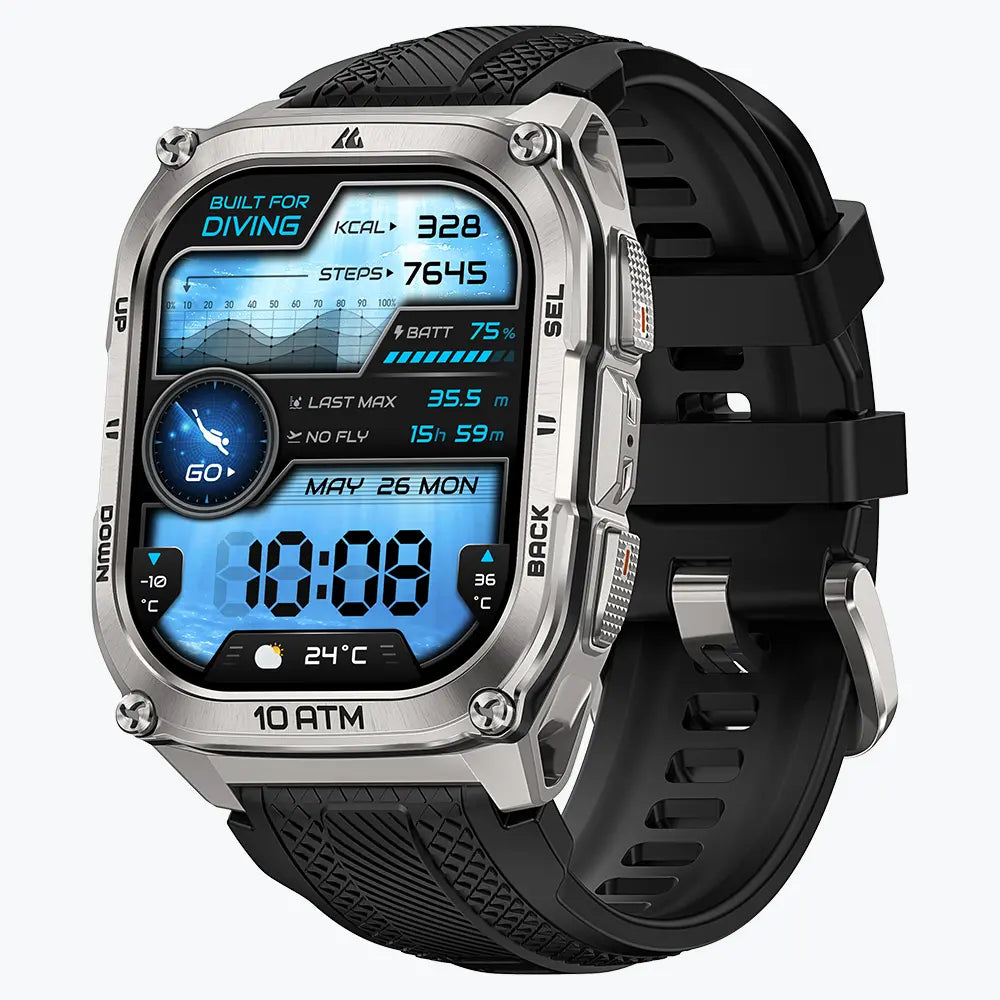
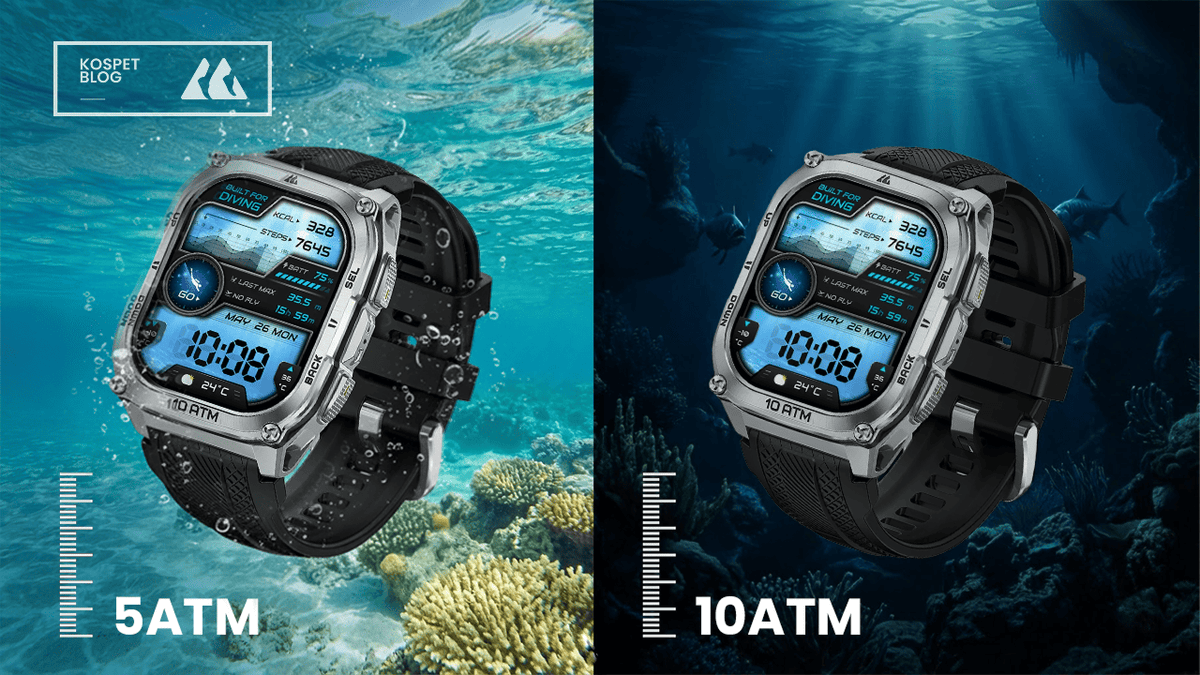
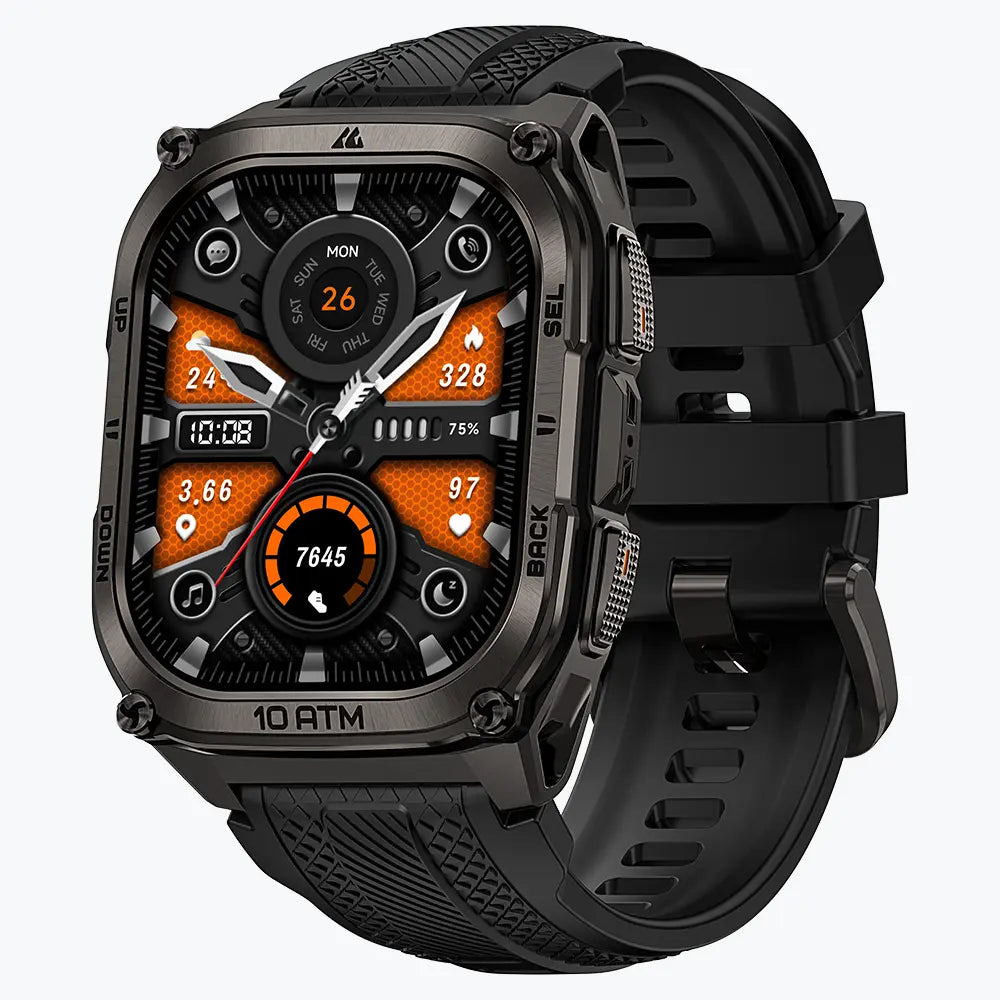
ATM ratings describe pressure resistance. A 5 ATM watch is tested at pressure equivalent to a 50-meter static water column. A 10 ATM model uses pressure equivalent to 100 meters.
These figures represent test pressure. They are not recommended diving depths.
The water-rating guide connects common ATM levels with typical activities:
| ATM rating | Commonly associated activities | Additional checks |
|---|---|---|
| 3 ATM | Rain, splashes, and limited daily water exposure | Swimming approval |
| 5 ATM | Pool swimming and snorkeling | Fast water and diving restrictions |
| 10 ATM | Swimming and some high-speed water sports | Dive depth, software, and certification |
A high ATM number does not confirm that the watch contains a depth sensor or dive mode. Scuba use requires a separate product statement.
ISO 22810 covers water-resistant watches intended for daily use and swimming. The ISO overview places diver’s watches under a different standard.
That distinction creates a simple rule:
- 10 ATM supports a water-sports comparison.
- A stated dive depth supports a diving comparison.
- A dive standard and dive mode provide stronger scuba evidence.
MIL-STD-810H for Shock and Extreme Conditions
MIL-STD-810H contains environmental engineering guidance and laboratory test methods. These methods can address shock, vibration, rain, sand, dust, humidity, altitude, heat, cold, and temperature change.
The label does not represent one fixed test package. The DLA record explains that test methods are tailored to expected service conditions.
A manufacturer may complete several methods without running the entire set. For that reason, “MIL-STD-810H tested” provides less information than a published test list.
More useful evidence includes:
- The environmental stresses tested
- The number of completed procedures
- Test conditions and pass criteria
- The laboratory responsible
- A model-specific report or certificate
A claim becomes more credible when the test methods are named. Third-party laboratory details add another layer of verification. A general “military-grade” label provides little context on its own.
MIL-STD-810H should also be separated from IP and ATM ratings. Environmental testing may include rain, immersion, or dust procedures, but those methods do not automatically create an IP or ATM classification.
Glass and Case Protection Beyond Ratings
A watch may resist water while remaining vulnerable to surface damage. IP and ATM labels do not describe the strength of the display, bezel, lugs, or control buttons.
These parts need a separate construction review:
| Component | What to inspect |
|---|---|
| Display | Glass material, coating, and scratch-test claims |
| Bezel | Raised edge and coverage around the screen |
| Case | Material, reinforcement, and exposed joints |
| Buttons | Guards, spacing, and wet-hand usability |
| Lugs | Strap connection and visible weak points |
| Case back | Sensor protection and charging contacts |
The distinction also appears in the ISO watch catalog. Water resistance, shock resistance, scratches, and impact testing belong to different standards.
Sapphire, Gorilla Glass, stainless steel, and reinforced polymer describe materials. They do not guarantee the performance of the complete watch. A strong cover can still sit inside a poorly protected case.
Which Durability Ratings Fit Your Activities?
A suitable rating depends on the environment. The same watch rarely offers equal value for job sites, mountain trails, pools, and winter expeditions.
Everyday Use and Outdoor Work
Outdoor work brings together abrasive dust, mud, rain, sweat, tools, and hard surfaces. The most relevant protection starts with enclosure sealing and structural design.
Prioritize:
- A declared dust-protection level
- Water protection for rain, mud, and cleaning
- Reinforced case edges
- Protected physical buttons
- Controls that work with gloves
- A replaceable, washable strap
The IP scope supports comparisons involving dust and water ingress. Impact resistance requires separate construction or test evidence.
A diver’s watch may offer little extra value on a construction site. A built-in flashlight, guarded screen, long battery life, or physical controls can provide greater daily benefit.
Work conditions also affect the product format. A large touchscreen may display more information. Raised edges and spaced buttons usually provide better control around gloves, dirt, and moisture.
Hiking and Mountain Biking
Trail environments combine rain, grit, vibration, branches, rocks, and limited access to charging. Durability matters, but survival alone does not make a watch useful outdoors.
| Durability requirement | Field requirement |
|---|---|
| Rain and dust protection | Readable display |
| Shock and vibration evidence | Stable GPS tracking |
| Protected screen edges | Physical controls |
| Secure strap attachment | Route navigation |
| Declared temperature limits | Sufficient GPS battery life |
Mountain biking adds continuous vibration and a higher chance of direct impact. Screen position and strap security deserve more attention in this scenario.
Hiking shifts the priority toward route tools and endurance. Offline maps, route import, a compass, and return navigation reduce dependence on a phone. These functions should be evaluated separately from physical durability.
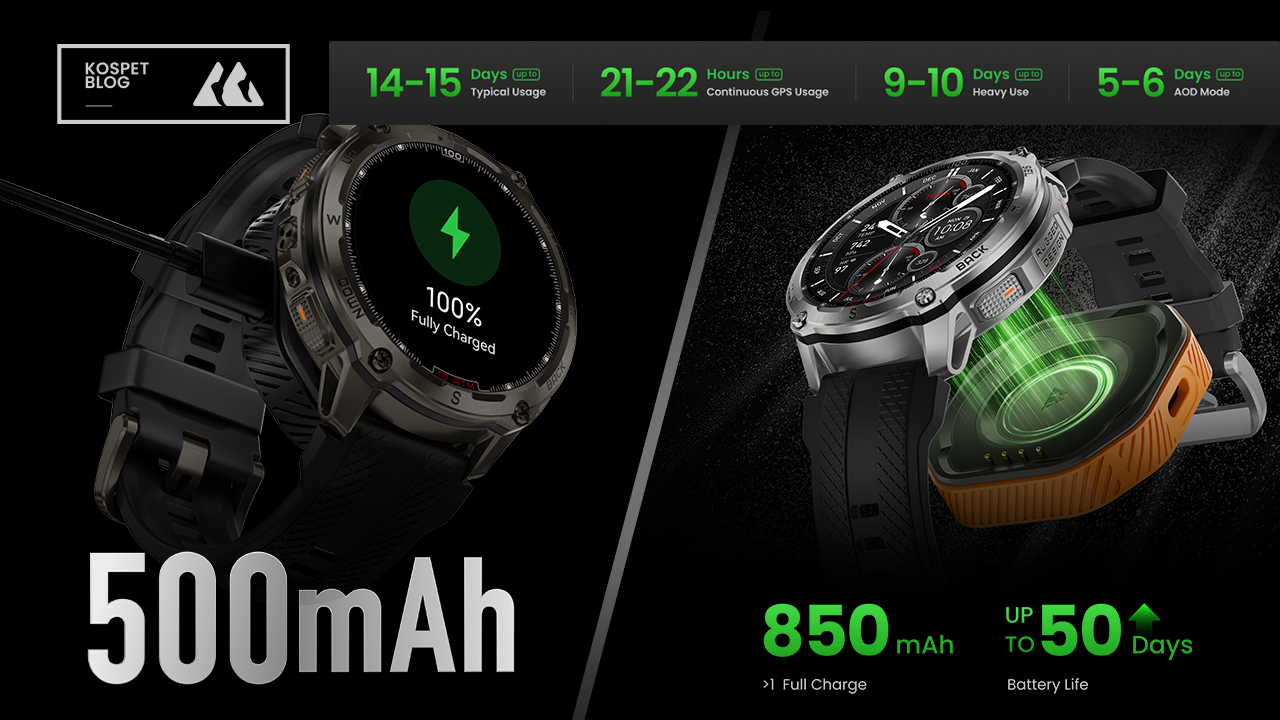
Battery claims also require context. Compare continuous GPS time rather than general smartwatch mode. The latter may exclude long navigation sessions, frequent screen use, and low temperatures.
Swimming and Water Sports
Water activities create different forms of pressure. Pool laps, surfing, snorkeling, and scuba diving should not share one durability requirement.
| Activity | Minimum evidence to seek |
|---|---|
| Pool swimming | 5 ATM plus an approved swimming mode |
| Open-water swimming | Water approval, GPS tracking, and secure controls |
| Surfing or fast water | 10 ATM or WR100 with activity-specific permission |
| Recreational diving | Stated dive depth, depth data, and dedicated dive modes |
Water speed matters as much as depth. A fast jet, fall into water, or strong wave can place different pressure on the enclosure.
Scuba buyers should look for a product statement that names the maximum operating depth. ISO 6425 provides separate requirements for diver’s watches. Smartwatches with depth instruments may reference other diving standards, so the exact certification still needs confirmation.
Saltwater introduces corrosion and residue. Rinse the watch with fresh water after ocean use. Dry the case before charging, and follow the band-care instructions.
Hot water needs separate attention. Steam and heat can affect seals even when the product carries a strong water rating.
Cold, Heat, and Extreme Environments
A temperature test does not always equal a continuous operating range. The first checks whether a device survives defined conditions. The second states when normal functions remain available.
Look for both types of information:
- On-wrist operating temperature
- Storage temperature
- Charging limits
- Low-temperature battery performance
- GPS endurance in cold conditions
- Altitude and humidity limits
- High- and low-temperature test methods
Battery performance often changes in severe cold. Displays, sensors, and charging systems may also operate differently. A general MIL-STD-810H statement does not reveal these limitations.
The MIL scope allows manufacturers to select relevant procedures. Buyers should therefore look for named temperature tests and a separate operating table.
Extreme-environment users also need suitable accessories. Metal bracelets can feel uncomfortable in deep cold. Thick gloves may block small buttons. Sweat, salt, and sunscreen can affect straps during hot-weather use.
What Durability Ratings Don’t Guarantee
Laboratory results reduce uncertainty, but they cannot reproduce every accident. Product age, maintenance, chemicals, and earlier damage all influence real-world performance.
Lab Tests vs Real-World Conditions
A laboratory controls the exposure. Outdoor conditions combine several hazards at once.
| Laboratory condition | Real-world complication |
|---|---|
| Clean water | Salt, chlorine, mud, or soap |
| Fixed temperature | Rapid temperature changes |
| Controlled impact | An uneven rock or metal edge |
| New enclosure | Aging seals and earlier drops |
| Defined duration | Prolonged or repeated exposure |
A watch may pass a rain test without being suitable for scuba diving. It may survive vibration yet remain vulnerable to a sharp screen impact.
Test results answer a narrow question: did the tested sample meet the stated procedure? They do not promise unlimited protection across every environment.
Water Resistance Over Time
Water resistance can change as seals and adhesives age. Drops, chemicals, heat, and repairs may accelerate that process.
Official water-resistance guidance states that protection is not permanent and can diminish over time. It also identifies drops, soap, solvents, steam, and high-velocity water as possible risks.
Simple care reduces avoidable exposure:
- Rinse saltwater and chlorine residue.
- Dry the watch before charging.
- Keep soap and solvents away from seals.
- Avoid saunas and hot showers.
- Inspect the case after a hard fall.
- Follow the model-specific cleaning instructions.
Water Lock protects against accidental screen input. It does not improve the physical seal or raise the water-resistance rating.
Damage Not Covered by Ratings
Headline ratings leave several common failures outside their scope.
| Damage | Why the rating may not apply |
|---|---|
| Scratched display | IP and ATM do not measure surface hardness |
| Cracked screen | Enclosure sealing does not prevent every impact |
| Broken strap or lug | Accessories may sit outside the case rating |
| Chemical damage | Test liquids may differ from soaps, oils, and solvents |
| Worn seals | The rating reflects the tested condition |
| Accidental drops | Test procedures and warranty terms may differ |
Warranty coverage is a separate contract. A consumer warranty may exclude damage caused by accidents, misuse, water, or other external causes.
A water-resistant label therefore does not guarantee free repair after every liquid-related failure. Local consumer laws may provide additional rights, but they remain separate from the durability rating.
Claims, Reports, and Warranty Coverage
A product claim becomes more useful as supporting detail increases.
Before checkout, open four sources:
- Product page: Confirm the exact model and rating.
- Test page: Find the methods, laboratory, and scope.
- User manual: Review activity limits and maintenance.
- Warranty page: Identify damage exclusions.
A laboratory result should not be treated as permission to recreate the test. Drop tests do not invite repeated drops. Pressure testing does not approve every high-pressure water source. Temperature testing does not replace the stated operating range.
Use this final verification checklist:
- The model name matches the test claim.
- The approved activity appears in writing.
- Water depth and duration are stated.
- Environmental methods are identified.
- Normal-use restrictions are clear.
- Warranty exclusions are acceptable.
Rugged Smartwatches Compared by Use Case
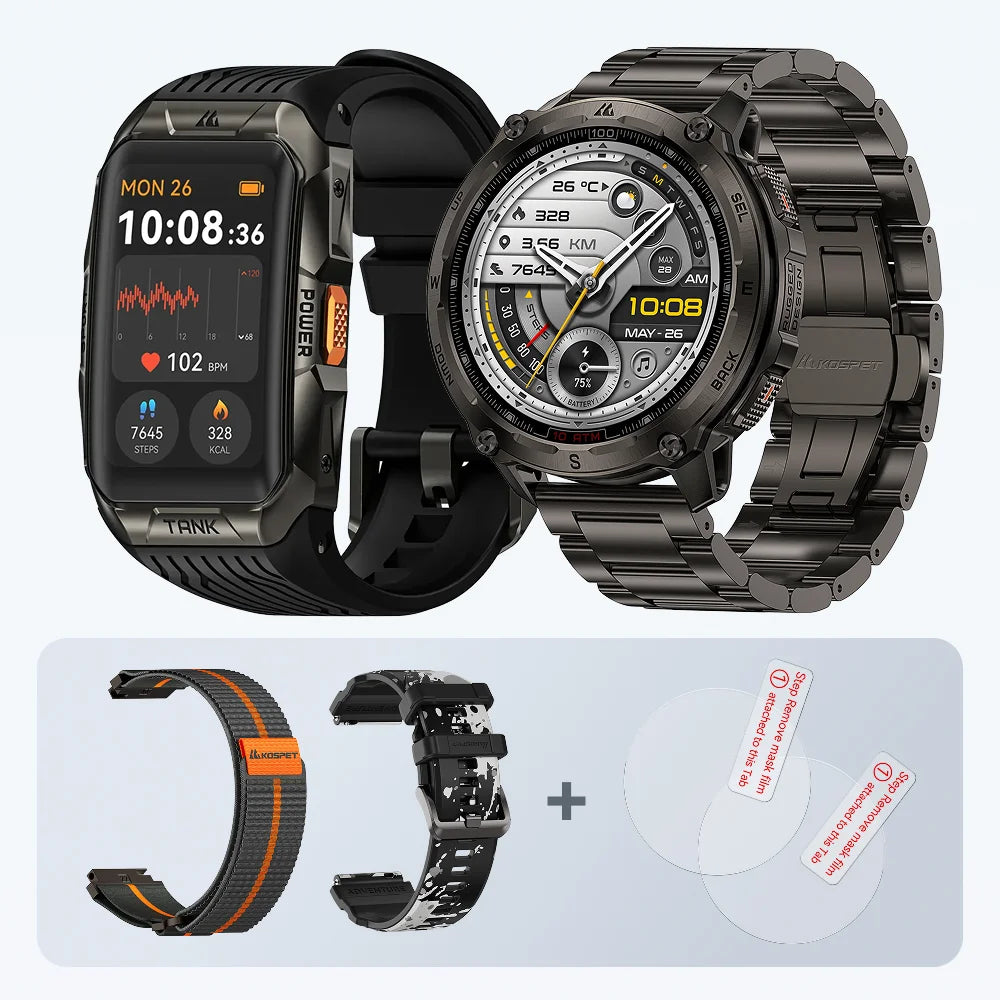
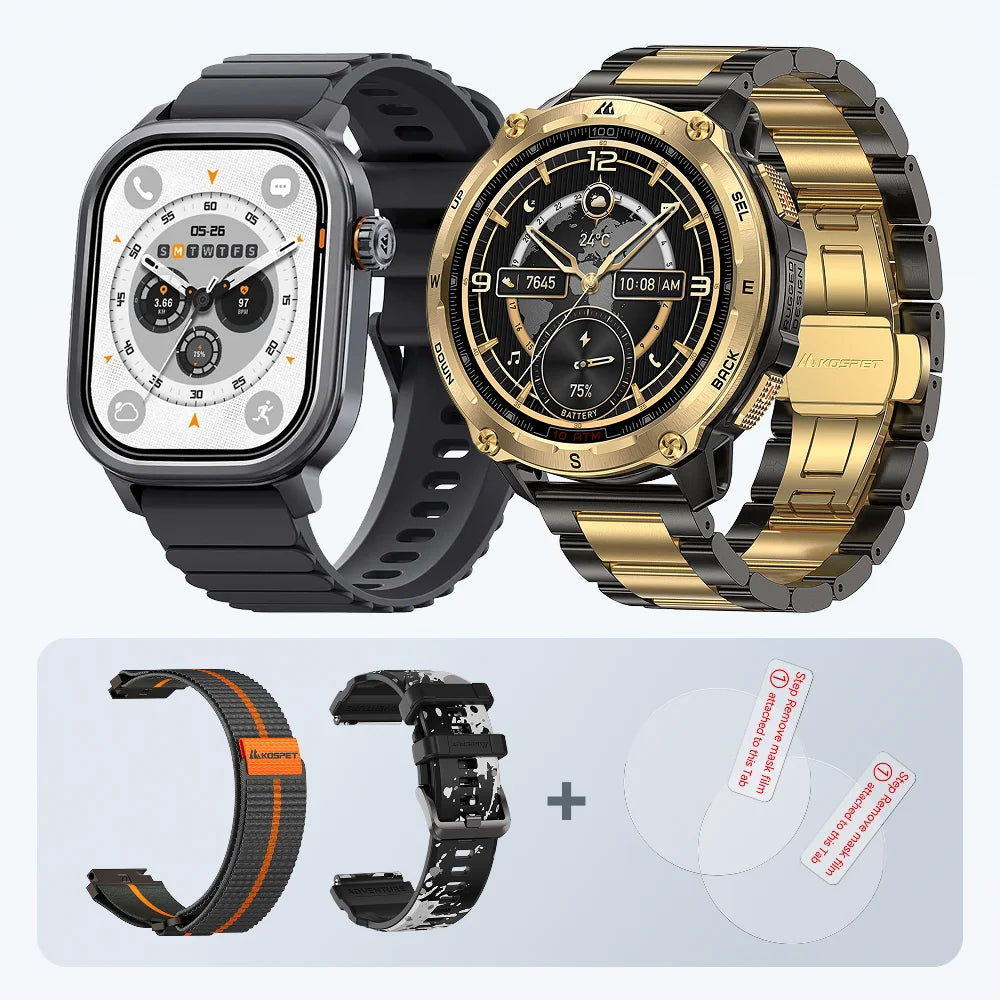
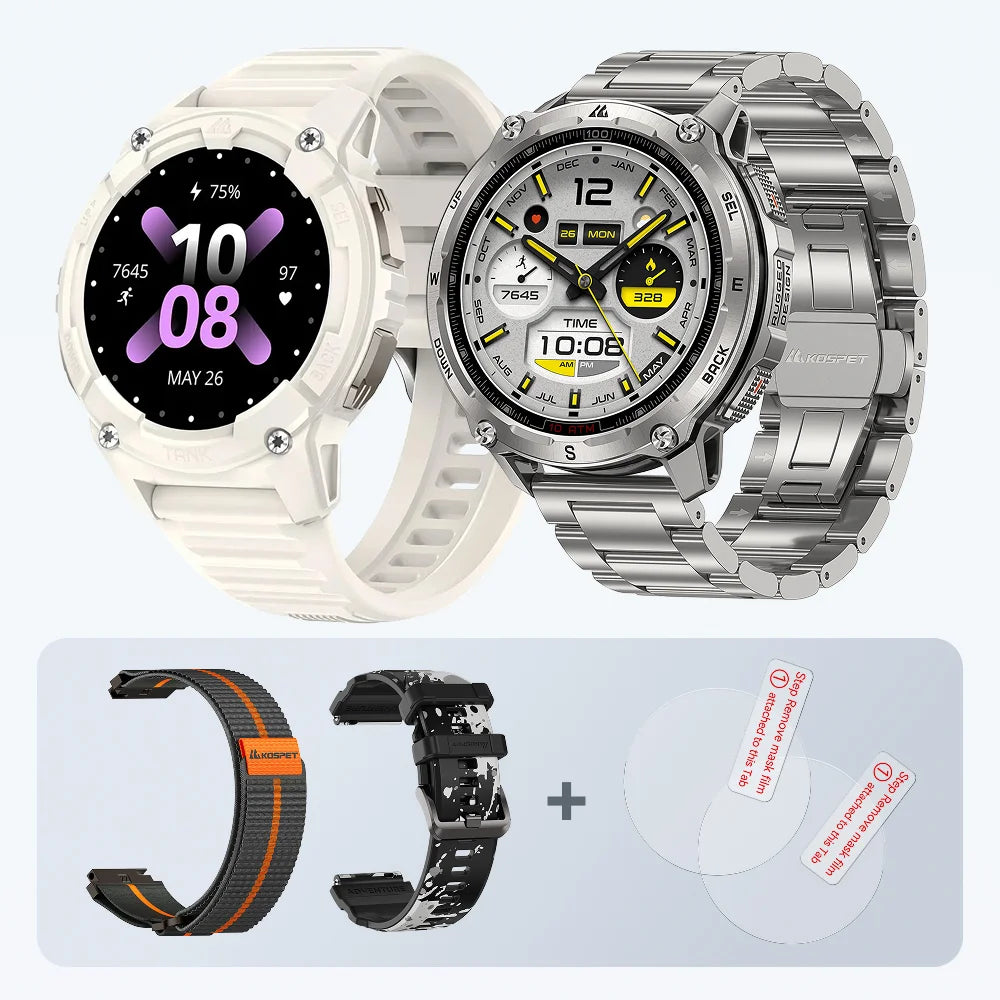
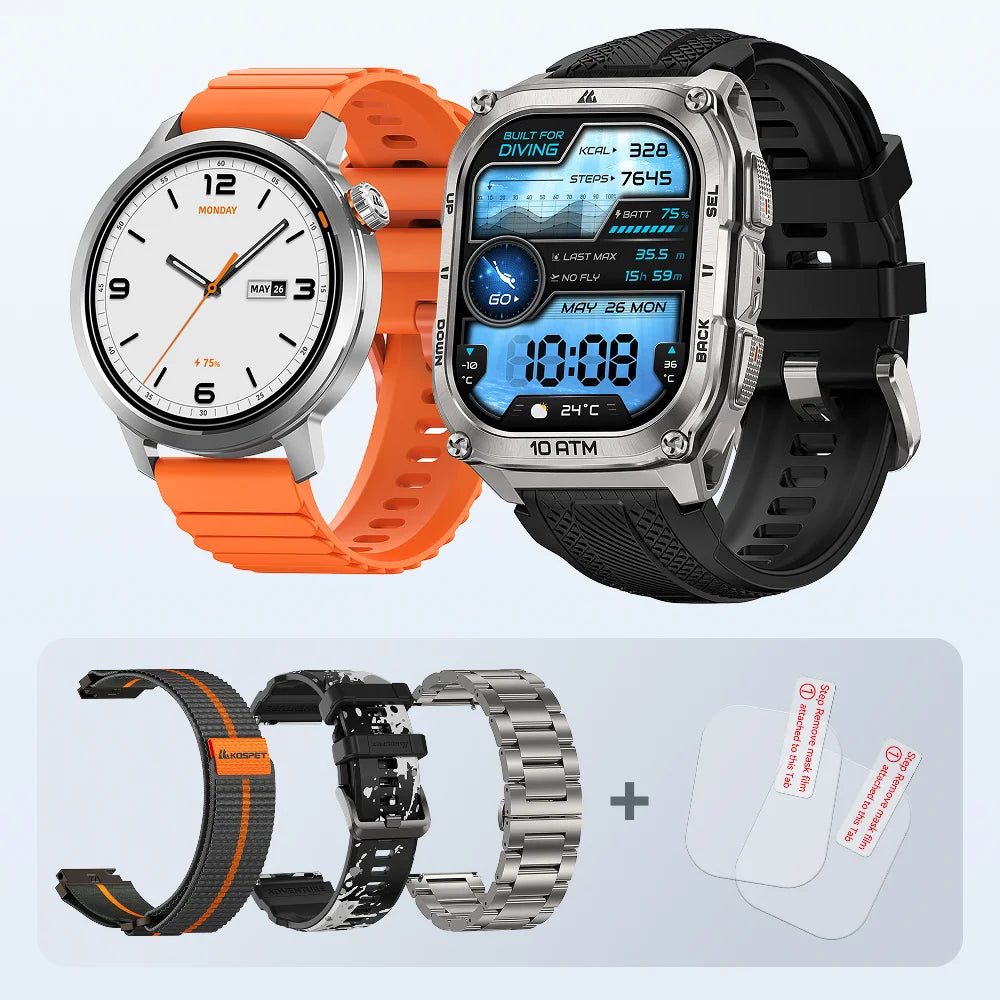
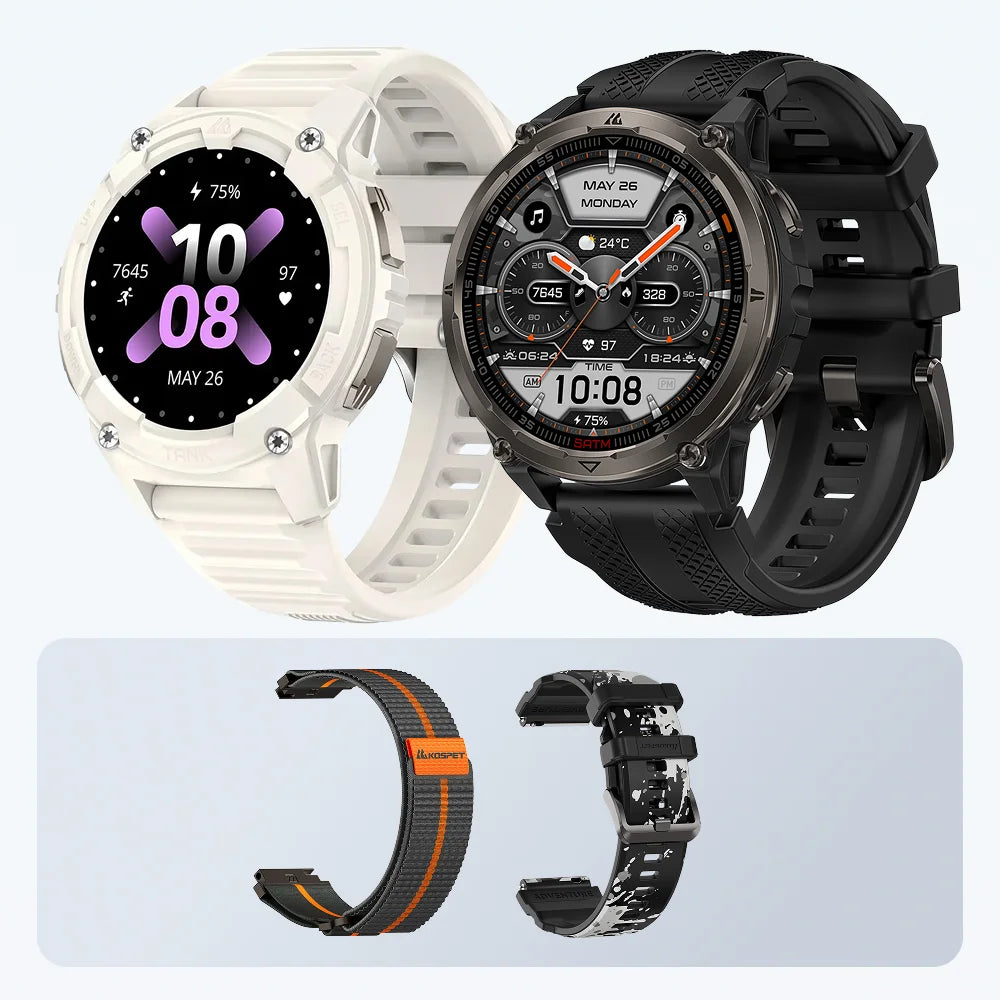
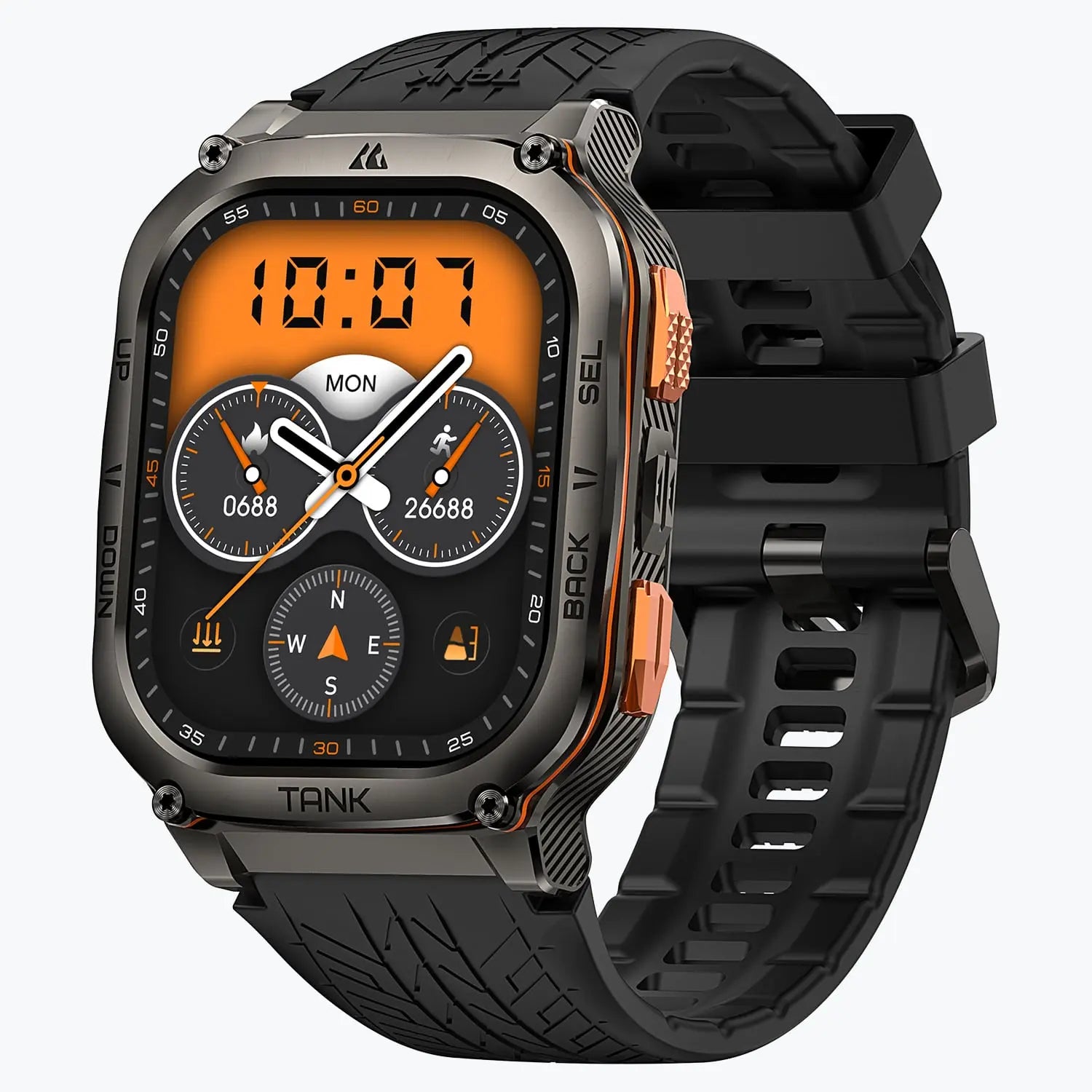
KOSPET TANK T4 Smartwatch
$209.99 USD
| Use case | KOSPET TANK model | Relevant durability evidence | Useful features | Check before buying |
|---|---|---|---|---|
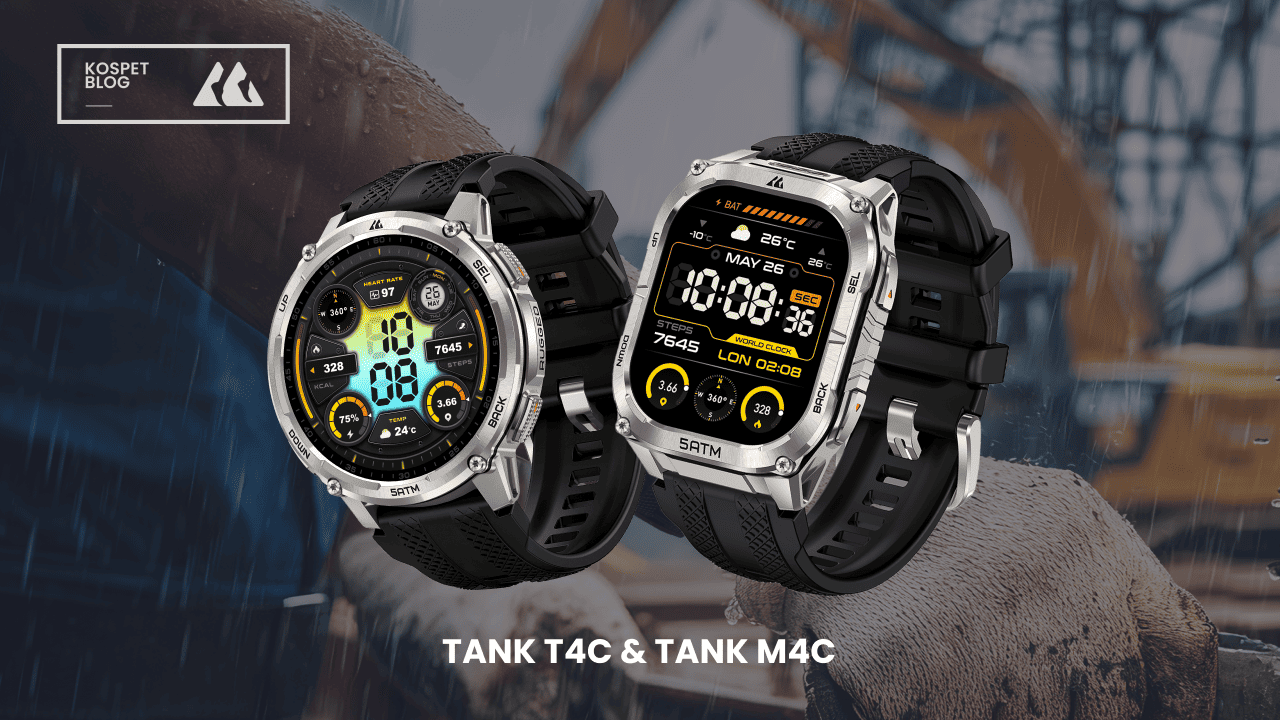
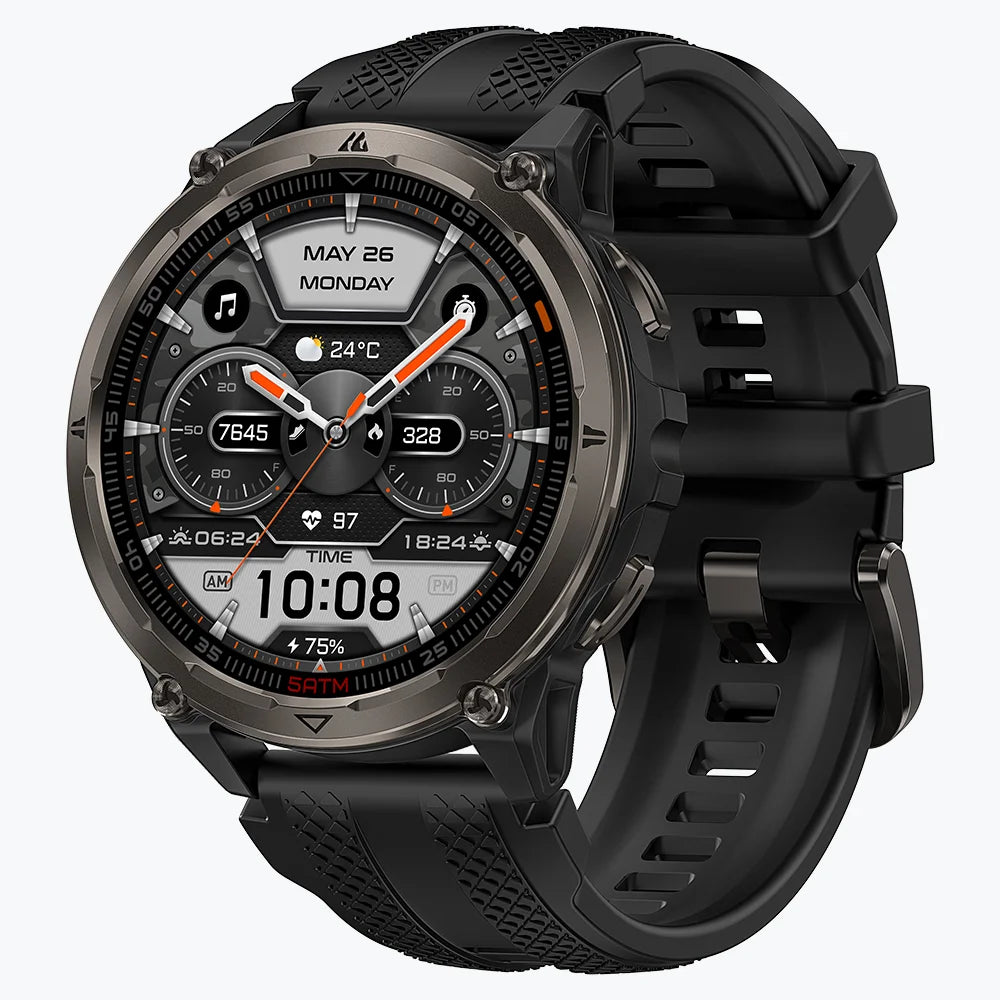
| Outdoor work and job sites | TANK T4C | 5 ATM, IP69K, reinforced structure | Five-level flashlight, walkie-talkie, physical buttons, up to 15 days of typical use | No detailed 20-method test list is published on the product page |
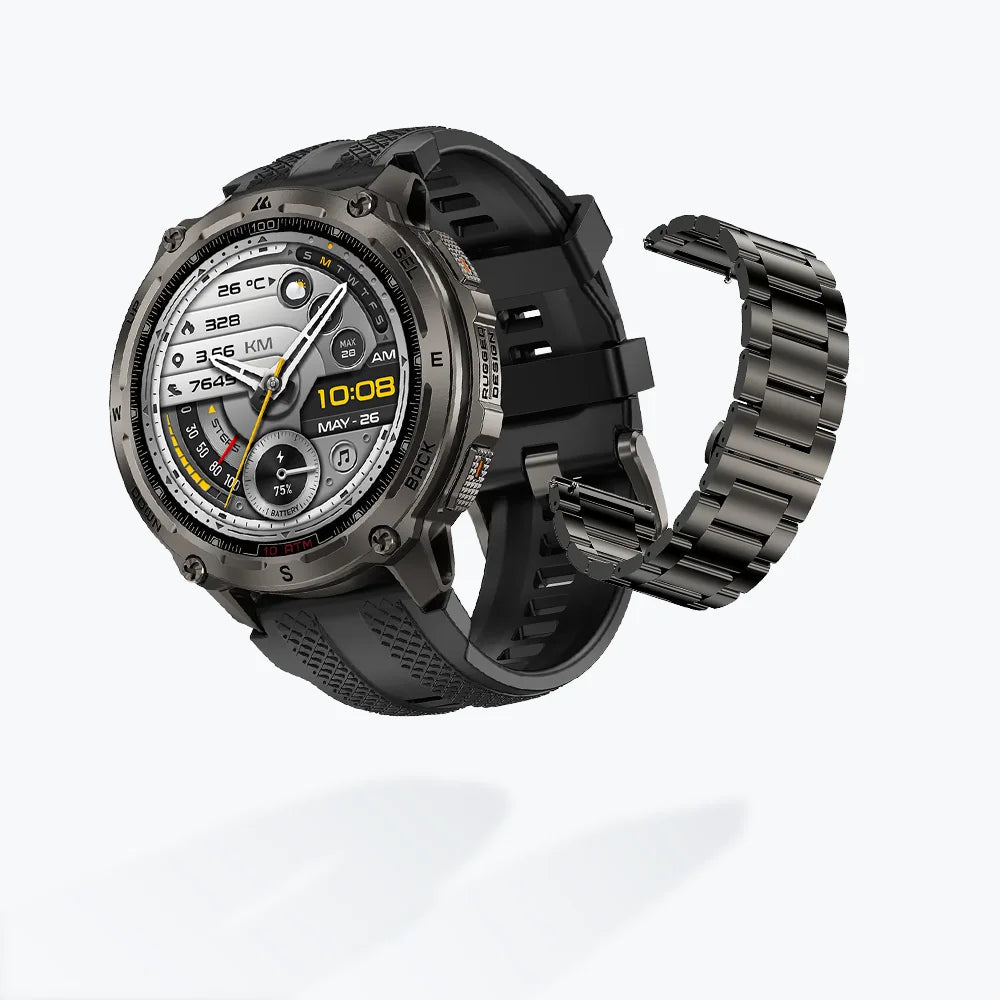
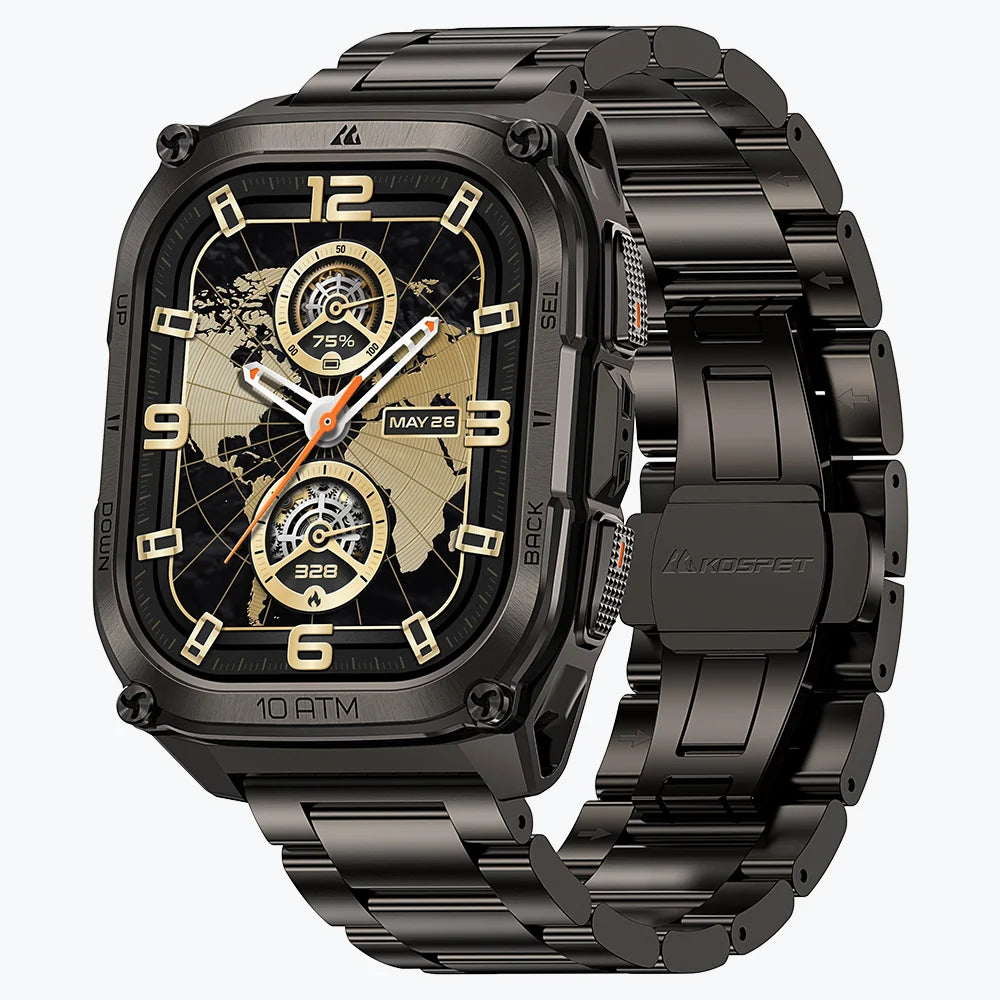
| Hiking and trail navigation | TANK T4 | 10 ATM, IP69K, 20 MIL-STD-810H tests, SGS testing | Offline maps, route import, dual-band GNSS, up to 22 hours of GPS | Large stainless-steel case and model-specific battery assumptions |
| Swimming and recreational diving | TANK M4 | 10 ATM, IP69K, 20 MIL-STD-810H tests, dive support to 45 meters | Freedive, scuba, and gauge modes with depth data | Hot-water restrictions and gradual loss of water resistance |
| Everyday training and smaller wrists | TANK S2 | 5 ATM, IP69K, 15 MIL tests | Dual-band GNSS, compass, altimeter, multiple colors, lighter design | Lower water capability than the 10 ATM T4 and M4 |
FAQs
Is MIL-STD-810H Tougher Than MIL-STD-810G?
MIL-STD-810H is a newer revision, not a higher consumer durability grade. The letter identifies the version of the standard. It does not show how many tests a smartwatch completed.
A product tested under revision G may face stricter conditions than another product carrying an H claim. The result depends on the selected methods, test severity, duration, and pass criteria. Compare these details instead of treating “H” as an automatic upgrade. The official DLA record explains how environmental tests are tailored.
Does IP69K Protect a Smartwatch From Saltwater Corrosion?
Not by itself. IP69K focuses on enclosure protection during specified high-pressure water tests. It does not certify long-term resistance to salt fog, seawater residue, or chemical corrosion.
Corrosion requires separate material evidence or a named salt-fog test. The IEC scope limits IP codes to enclosure ingress protection. After ocean use, rinse the watch with fresh water and follow its drying instructions.
Can a Case or Screen Protector Raise a Durability Rating?
No. A protective case or screen film cannot change the smartwatch’s official IP, ATM, or MIL-STD-810H result. Those claims apply to the configuration used during testing.
Accessories may reduce scratches or absorb minor contact. They can also affect button access, touch response, or water drainage. Remove them periodically to check for trapped grit, moisture, or case damage. Treat accessory protection as an extra layer, not a new certification.
Does Water Resistance Remain Valid After a Repair?
Not automatically. Replacing a screen, battery, button, or case back may disturb the original gasket or adhesive seal. The repair method determines whether the enclosure receives new sealing and pressure testing.
Use an authorized repair provider and request written confirmation of the post-repair water-resistance status. Policies vary by manufacturer. Some service guidance states that water resistance cannot be rechecked or resealed. Judge a repaired watch by its service documentation rather than the rating printed on the original box.