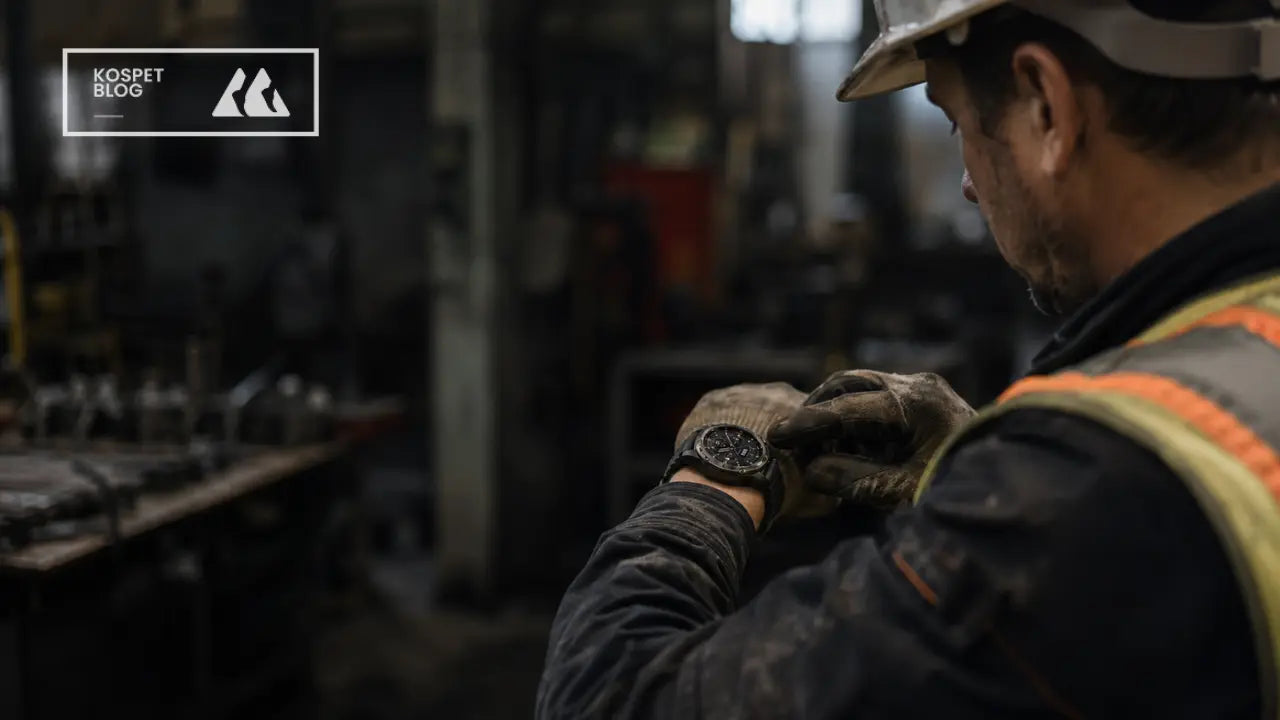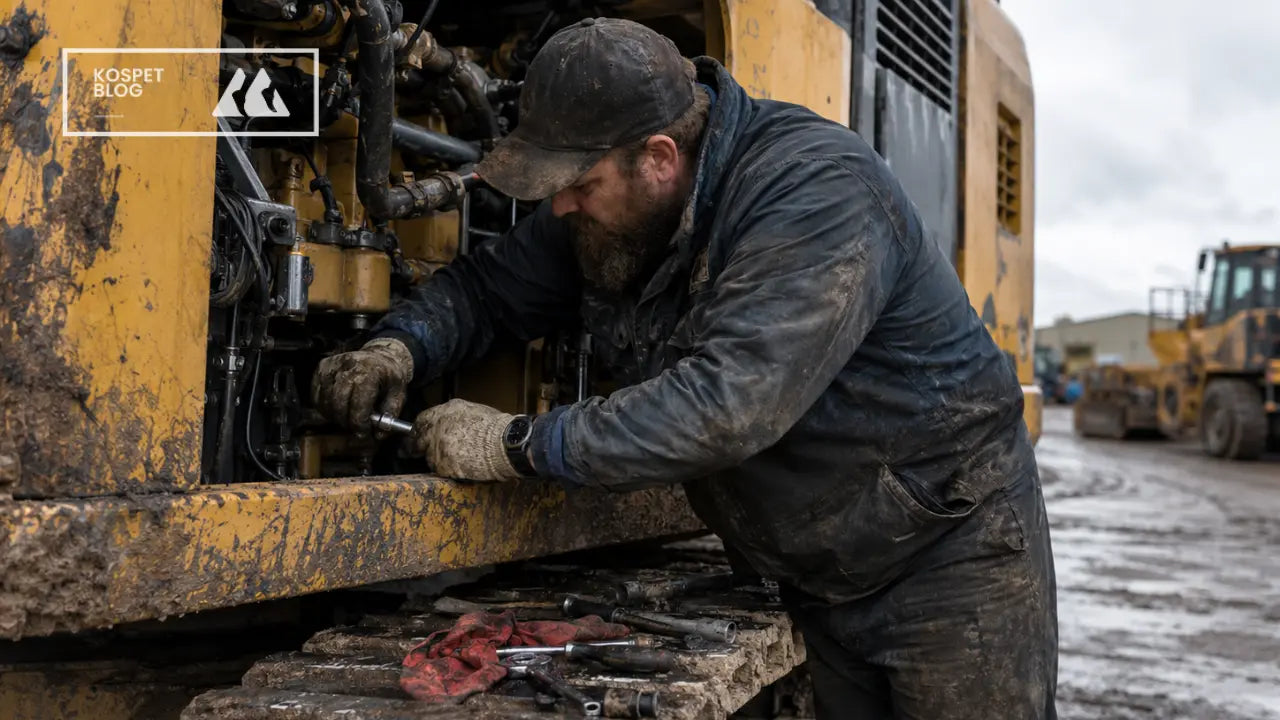

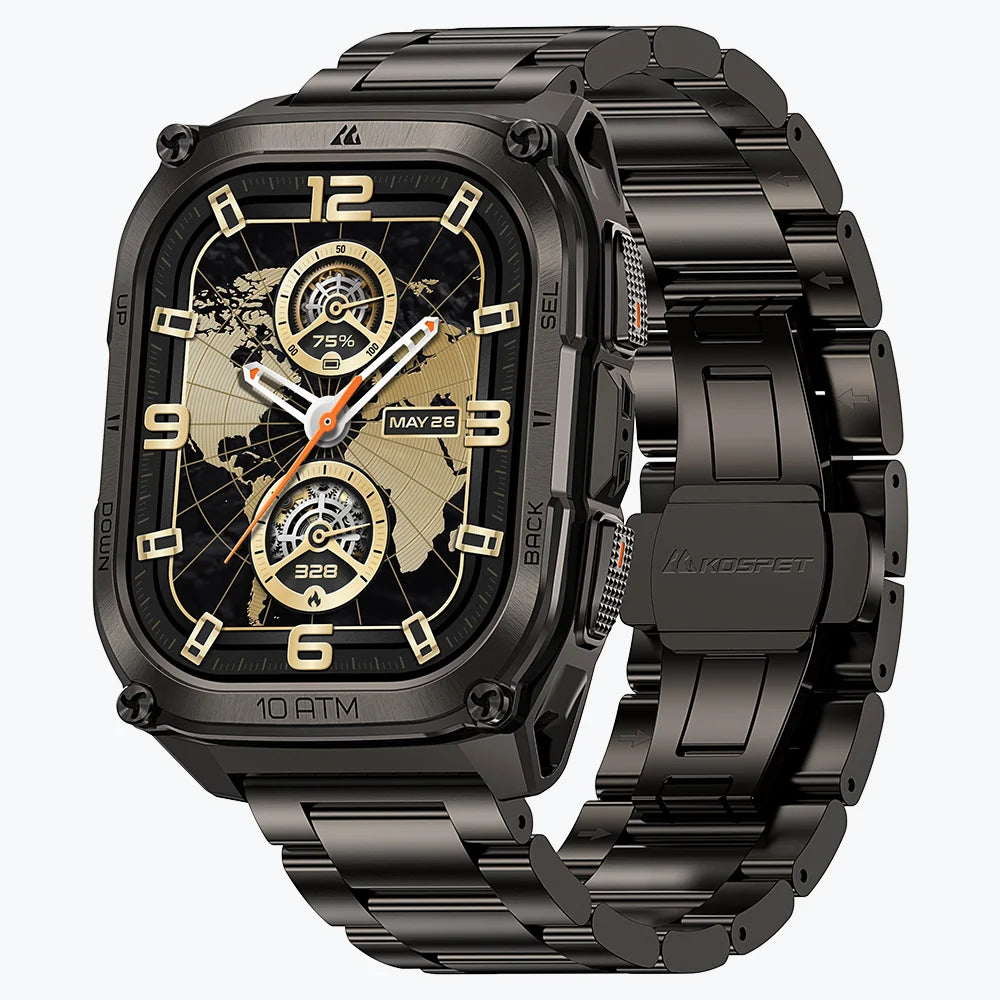



Rugged smartwatches can support electricians during routine, verified de-energized work where site policy permits wristwear. They come off before tasks near exposed energized parts. Rugged ratings describe resistance to impact, dust, water, and rough handling—not electrical insulation, arc protection, or hazardous-location approval.
For work-focused models with durable designs, long battery life, and practical jobsite tools, explore KOSPET rugged smartwatches for work and outdoor use.
This article uses United States OSHA requirements as its main regulatory reference. Local regulations, employer policies, and the job’s electrical safety program remain the final authority.

Can Electricians Wear Rugged Smartwatches Safely at Work?
Yes, across specific parts of the workday. A smartwatch belongs in planning, communication, and verified de-energized tasks. Exposed energized work sits outside that role.
A task-based answer
The smartwatch name does not decide whether the watch stays on the wrist. The work condition does.
| Work zone | Typical task | Role of the smartwatch |
|---|---|---|
| Routine | Briefings, schedules, stock checks, or travel between sites | Calls, reminders, weather, and timekeeping |
| Controlled | Installation or maintenance on equipment in an electrically safe work condition | Timers, notes, and team updates under site policy |
| Restricted | Testing, troubleshooting, or reaching near exposed energized parts | No useful role; this is a watch-free task |
| Classified | Work around ignitable gas, vapor, or dust | Only zone-certified equipment belongs here |
This division gives users a more useful answer than a simple “yes” or “no.” It also separates everyday convenience from electrical exposure.
Why electricians use smartwatches on ordinary jobs
A good work watch removes small delays. It does not need to run the job.
- Notifications stay visible while the phone remains secure.
- Timers support repeat checks, breaks, and scheduled work.
- A wrist flashlight helps in ceiling voids, basements, and dark corridors.
- Short voice updates keep nearby coworkers aligned.
- Multi-day battery life cuts charging during long assignments.
Electricians describe the same benefits in a field discussion about smartwatches at work. Common examples include quick messages, remote phone-camera views, flashlights, and hands-free calls. That feedback reflects daily usability rather than formal safety guidance.
Why Rugged Smartwatches Are Not Always Electrically Safe
A rugged case answers one question: how well does the watch handle a hard environment? Electrical safety asks another: does wristwear introduce contact, heat, ignition, or snagging risk during the task?
Rugged, insulated, and intrinsically safe are different claims
| Term | Meaning | Key limit |
|---|---|---|
| Rugged | Built for impact, vibration, dust, water, or temperature changes | No electrical protection claim |
| Shock-resistant | Tested against physical blows or vibration | “Shock” does not refer to electric current |
| IP or ATM rated | Tested under stated dust or water conditions | No arc-flash rating |
| Electrically insulated | Uses a tested insulating system for a defined application | Not a general claim for consumer watches |
| Intrinsically safe | Certified to limit ignition energy in a specified hazardous zone | Approval remains model- and zone-specific |
The language matters. “Military-grade” and “waterproof” can describe jobsite durability. Neither term places a watch inside an electrical PPE system.
What OSHA says about watches near energized parts
OSHA’s general-industry rule on conductive apparel covers jewelry and clothing that can contact exposed energized parts. Watch bands appear among its examples. For construction-related electrical work, OSHA 1926.960 addresses wristwatches and bands within reaching distance of exposed energized equipment.
These rules focus on exposure, not product branding. A watch sold for construction work still falls under the task’s hazard assessment and the employer’s wristwear policy.
Why a silicone strap does not certify the whole watch
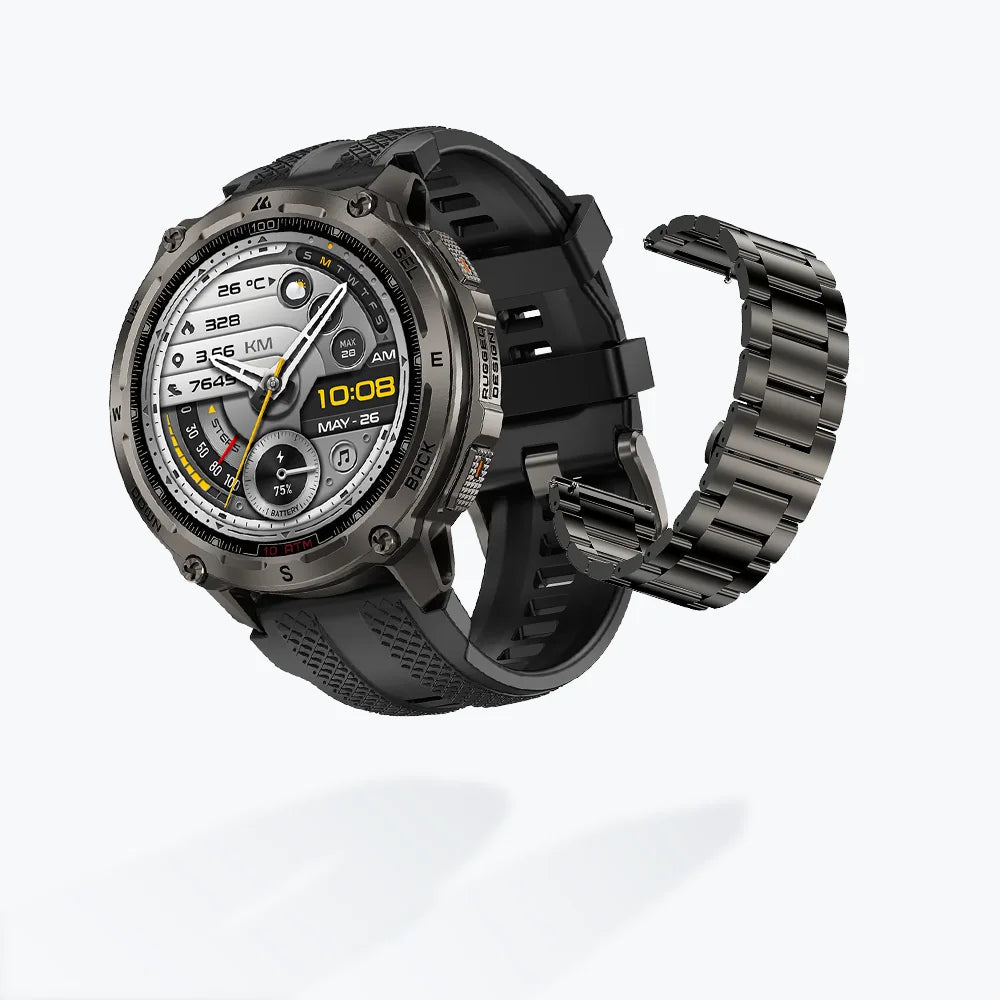
Silicone, resin, and fabric straps reduce exposed metal around the wrist. They also handle sweat and repeated movement well. The rest of the device still matters.
Cases, bezels, buckles, buttons, sensors, and charging contacts can contain conductive parts. Changing the strap improves comfort. It does not turn a consumer smartwatch into tested insulation or arc-rated equipment.
Arc flash and hazardous locations need separate controls
An electrical arc produces extreme heat, pressure, bright light, and molten material. The OSHA explanation of arc-flash hazards notes that arc energy can rapidly heat and vaporize metal. That risk belongs in the electrical safety plan, not in a smartwatch feature list.
Hazardous gas and dust environments add ignition concerns. Only a model with approval for the assigned zone fits that setting. The ATEX/IECEx-certified IS-SW1.1 industrial smartwatch shows how specific that certification becomes. Standard rugged consumer watches occupy a different product category.
Which KOSPET Rugged Smartwatch Fits Electricians: TANK T4C or TANK M4C?
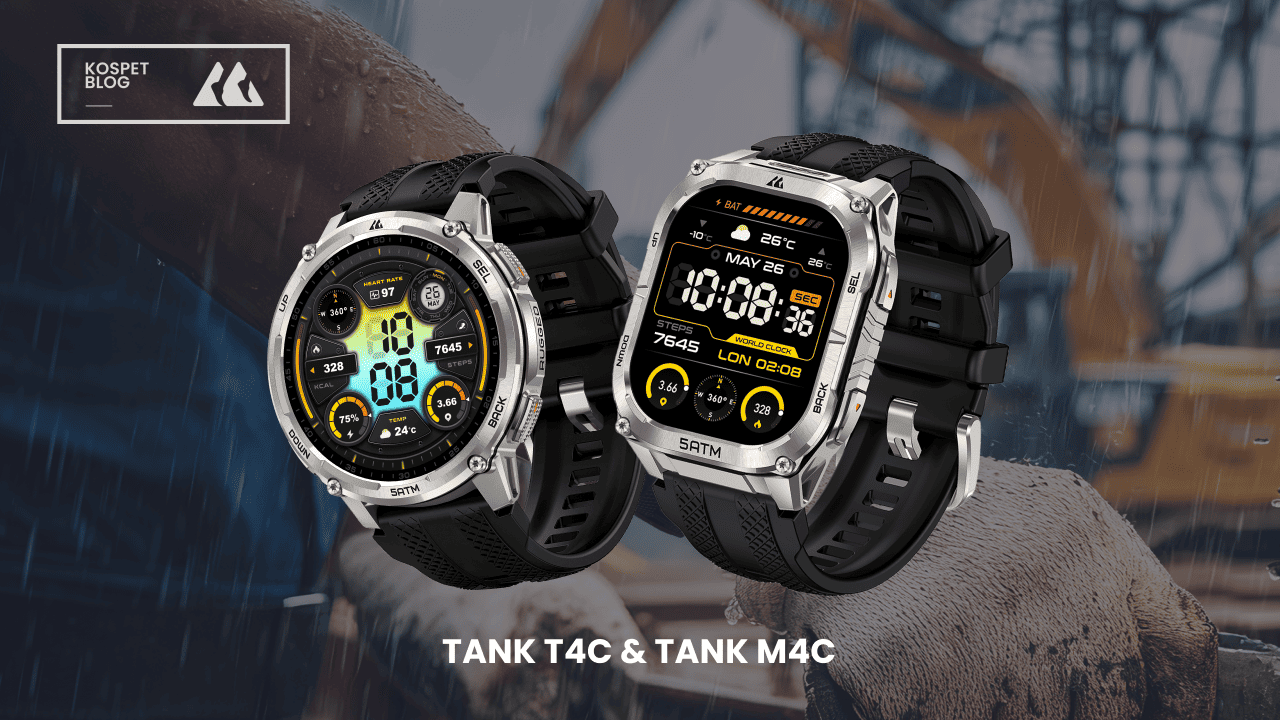
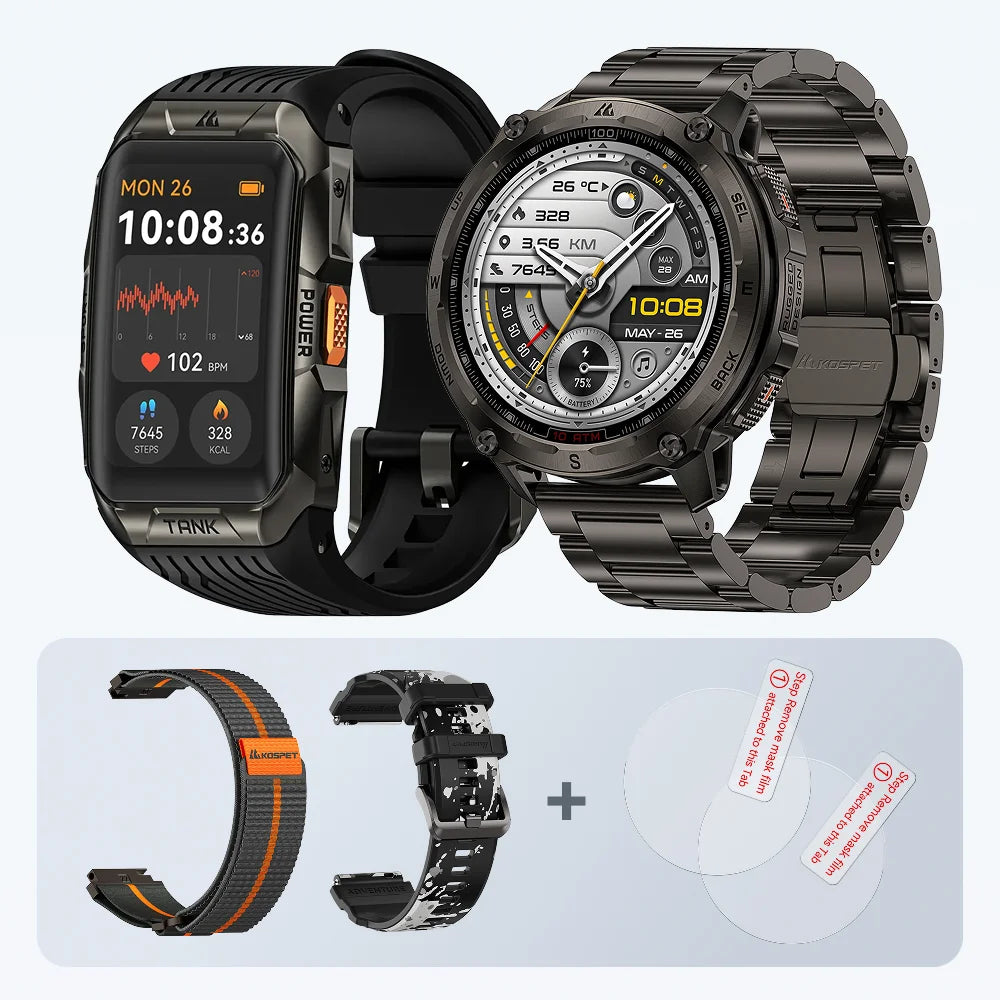
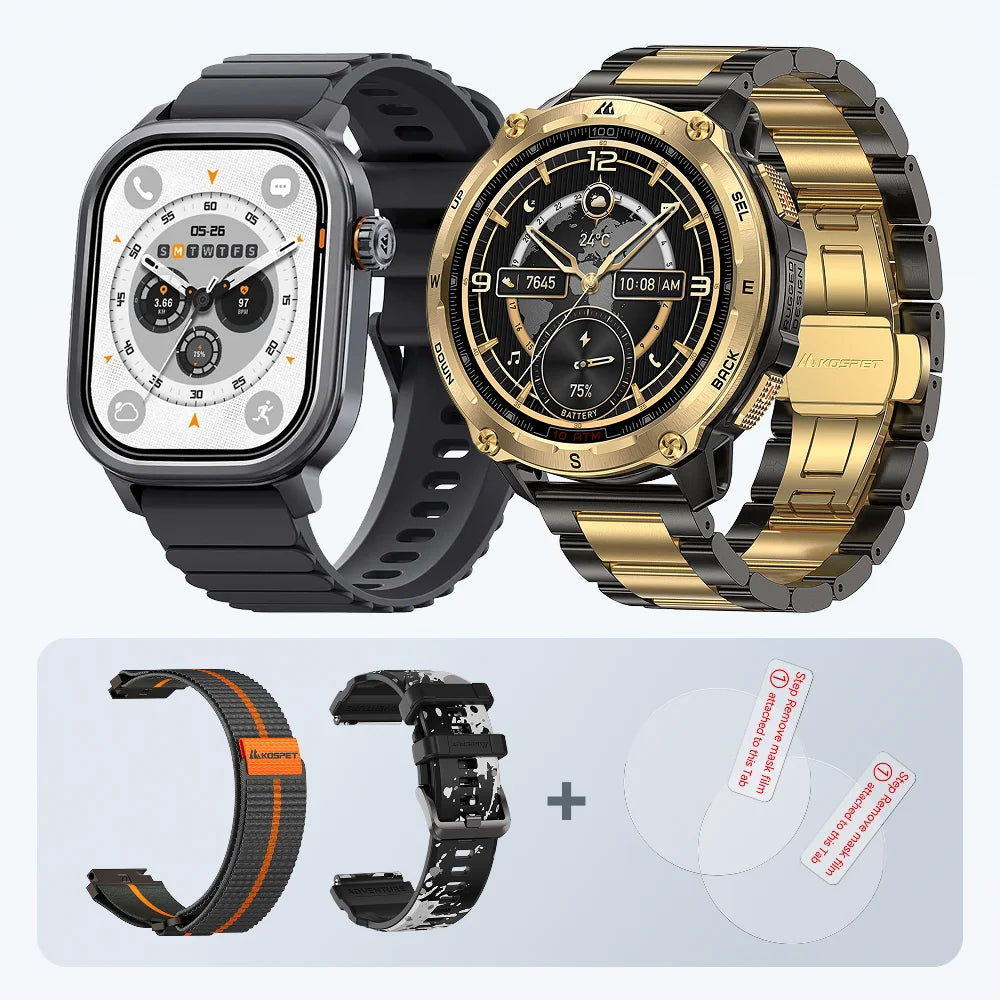
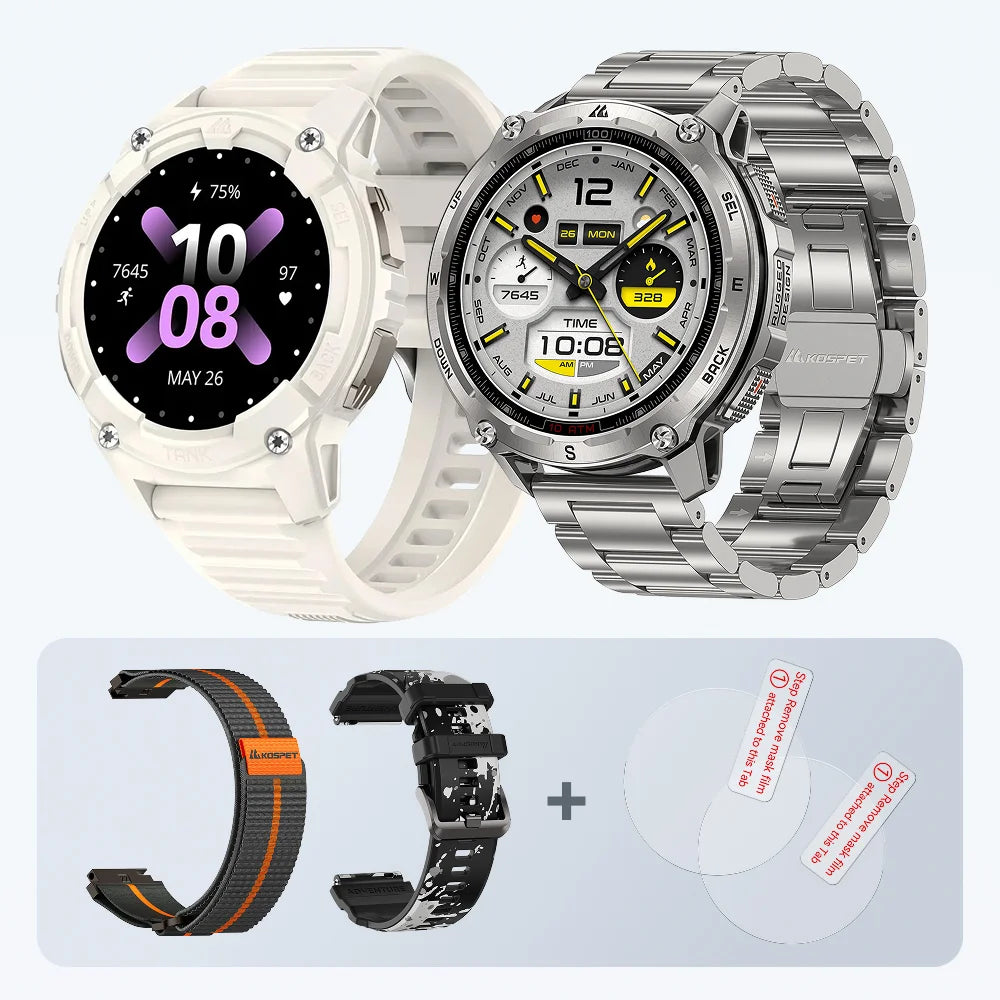
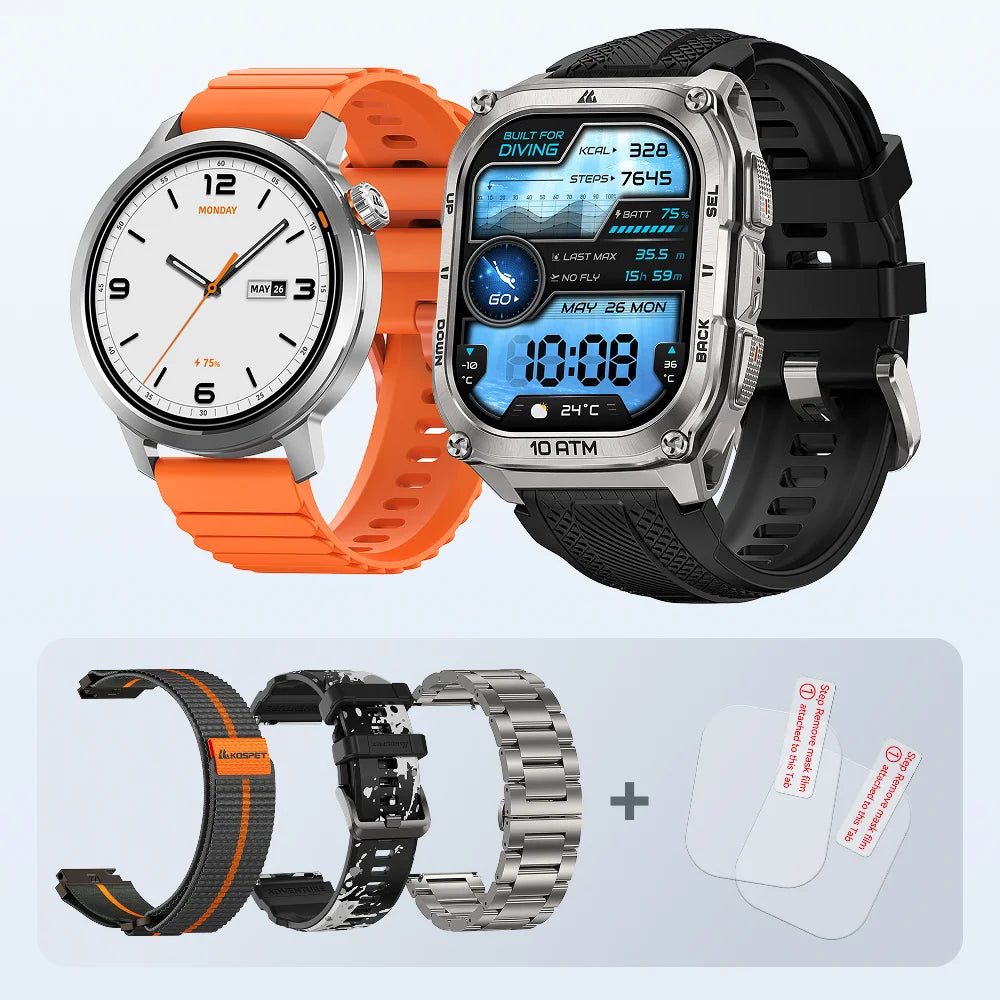
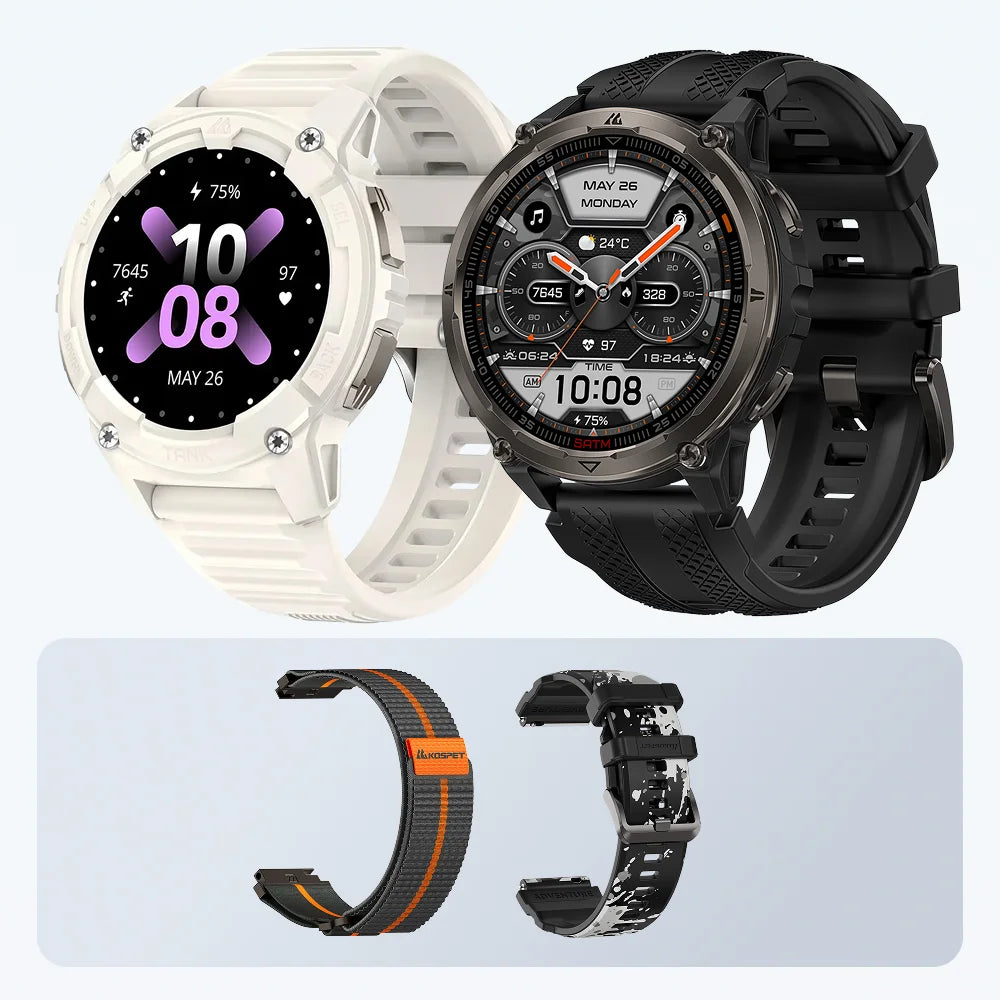
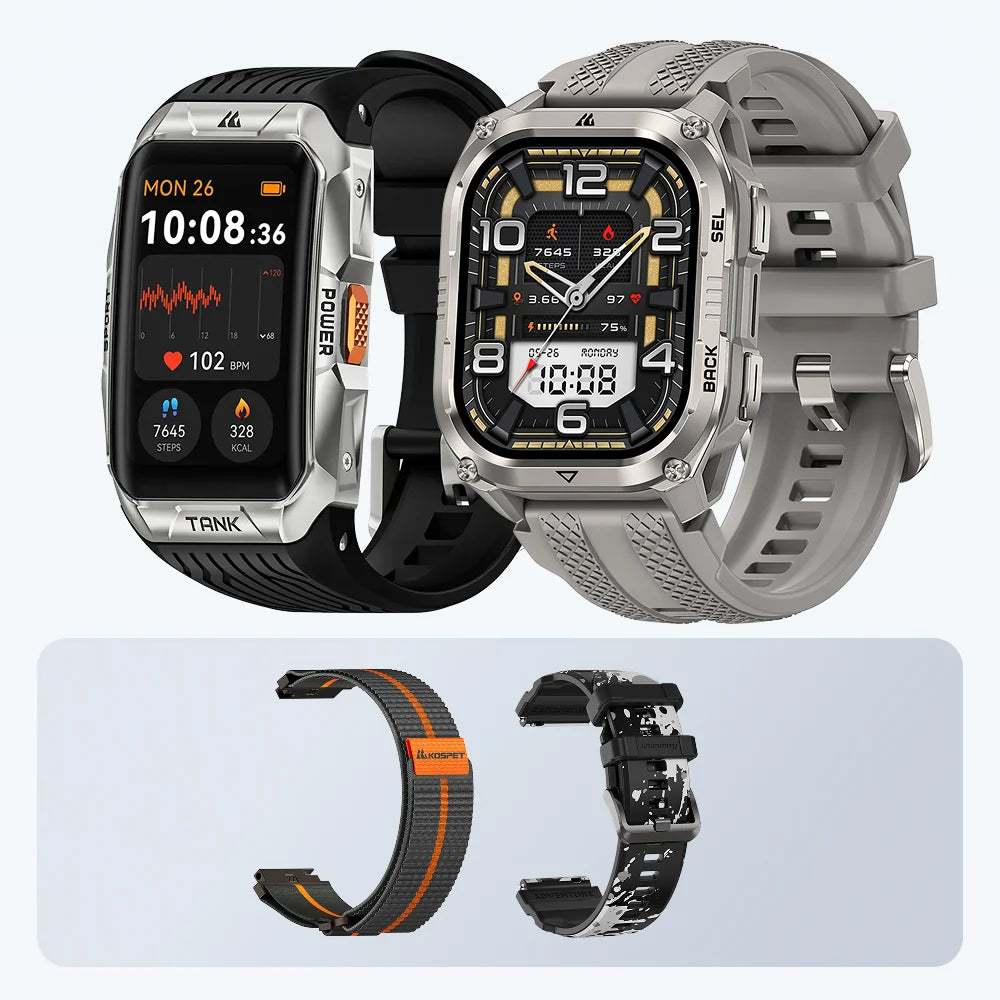
For ordinary site duties, the choice comes down to display shape and how information appears on the wrist. Both models target construction, outdoor work, and rugged daily use. Their lighting and communication tools address common workday frustrations.
Product scope: TANK T4C and TANK M4C are jobsite-oriented consumer smartwatches. They are not electrical test tools, insulation, or PPE.
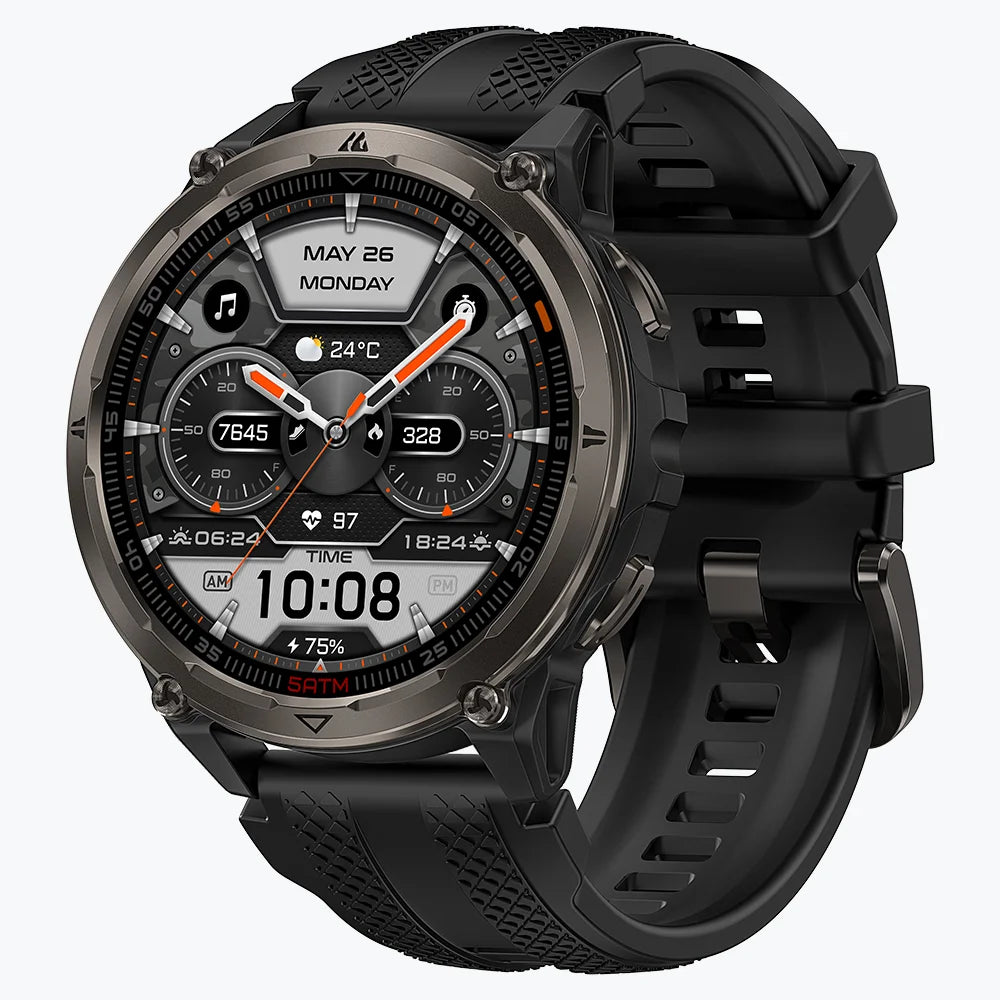
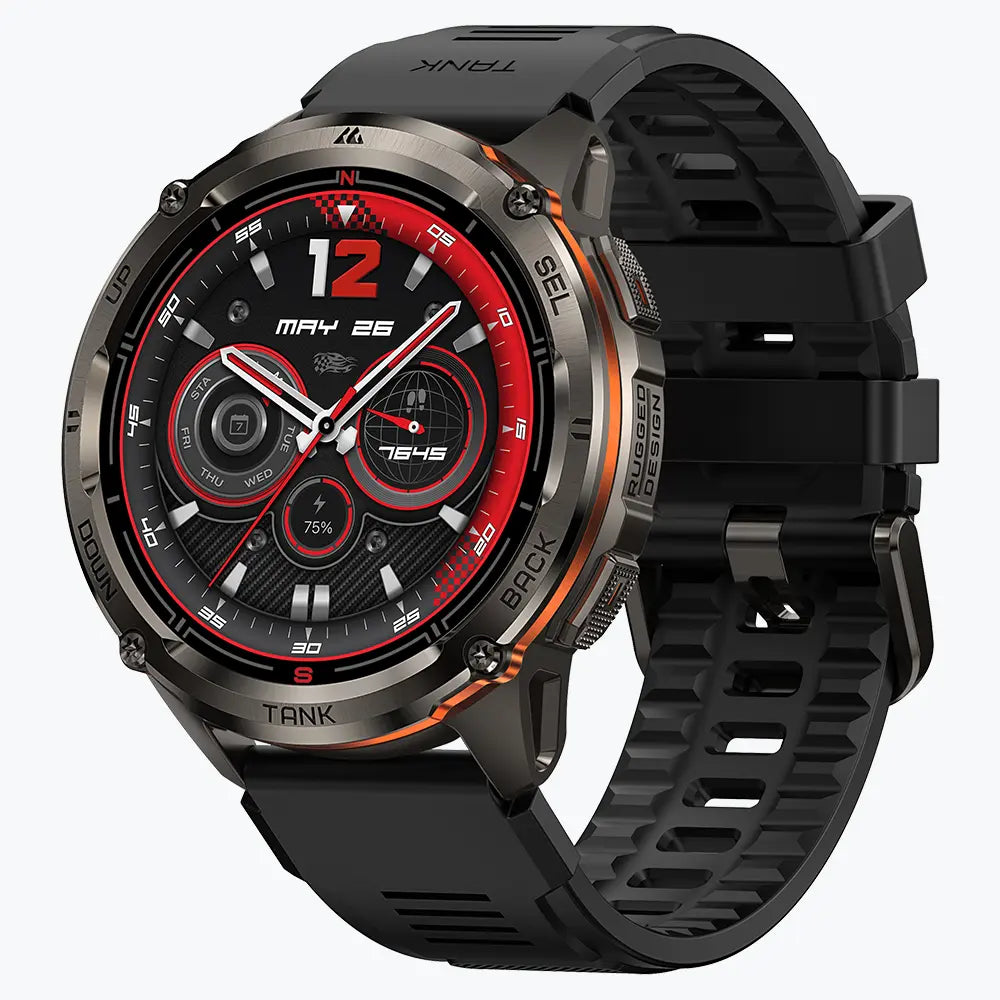
TANK T4C: a round work watch for traditional-watch users

KOSPET TANK T4C Smartwatch
$159.99 USD
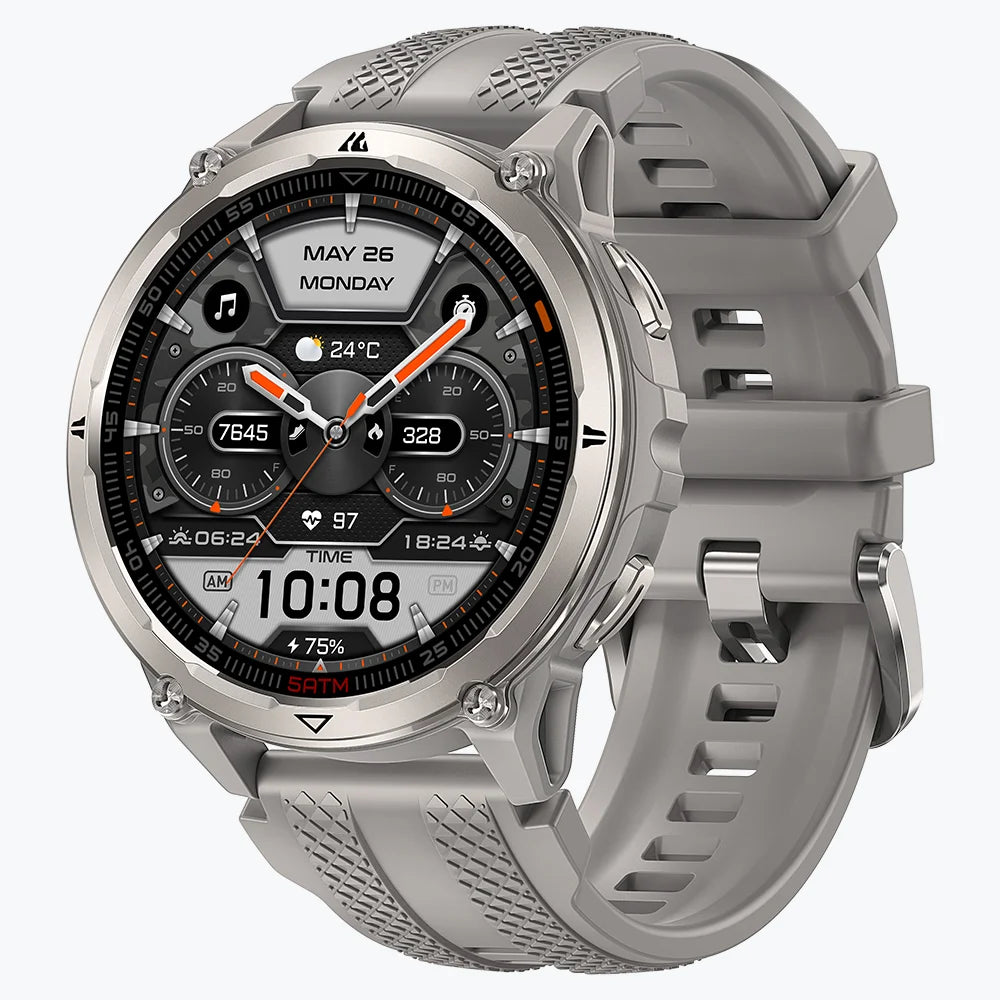
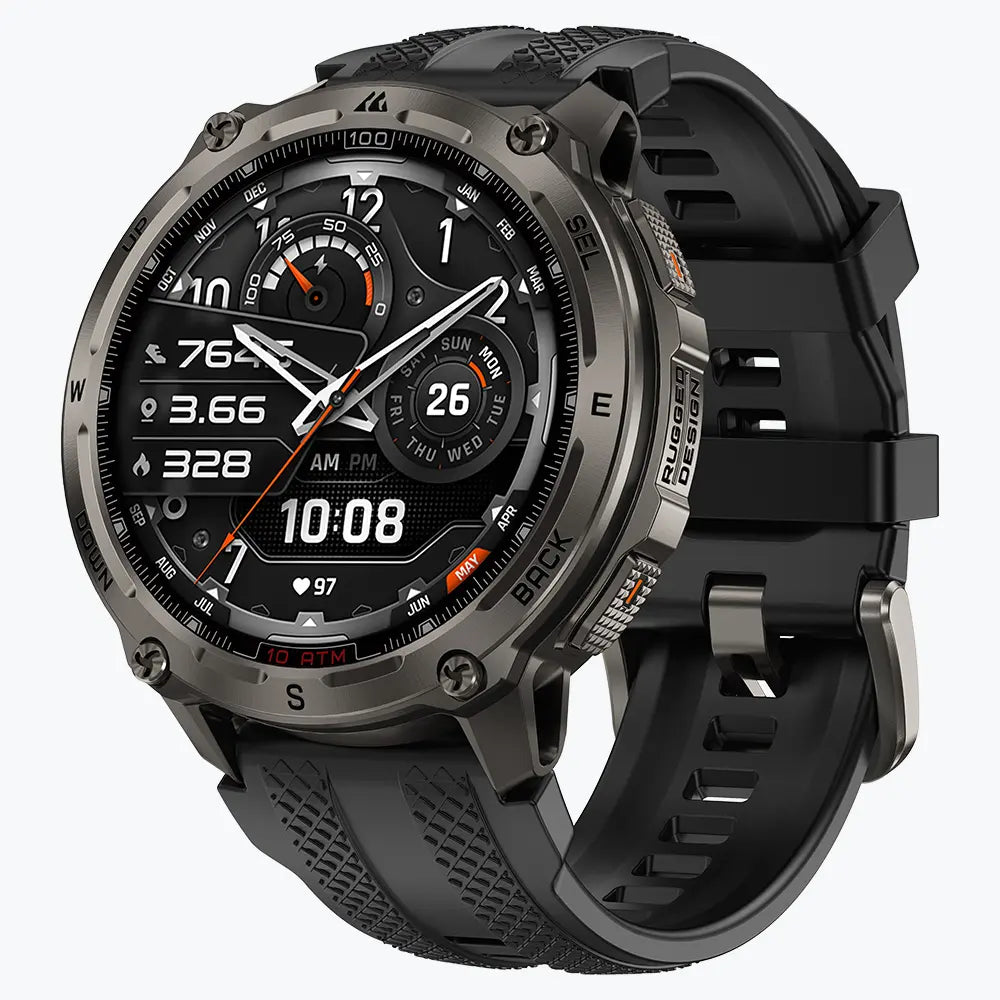
The TANK T4C uses a 1.5-inch round AMOLED display with a stated peak brightness of 1,000 nits. The format feels familiar to users who prefer a conventional watch face. High screen brightness also helps during outdoor checks.
Its five-level LED flashlight supplies quick light for a cabinet label, ceiling route, or tool bag. The walkie-talkie supports short conversations between nearby compatible watches.
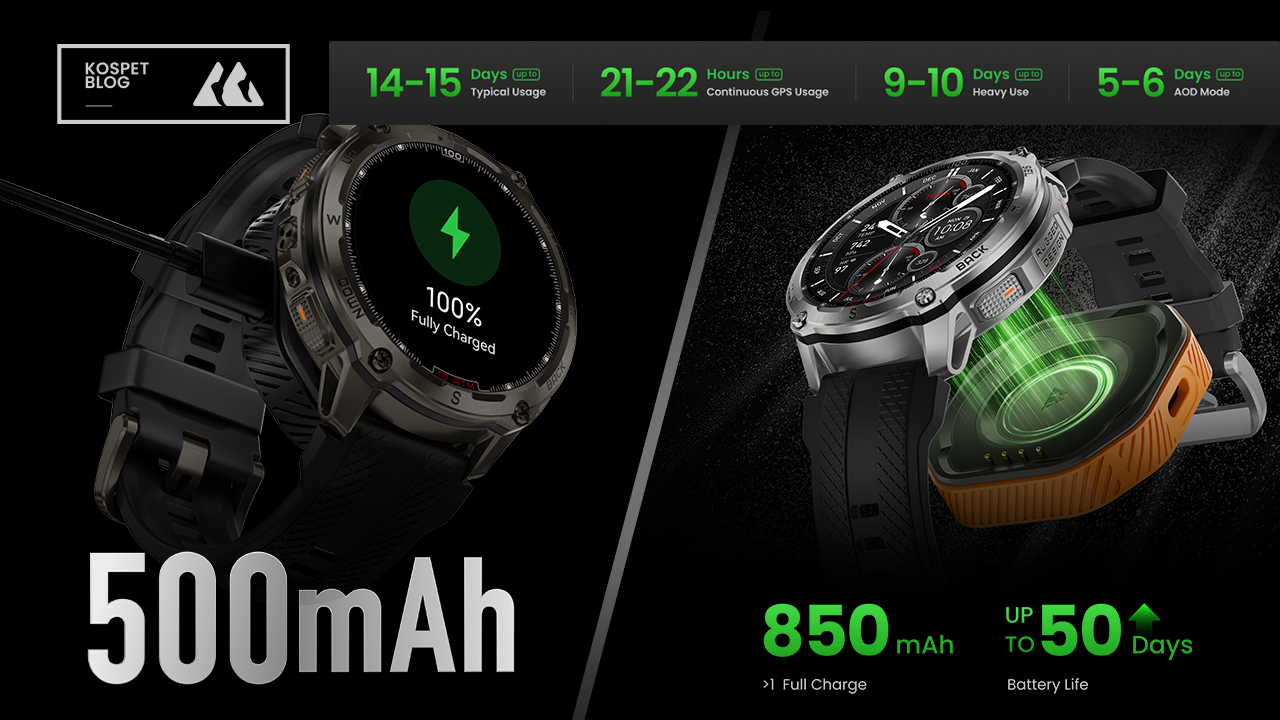
KOSPET states a range of up to 40 meters. A 500mAh battery carries a claimed maximum of 15 days under typical use. Screen settings, calls, GPS, and flashlight use change real-world endurance.
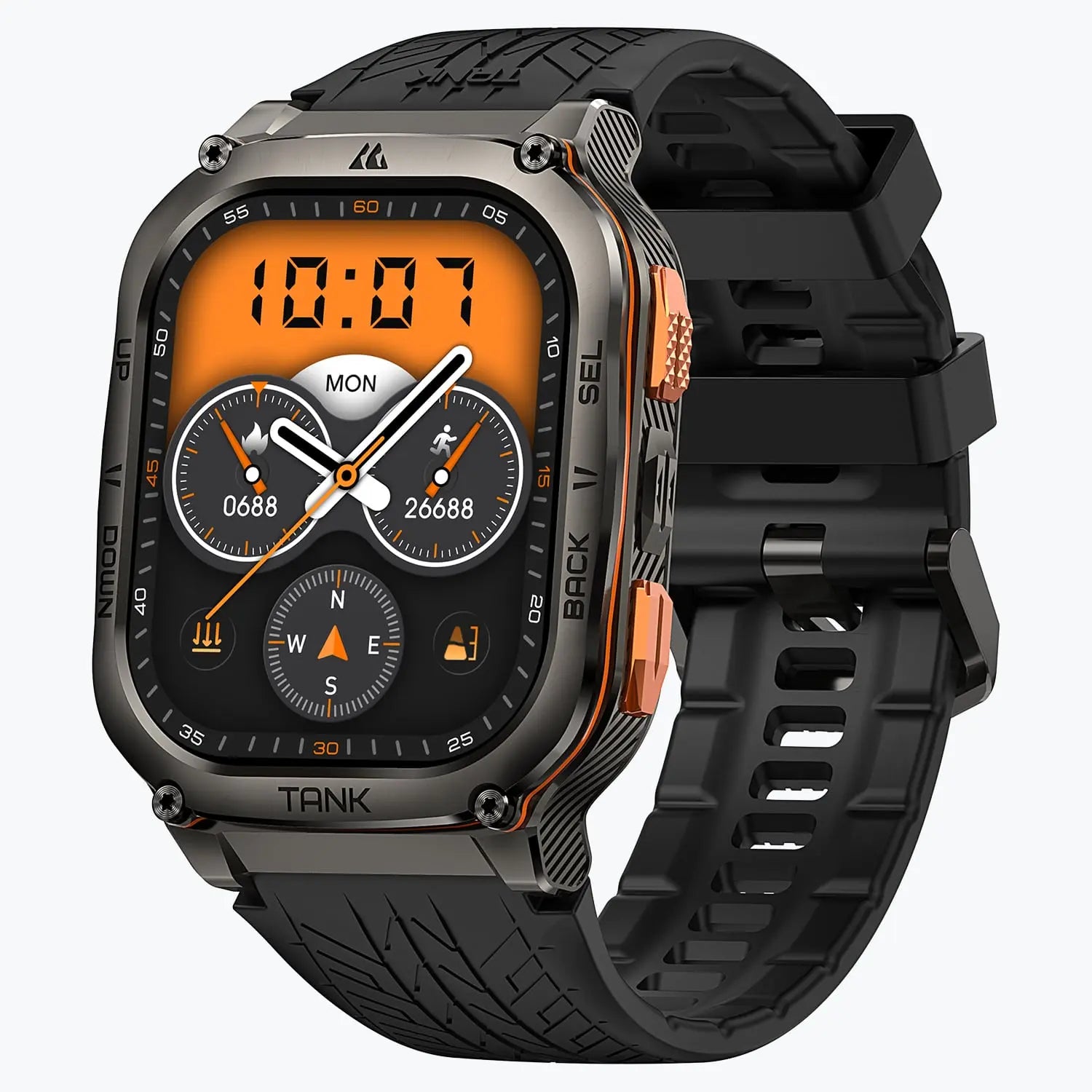
TANK M4C: a larger square screen for faster scanning
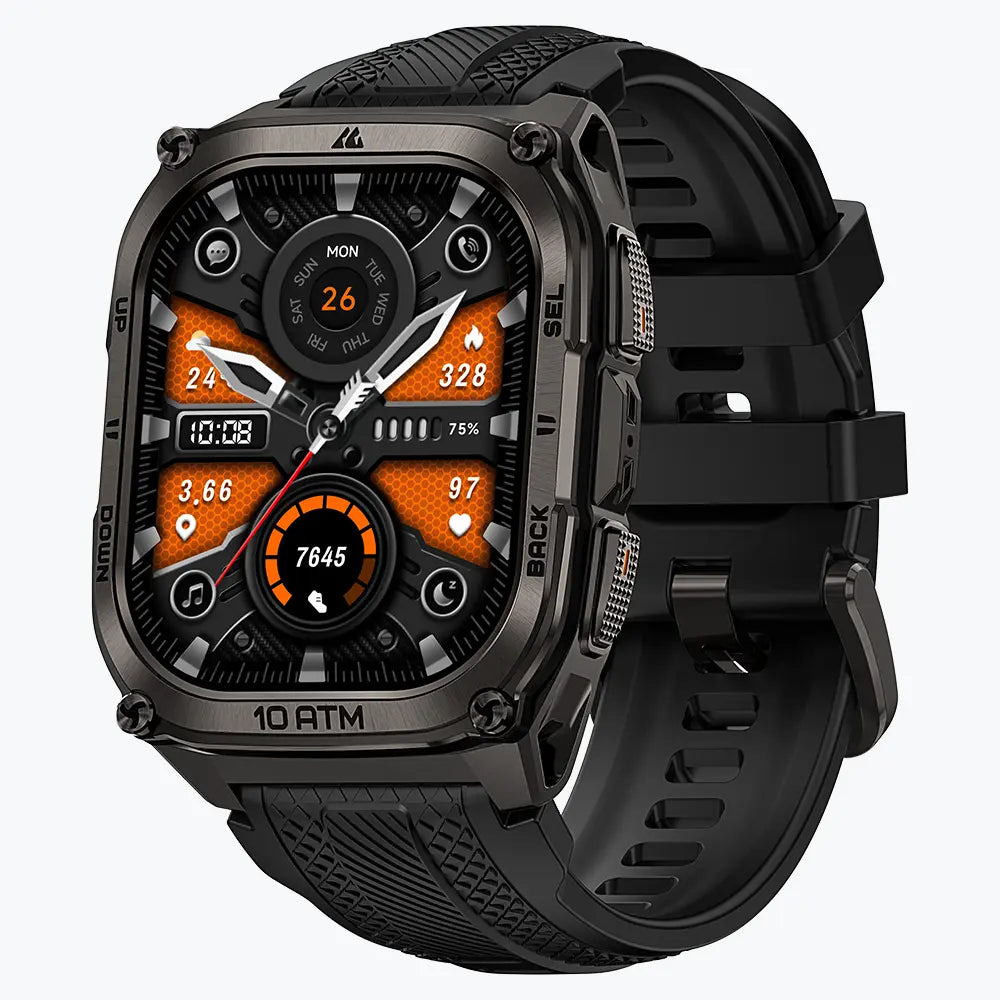
The TANK M4C presents messages, timers, and status information on a 1.96-inch square AMOLED display. Its stated peak brightness also reaches 1,000 nits. More screen area makes short text easier to scan at a glance.
This smartwatch includes the same five-level flashlight and short-range walkie-talkie concept. Typical-use battery life reaches a stated maximum of 16 days. The larger case takes more wrist space, so narrow cabinets and close-fitting sleeves deserve consideration.
TANK T4C vs. TANK M4C at a glance
| Workday priority | TANK T4C | TANK M4C |
|---|---|---|
| Display | 1.5-inch round AMOLED | 1.96-inch square AMOLED |
| Best match | Traditional work-watch style | Larger information area |
| Stated typical battery life | Up to 15 days | Up to 16 days |
| Low-light tool | Five-level LED flashlight | Five-level LED flashlight |
| Nearby communication | Walkie-talkie, stated range up to 40 m | Walkie-talkie, stated range up to 40 m |
| Environmental ratings | 5 ATM and IP69K | 5 ATM and IP69K |
Choose TANK T4C for a round face and familiar watch styling. Choose TANK M4C for a larger display with more room for messages and timers.
FAQs
Can an electrician trust a smartwatch compass near switchgear?
Use it only for general orientation. Magnetic and environmental interference can reduce digital-compass accuracy around metal structures and electrical equipment. Apple gives the same limitation in its official guidance on compass accuracy. A smartwatch compass does not replace an approved instrument, site drawing, or verified direction reference.
Can the TANK T4C or M4C walkie-talkie replace a jobsite radio?
No. The feature works best for nearby, noncritical coordination. KOSPET describes communication between compatible watches within a stated 40-meter range, with group conversations for up to four users. Those limits make it a convenience tool, not a substitute for the site’s approved radio network, emergency channel, or formal communication procedure.
How should electricians clean metal dust or cement from a rugged smartwatch?
Remove loose debris before it grinds across the display or gathers around buttons. KOSPET’s construction-dust care guidance recommends cool fresh water for loose sand or cement, followed by a soft cloth around the charging contacts and rear sensor. Let every surface dry before charging. Fine metal dust deserves prompt removal because particles can scratch finishes and collect in small openings.
Can smartwatch health data confirm fitness for duty?
No. Heart rate, blood oxygen, sleep, and stress readings help users notice personal wellness trends. They do not provide medical clearance for electrical work, heat exposure, fatigue, or return-to-work decisions.
KOSPET states that its measurements are intended for general wellness rather than diagnosis or clinical use in the TANK T4C product disclaimer. Treat an unusual reading as a reason to pause and follow the workplace health procedure—not as a diagnosis from the wrist.