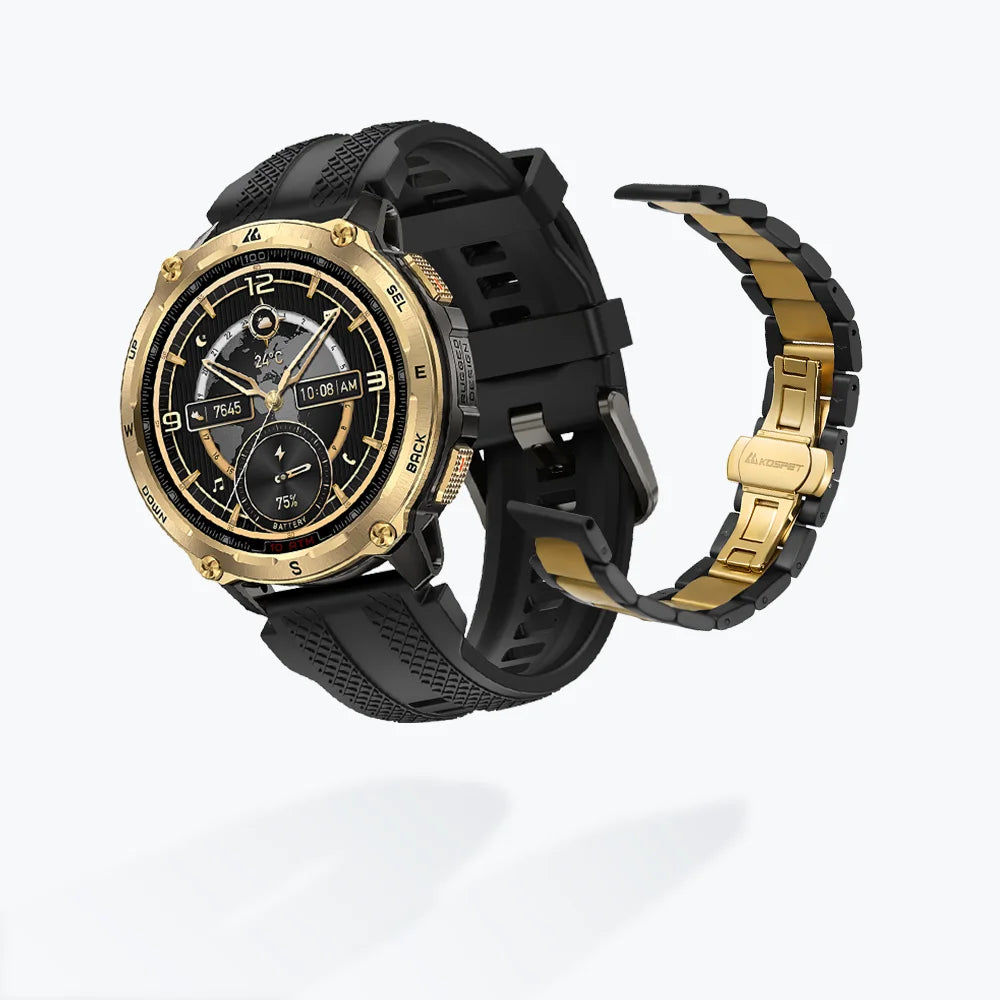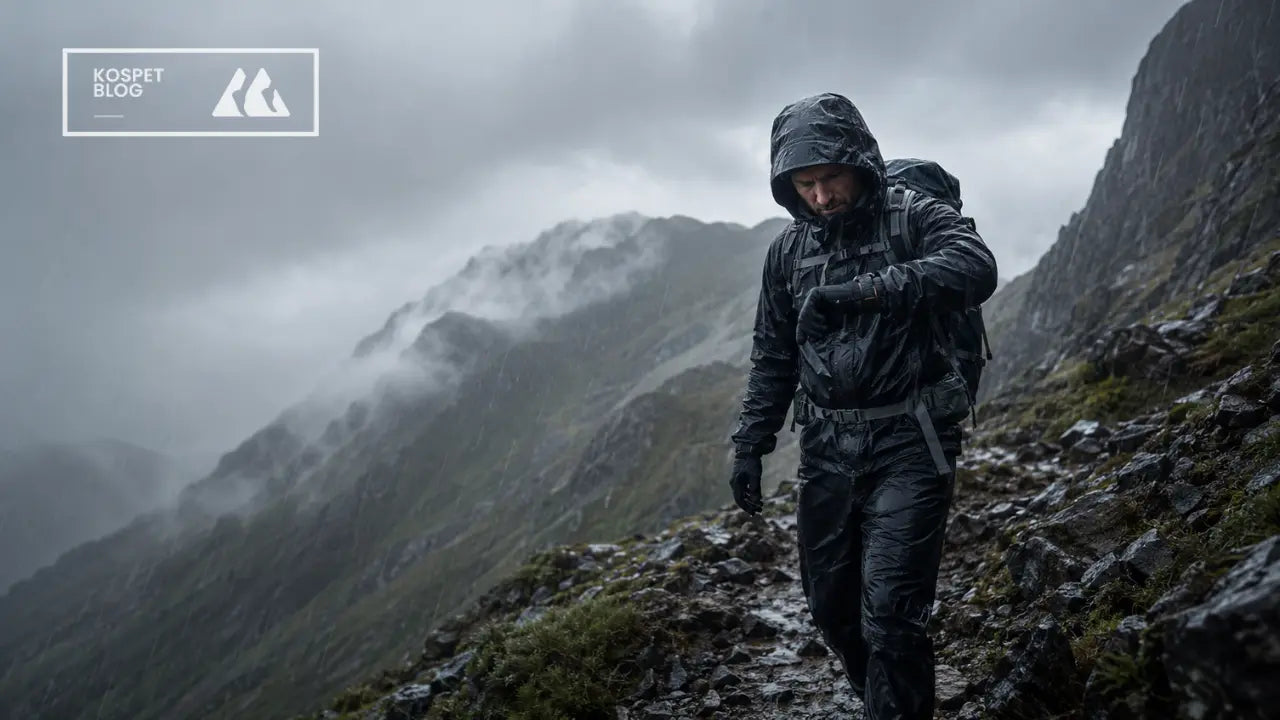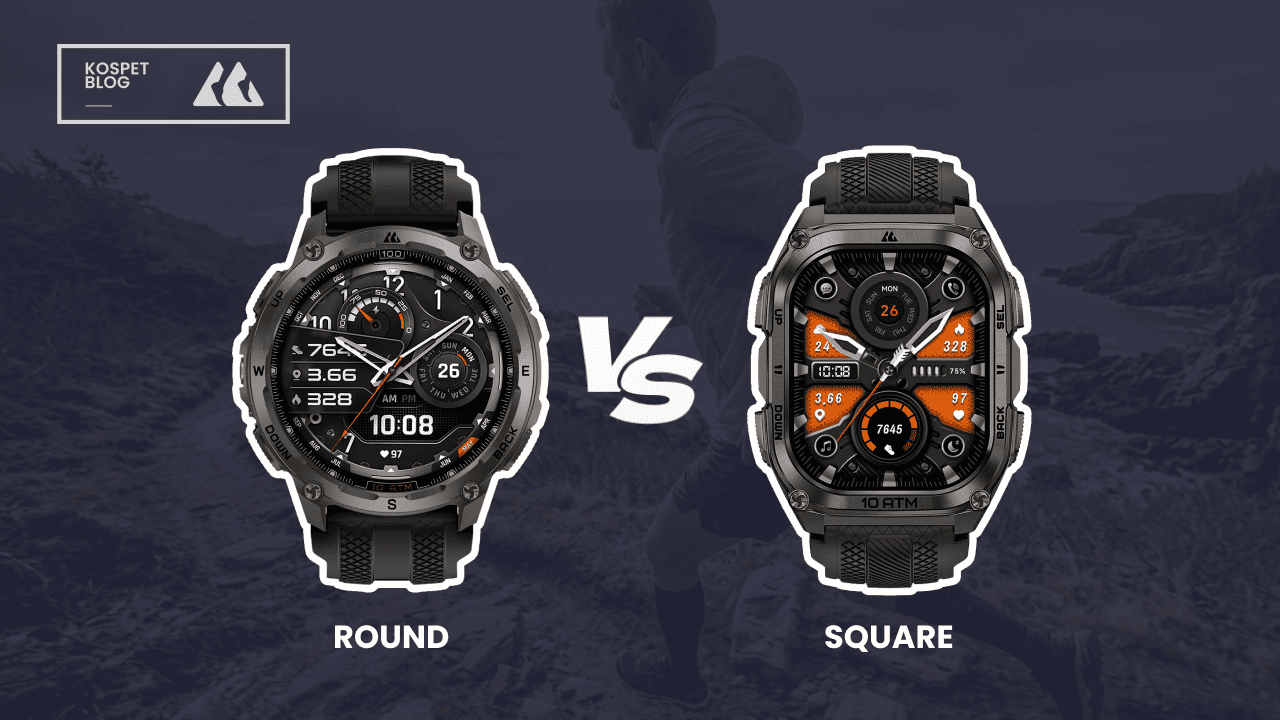


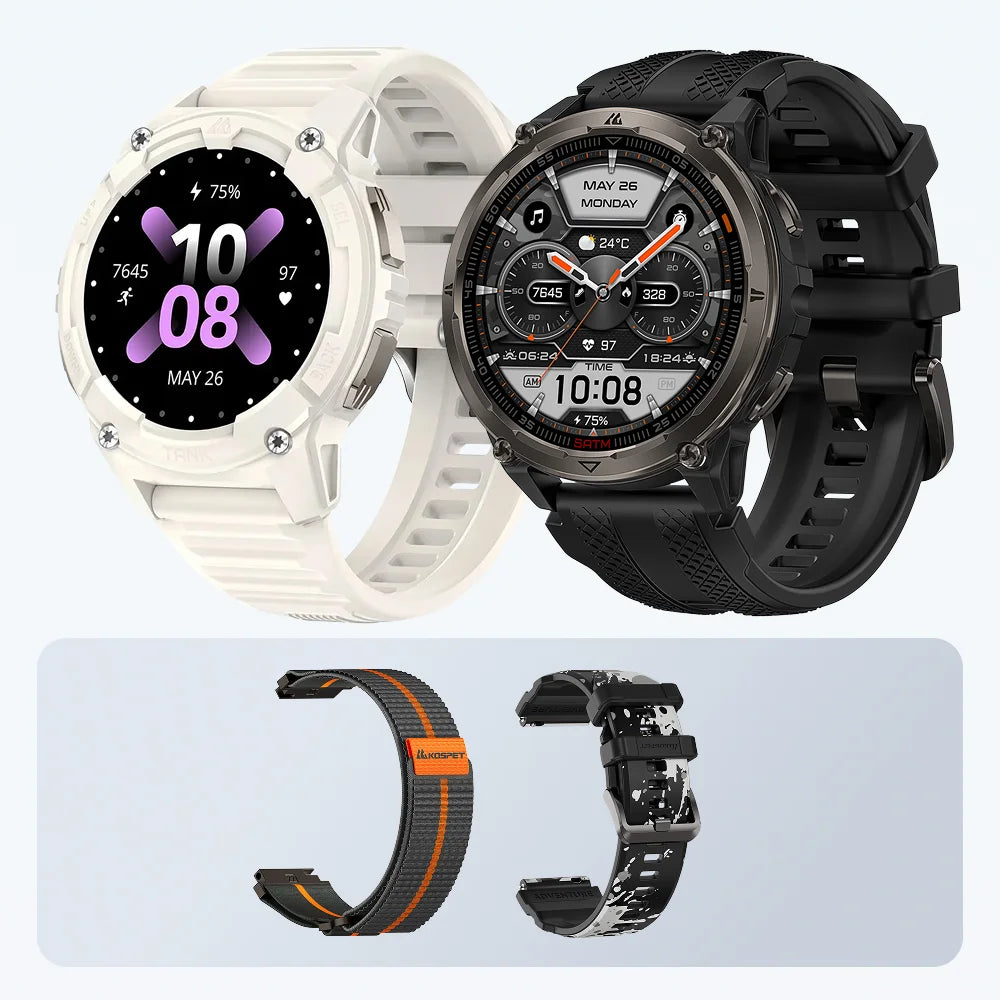
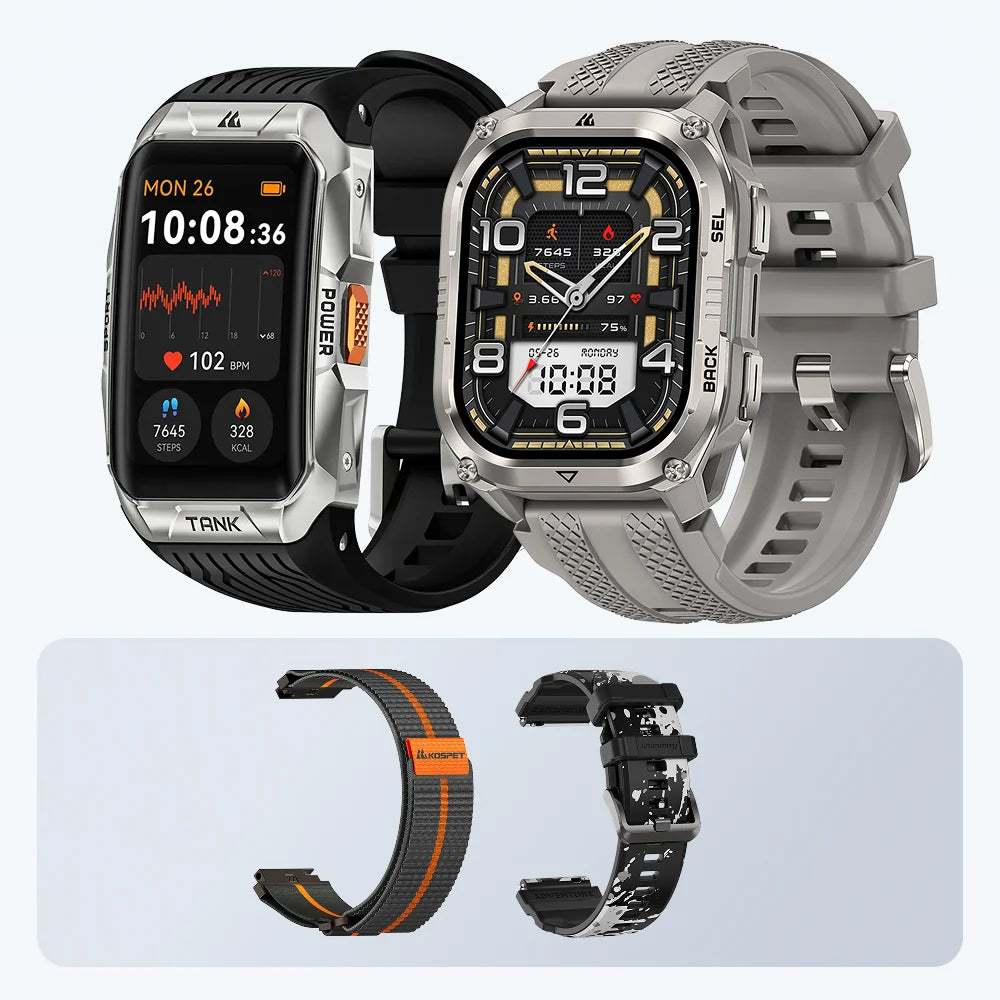
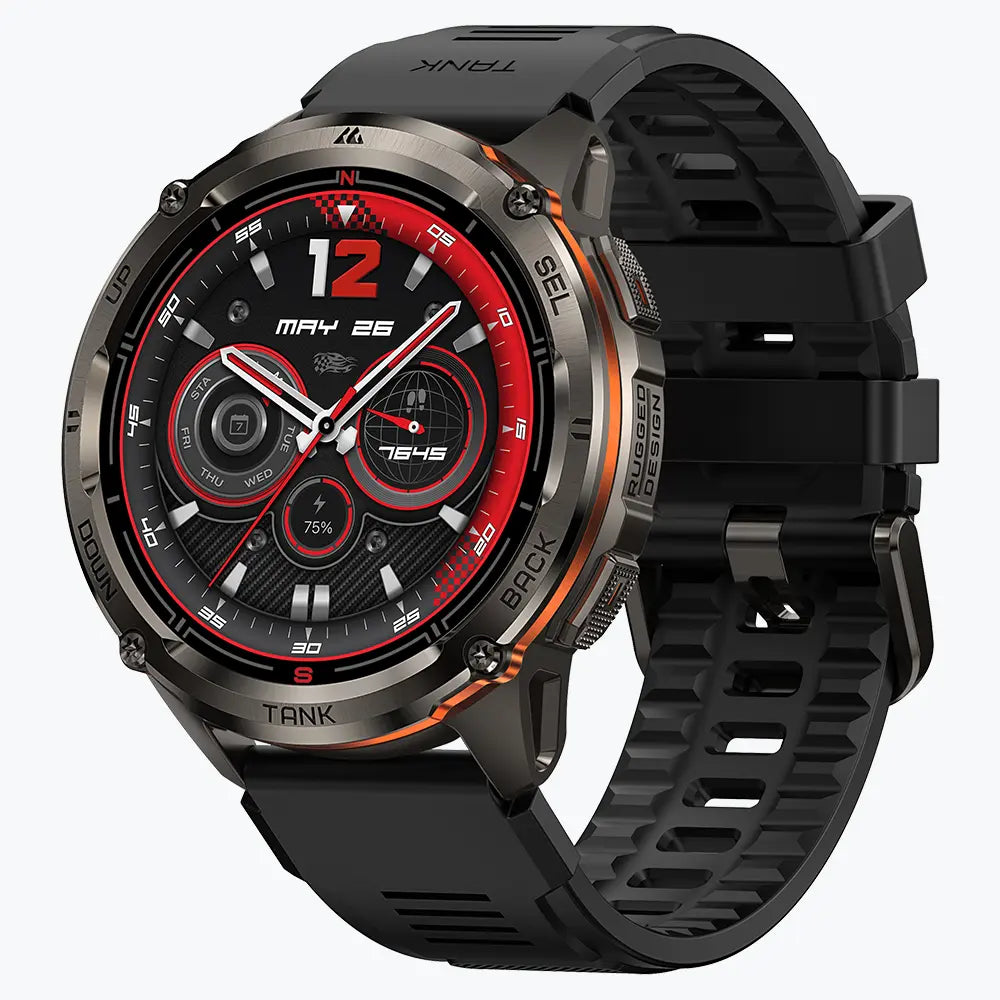
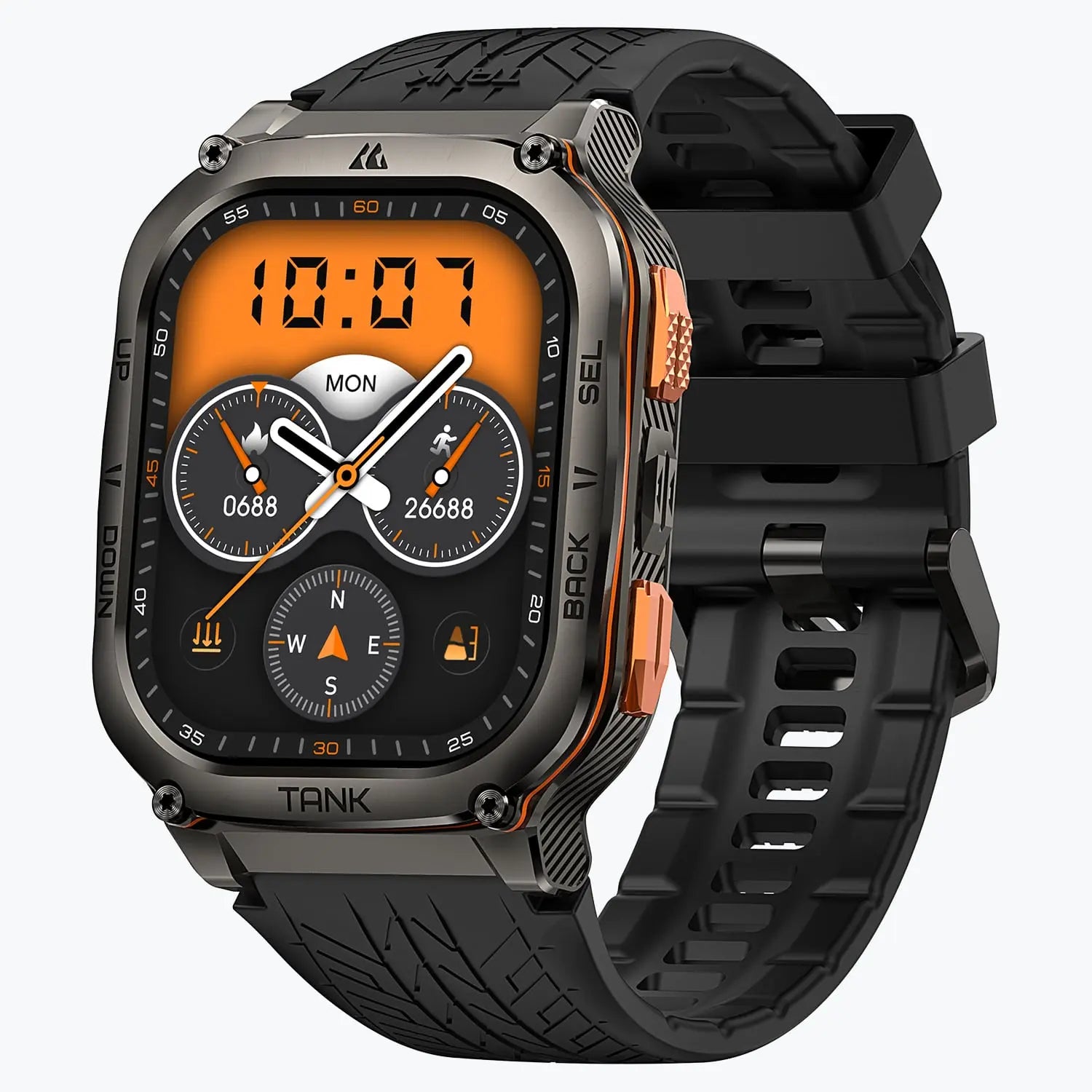


The best smartwatch color for hiking camouflage is not always the darkest one. It is the color that creates the least visual contrast with the terrain around you.
Muted olive green generally works best in forests, charcoal and slate gray suit rocky trails, and tan or earth brown fit dry, open landscapes. If your hikes regularly cross several types of terrain, matte charcoal or subdued gray-green usually provides the most versatile balance.
In this guide, camouflage means reducing visual contrast with common hiking terrain as it appears to the human eye. It does not assess species-specific animal vision or hunting camouflage. Color is also only one part of visibility: saturation, surface finish, hardware, the band, and an illuminated display can all affect how noticeable a smartwatch appears.
Smartwatch color recommendations by terrain
| Hiking environment | Better color choices | Why they work | Main limitation |
|---|---|---|---|
| Forest and woodland | Muted olive green, dark brown | Relates to foliage, bark, soil, and shade | Green becomes less effective in leafless seasons |
| Rocky and alpine terrain | Charcoal, slate gray | Matches stone, gravel, and natural shadows | Dark shades contrast with snow and pale rock |
| Dry and open trails | Tan, khaki, earth brown | Relates to soil, sand, and dry vegetation | Light bands may show sweat and dark stains |
| Mixed terrain | Charcoal, gray-green | Avoids extreme contrast across several backgrounds | Not the strongest specialist color for one terrain |
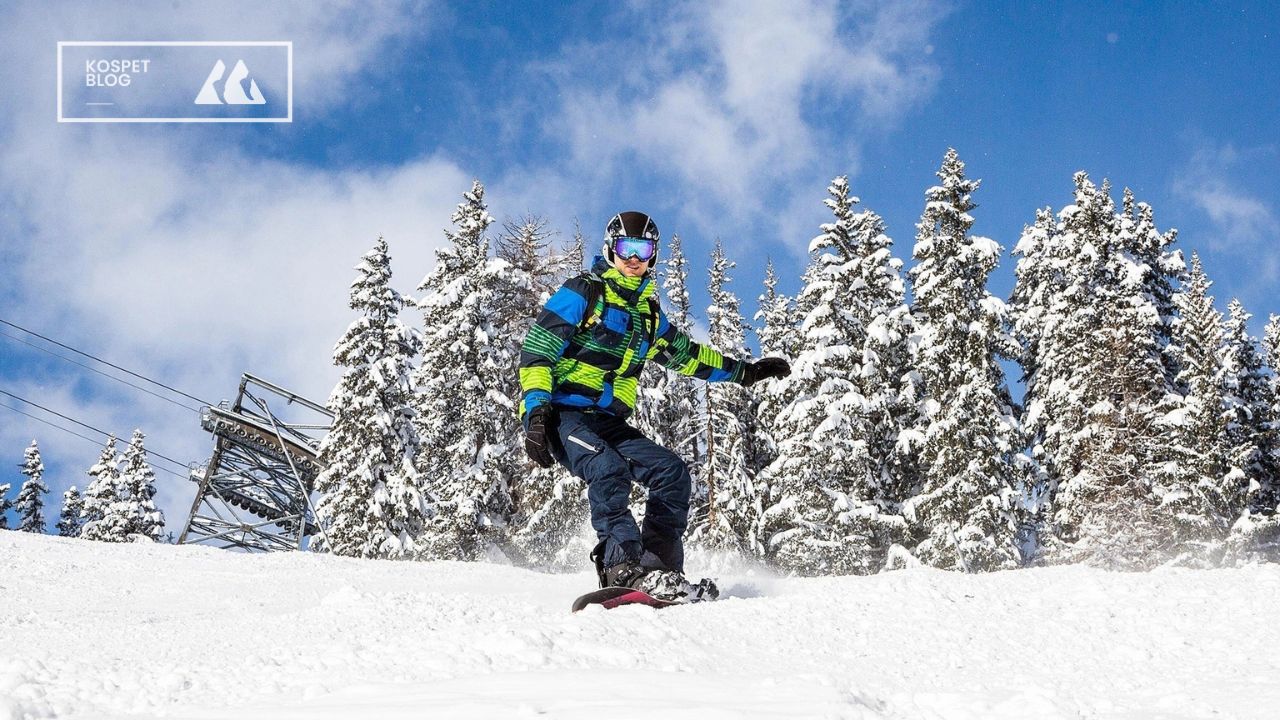
| Snow-covered terrain | Light gray, off-white | Reduces contrast against snow | More difficult to find if dropped |

Match the smartwatch color to the hiking environment
Terrain determines which colors create the least contrast, but hikers are not choosing a color in isolation. The case, bezel, band, buttons, and display all contribute to how a smartwatch looks outdoors. When comparing models, consider the complete color combination rather than relying only on labels such as “black,” “green,” or “silver.”
For forest trails, look for muted green or brown watch components
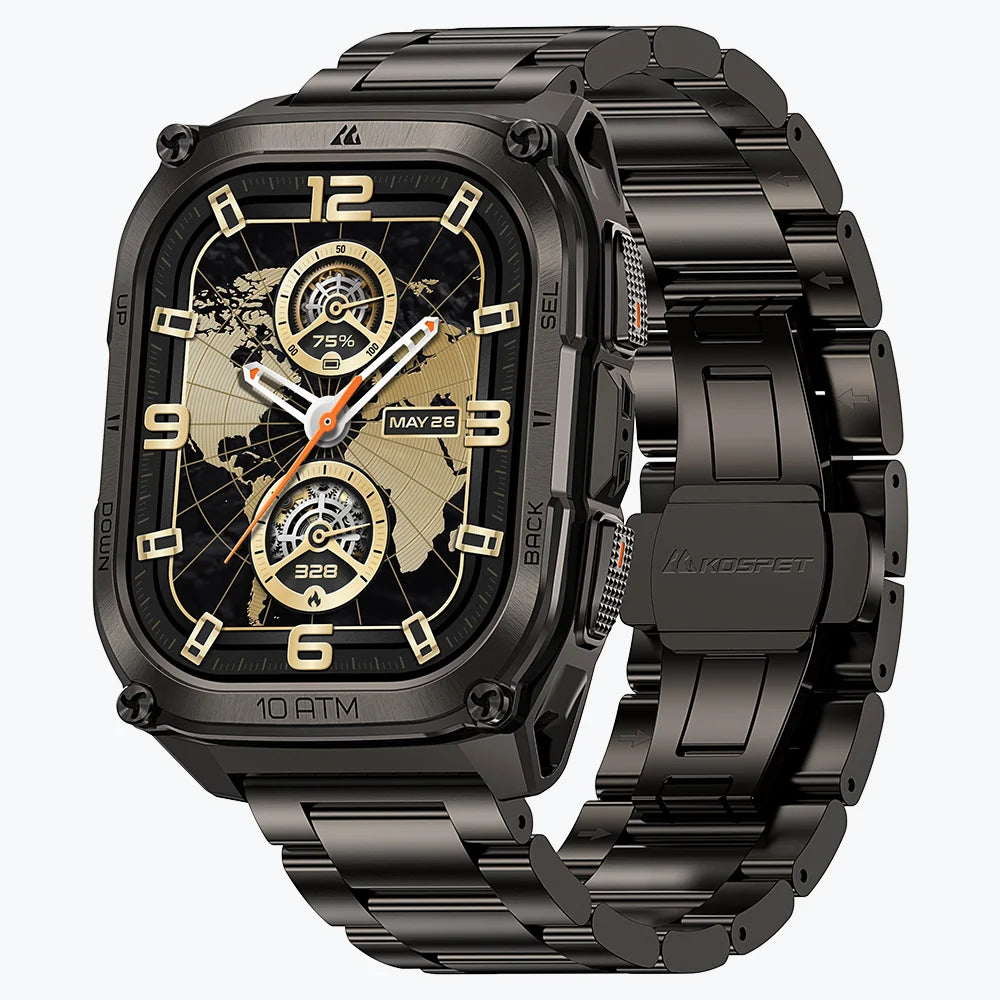
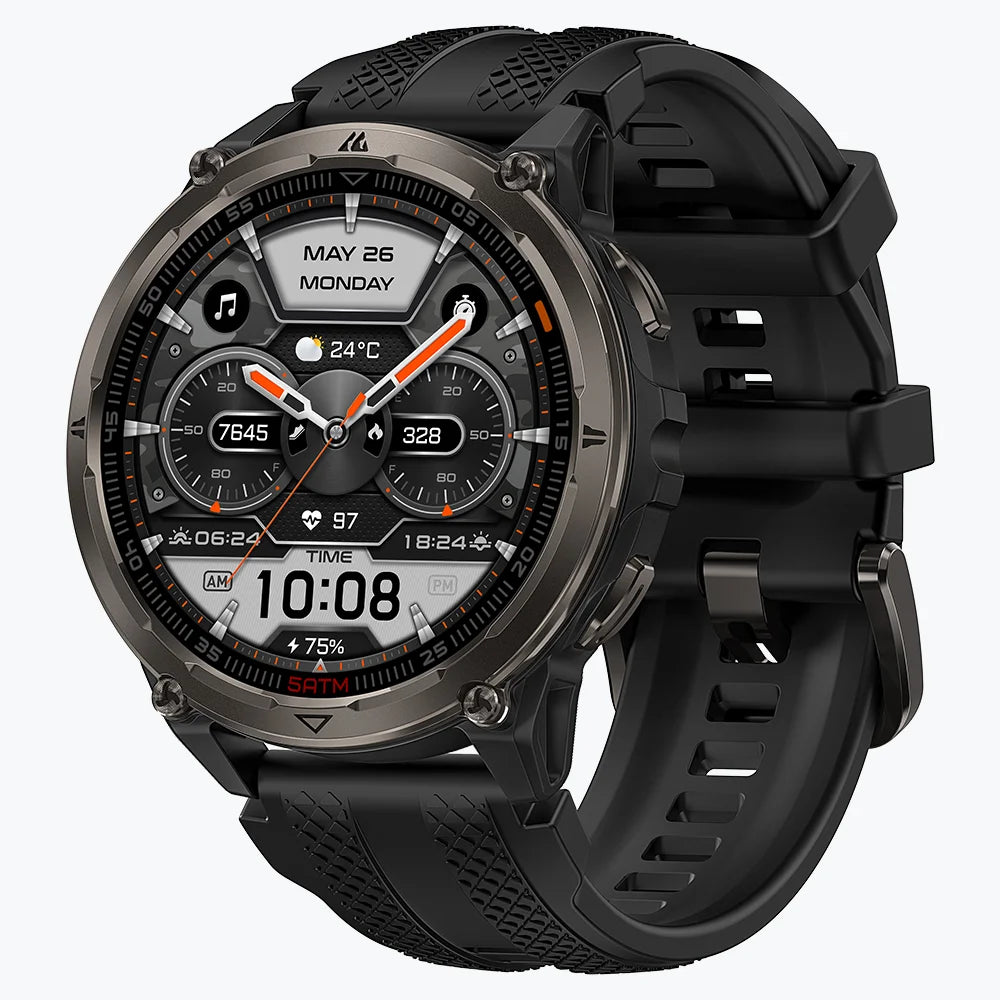
A forest-friendly smartwatch does not need to be completely green. A charcoal or dark gray case paired with a muted olive, gray-green, or dark brown band can blend naturally with foliage, bark, soil, and shade. This combination is often more versatile than a watch with a strongly green case.
Pay attention to saturation when comparing products. Bright green bands, high-contrast logos, polished silver bezels, and reflective buttons can make a watch more noticeable even when the main color is described as green. A subdued band and restrained hardware usually matter more than choosing an obvious camouflage pattern.
Season also affects the most useful configuration. Olive works well during spring and summer, while gray-green and dark brown remain more adaptable when leaves fall and the landscape becomes dominated by bark, soil, and branches.
For rocky trails, choose charcoal, slate gray, or brushed metal
On rocky and alpine routes, look for a smartwatch with a charcoal or slate-gray case and a medium-gray or dark neutral band. These colors relate more closely to stone, gravel, and natural shadow than pure black. Brushed or subdued metal can also work, provided it does not produce strong reflections.
Avoid judging the watch by its case color alone. A gray case paired with a glossy silver bezel may be more noticeable than a darker watch with restrained hardware. Large white markings, polished buttons, and bright display elements can also create contrast against rock.
Medium gray is generally more adaptable than deep black when trails include pale stone. If the route moves into snow-covered terrain, lighter gray reduces contrast further, although it can make the watch harder to locate if it is removed or dropped.
Where a black smartwatch makes sense
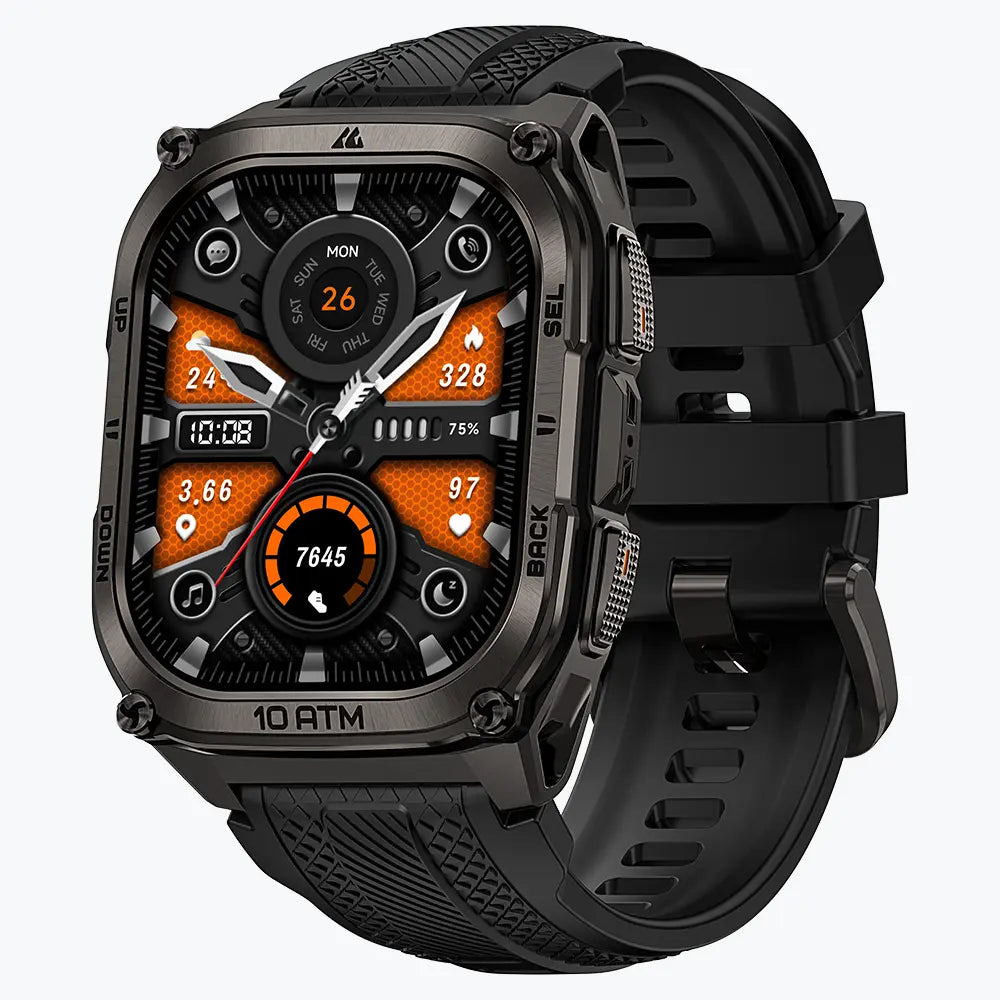
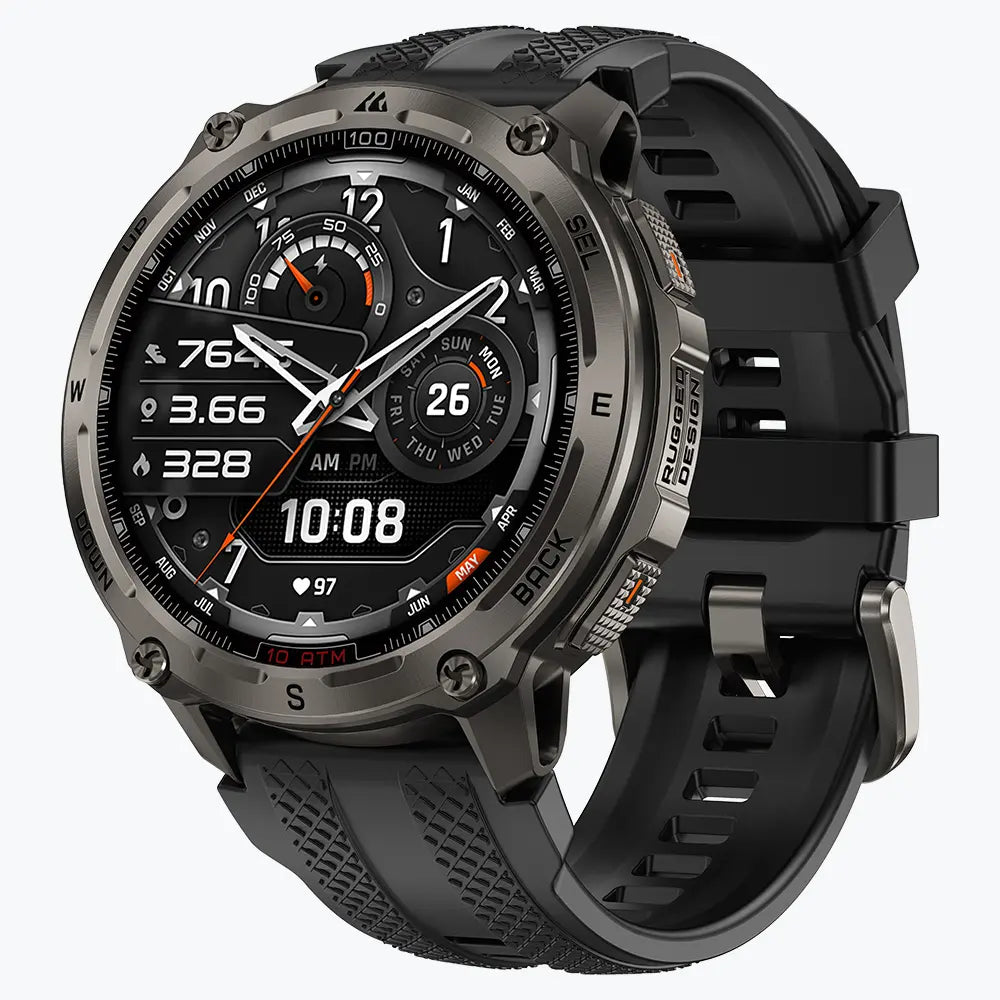
Black remains one of the most practical smartwatch colors because it works with everyday clothing and darker outdoor equipment. However, a black watch is not automatically the least visible option. It works more naturally in shaded woodland and overcast conditions but creates stronger contrast against pale rock, sand, and snow.
For dry trails, prioritize tan, khaki, or earth-brown bands
On dry and open trails, the band is often the easiest part of the watch to match with the environment. Tan, khaki, and earth brown relate more naturally to sand, exposed soil, and dry vegetation than black or dark green. A dark neutral case can still work if the band softens the overall contrast.
Choose subdued shades rather than bright yellow-tan or highly saturated brown. The finish matters as well: a muted tan silicone or fabric band generally looks less conspicuous than a glossy band in a similar color. Polished bezels and reflective metal hardware can remain visible even when the band matches the ground.
Maintenance may affect the final choice. Pale bands can hide sand and light dust but may show sweat, skin oils, and darker stains. Earth brown usually offers a better balance when the watch needs to move between dry trails, sparse woodland, and everyday use.
For mixed terrain, start with a neutral case and subdued band
If a hike passes through forest, rock, and open ground, avoid a highly specialized color combination. A charcoal case with a gray-green, gray-brown, or other low-saturation band provides a more stable appearance across changing backgrounds.
Solid neutral colors are generally more adaptable than terrain-specific camouflage prints. A forest pattern may become conspicuous on dry ground, while a desert pattern can stand out among wet vegetation. For a smartwatch used across several environments, a restrained case and band combination is usually the more practical choice.
Color alone does not determine camouflage
Two smartwatches described as the same color can look very different on a trail. One may use a subdued finish and restrained hardware, while the other has a glossy bezel, bright markings, or an illuminated display.
- Color saturation: Muted olive, charcoal, and earth tones usually relate more naturally to outdoor terrain than vivid green, solid black, or highly saturated colors.
- Surface finish: Matte, brushed, and lightly textured surfaces create softer reflections. Glossy plastic and polished metal can produce bright highlights even when the underlying color matches the environment.
- Bezel and hardware: Silver bezels, polished buttons, bright screws, and high-contrast markings can interrupt an otherwise subdued color combination.
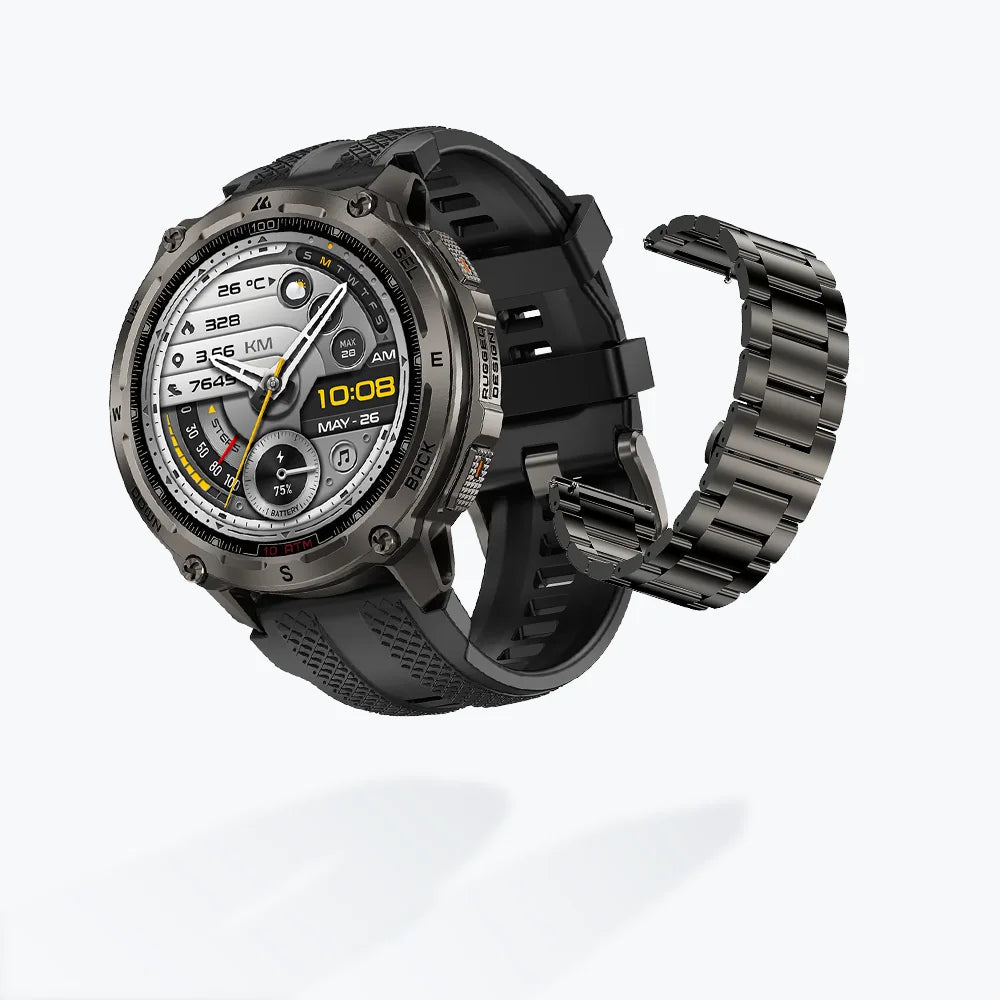
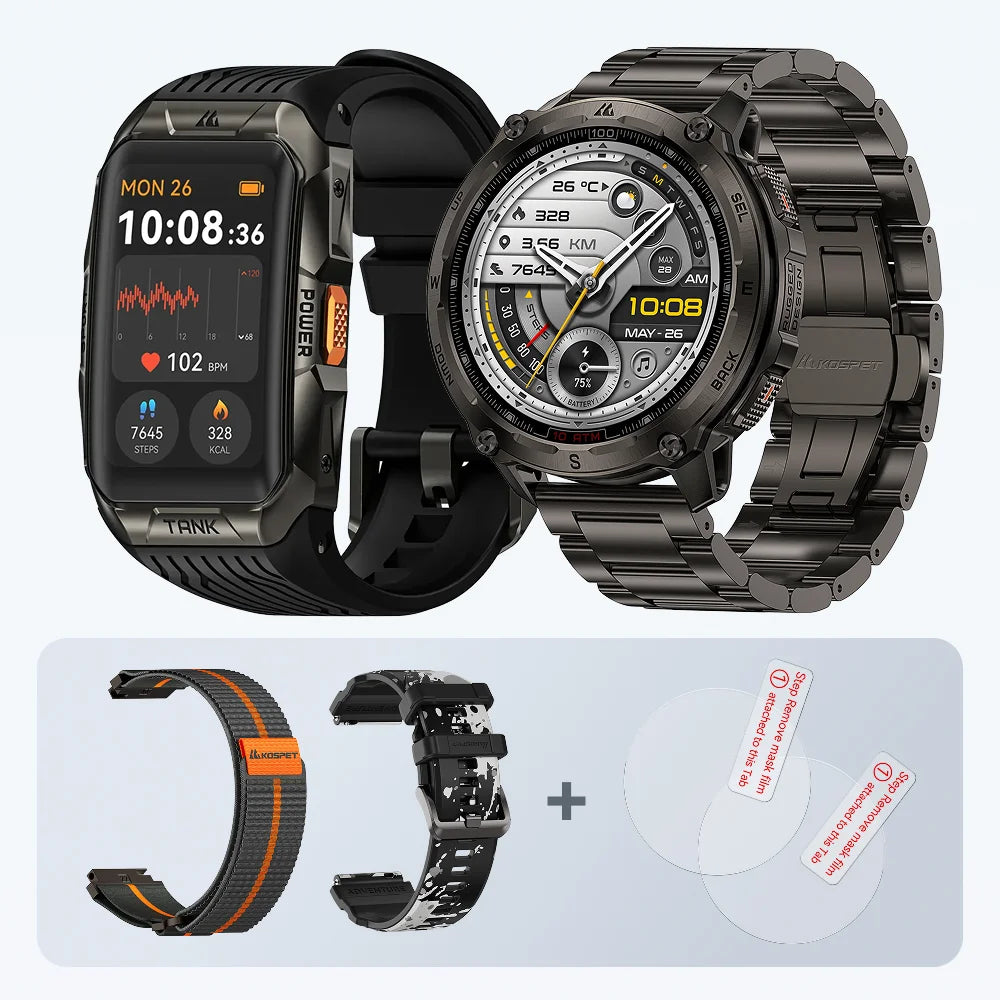
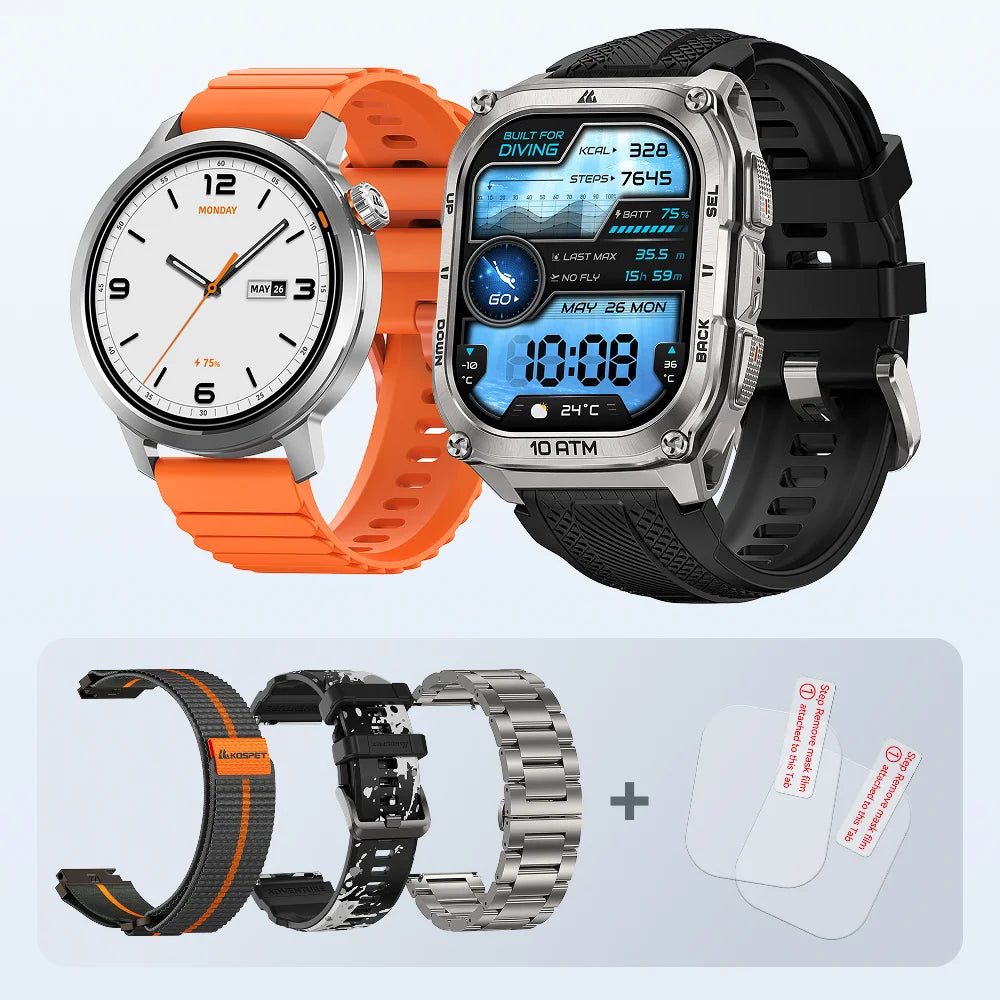
- Band color: The band often contributes more visible color than the case. A quick-release system allows a neutral watch case to be paired with olive for woodland, brown or tan for dry trails, and gray for rocky terrain without replacing the entire watch.
- Display state: A bright watch face or always-on display creates a clear illuminated shape in shaded woodland and low-light conditions. The same watch will appear less conspicuous when its screen is off.
- Camouflage patterns: Complex patterns are not automatically more effective. Because a smartwatch occupies a small area, a muted solid color may provide better consistency across changing terrain.
Camouflage, dirt resistance, and visibility are different needs
A smartwatch color can perform well in one area and poorly in another. A band that blends into the terrain may show sweat, while a color that hides dirt may be easier to see against the surrounding landscape. Before choosing a color, decide whether the main goal is reduced contrast, easier maintenance, or equipment visibility.
- For terrain camouflage: Match the watch’s dominant color and brightness to the environment. Muted green relates to woodland, gray to rocky terrain, and tan or brown to dry ground.
- For hiding dust and wear: Mid-tone gray and earth brown usually conceal a wider range of trail residue than very light or very dark colors. Light dust and scratches tend to remain more noticeable on solid black surfaces.
- For handling sweat and stains: Pale tan and light gray may blend well outdoors but can show skin oils, sweat marks, and dark stains. The material and texture of the band matter as much as its color.
- For finding a dropped watch: Bright orange, yellow, and red bands provide little camouflage but are easier to locate after the watch is removed or dropped.
- For hiking safety: A smartwatch is too small to function as meaningful high-visibility equipment. Bright clothing, reflective details, lights, navigation tools, and communication equipment should provide the main visibility and safety functions.
For wildlife observation or photography, reduced reflection and muted colors may be the priority. For ordinary hiking, everyday versatility, maintenance, and the ability to recover a dropped watch may matter more than achieving the lowest possible visual contrast.
FAQs
What is the best all-around smartwatch color for hiking?
Matte charcoal is usually the most versatile choice for hikers who move between forests, rocky trails, and open terrain. It relates well to stone and natural shadow without creating as much contrast as pure black. Subdued gray-green is a good alternative for routes that are primarily forested.
Is black a good camouflage color for hiking?
Black works reasonably well in shaded woodland, overcast conditions, and alongside darker outdoor equipment. However, it can create a strong outline against pale rock, sand, dry ground, and snow. Black is better viewed as a versatile everyday color than as the most effective camouflage option for every hiking environment.
Does the smartwatch band color matter more than the case color?
The band often contributes more visible color than the case, so changing it can significantly alter the watch’s overall contrast. A neutral case can be paired with an olive band for woodland, gray for rocky terrain, or brown for dry trails. The bezel, buttons, and display should still be considered as part of the complete watch.
Do the watch finish and display affect camouflage?
Yes. Glossy cases, polished bezels, and reflective buttons can create bright highlights even when the watch color matches the terrain. An illuminated or always-on display can also become highly visible in shade or low light. A subdued color works best when combined with restrained hardware and a low-reflective finish.