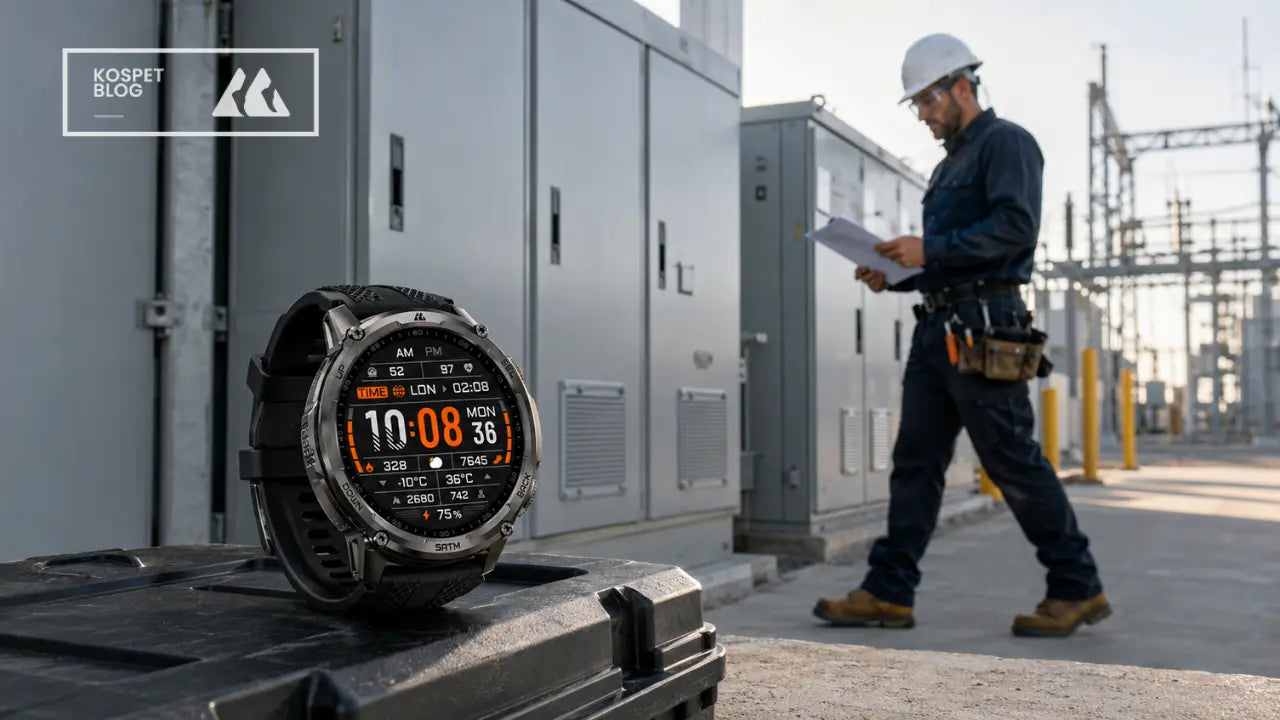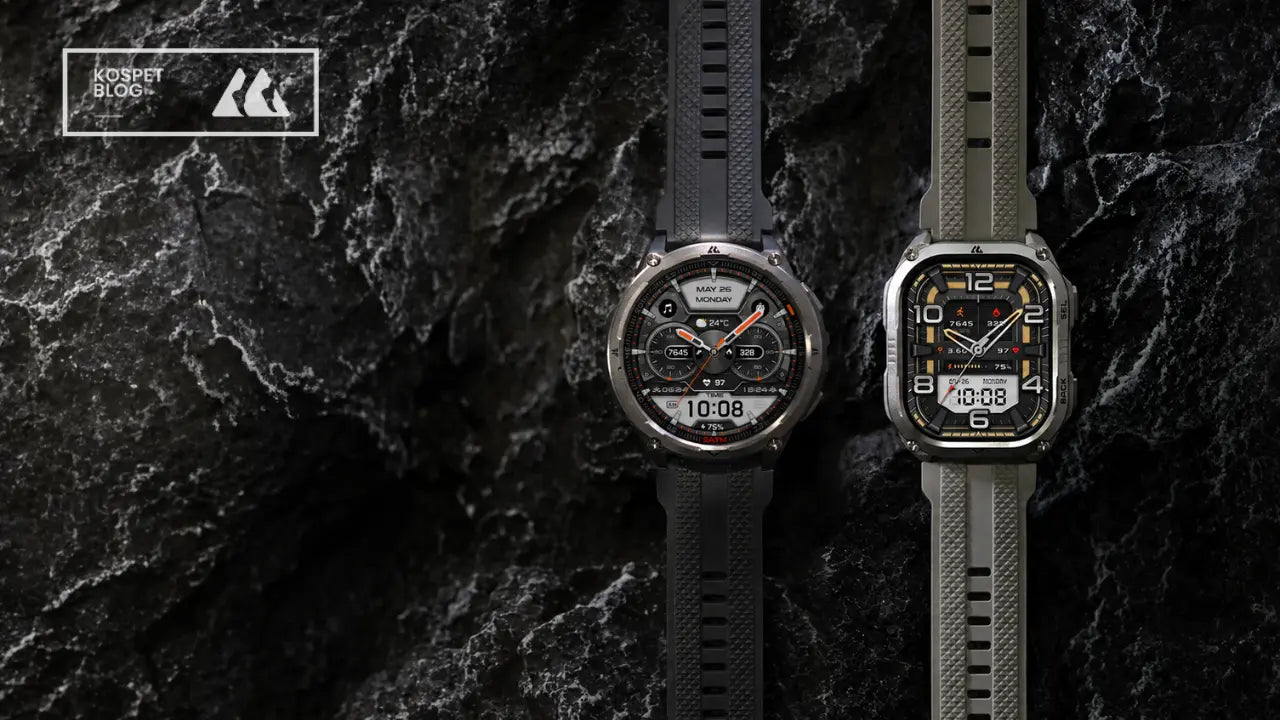

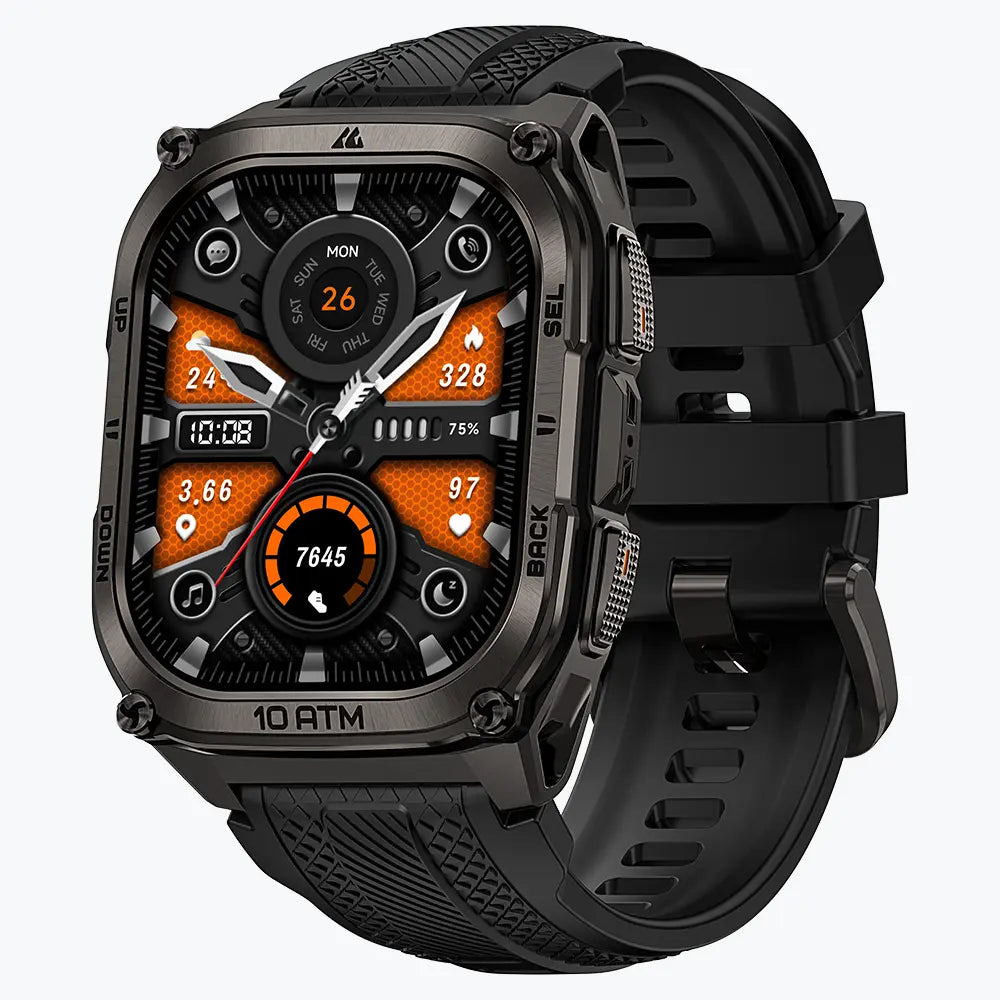
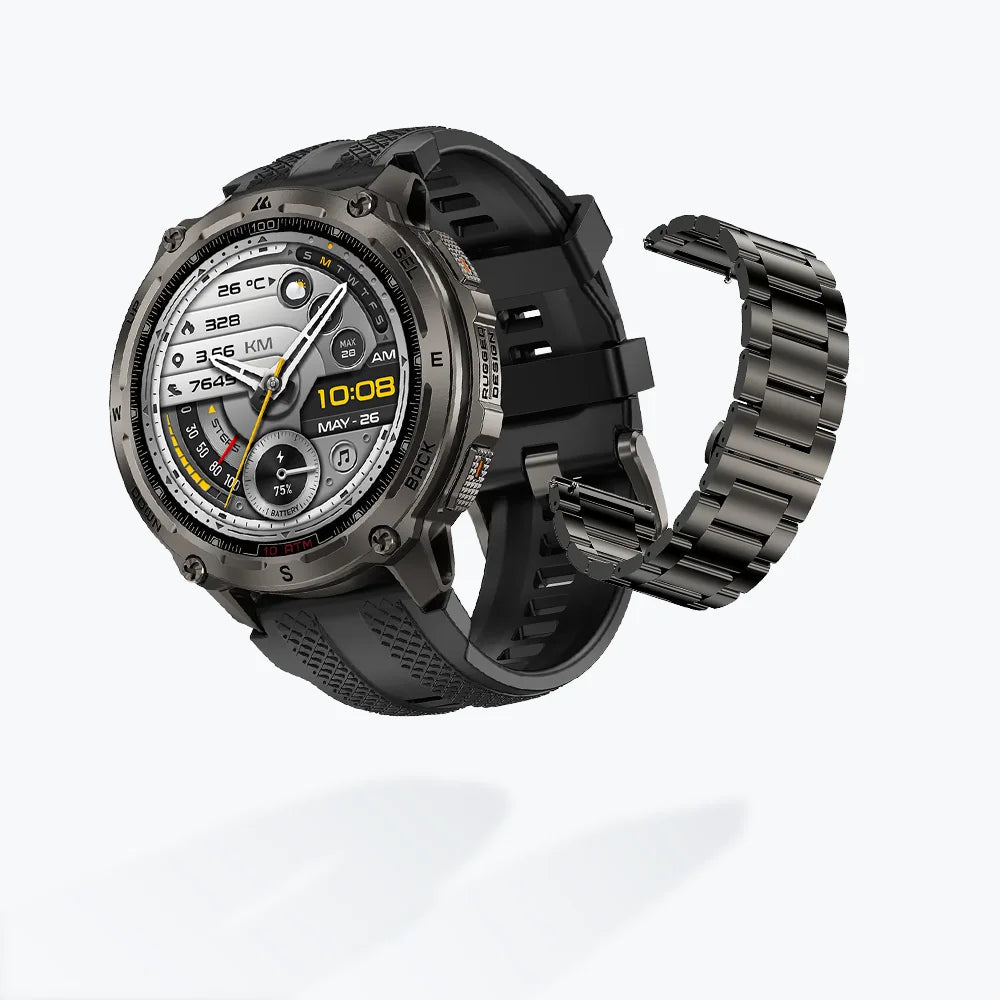
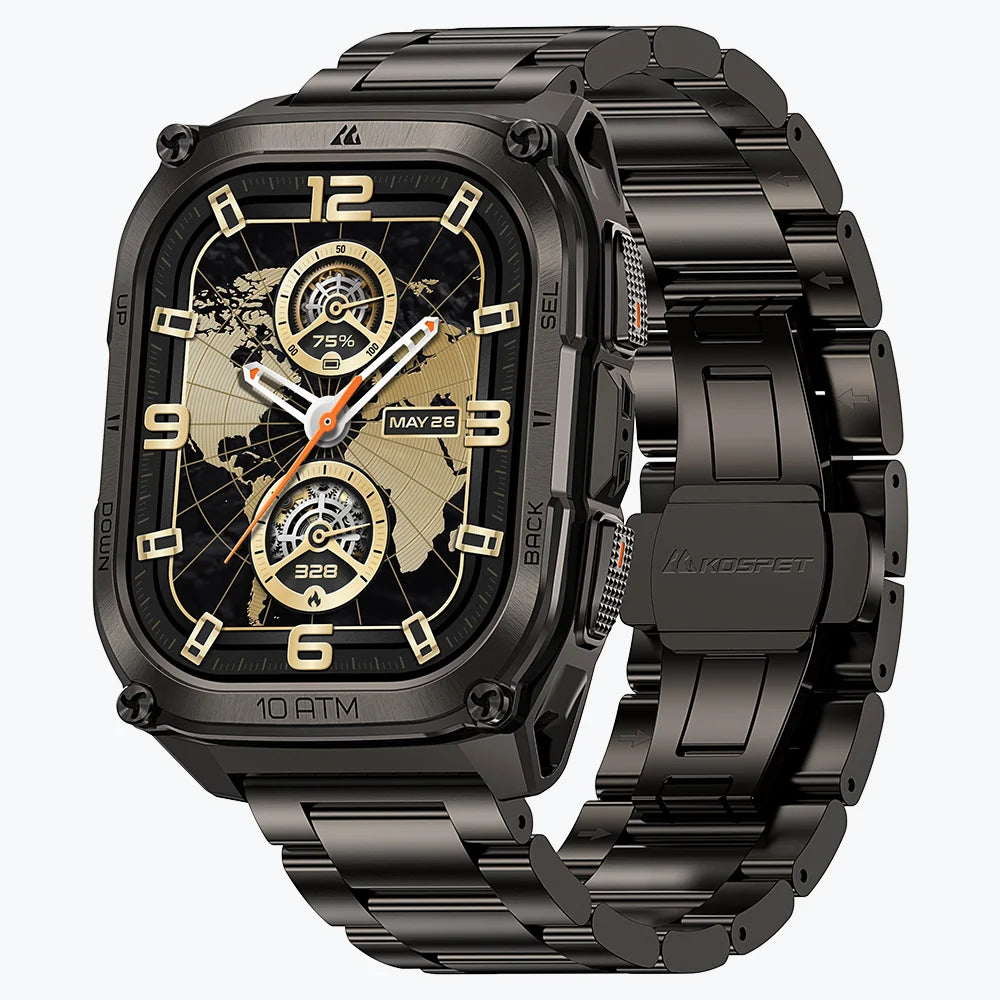
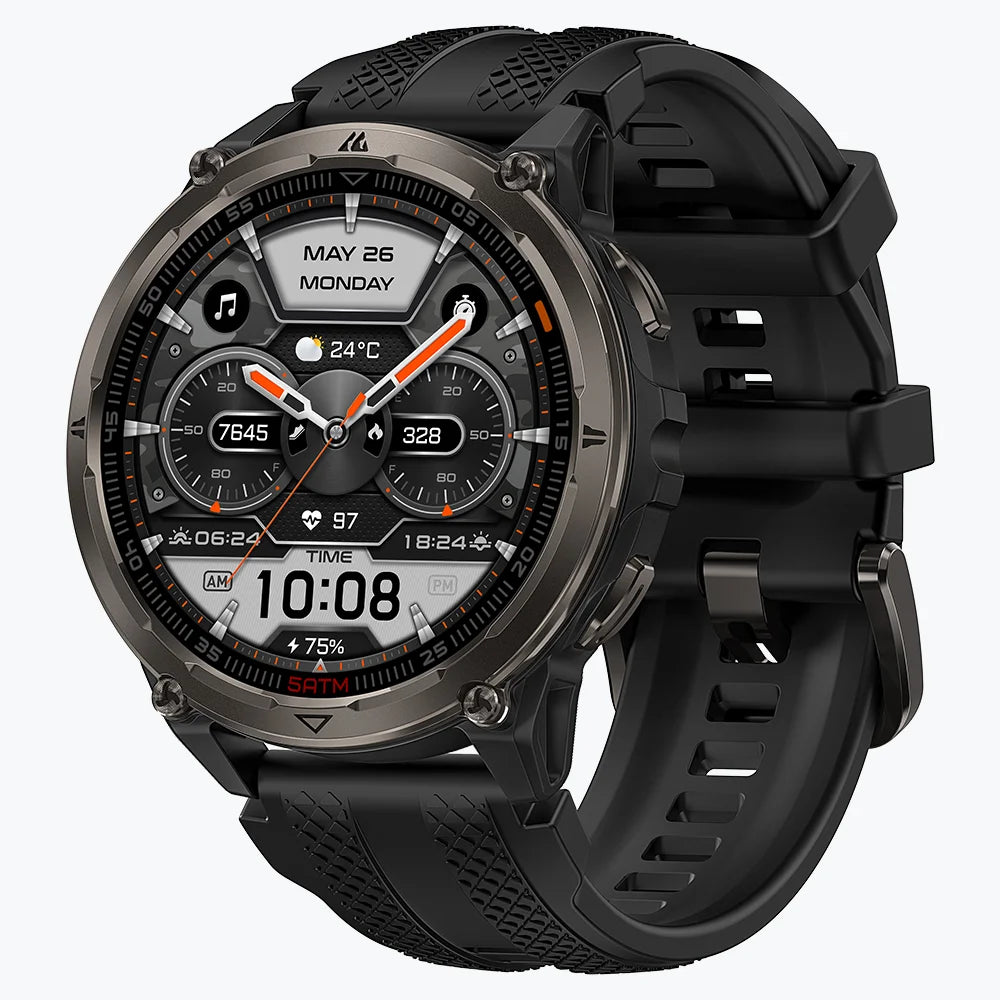

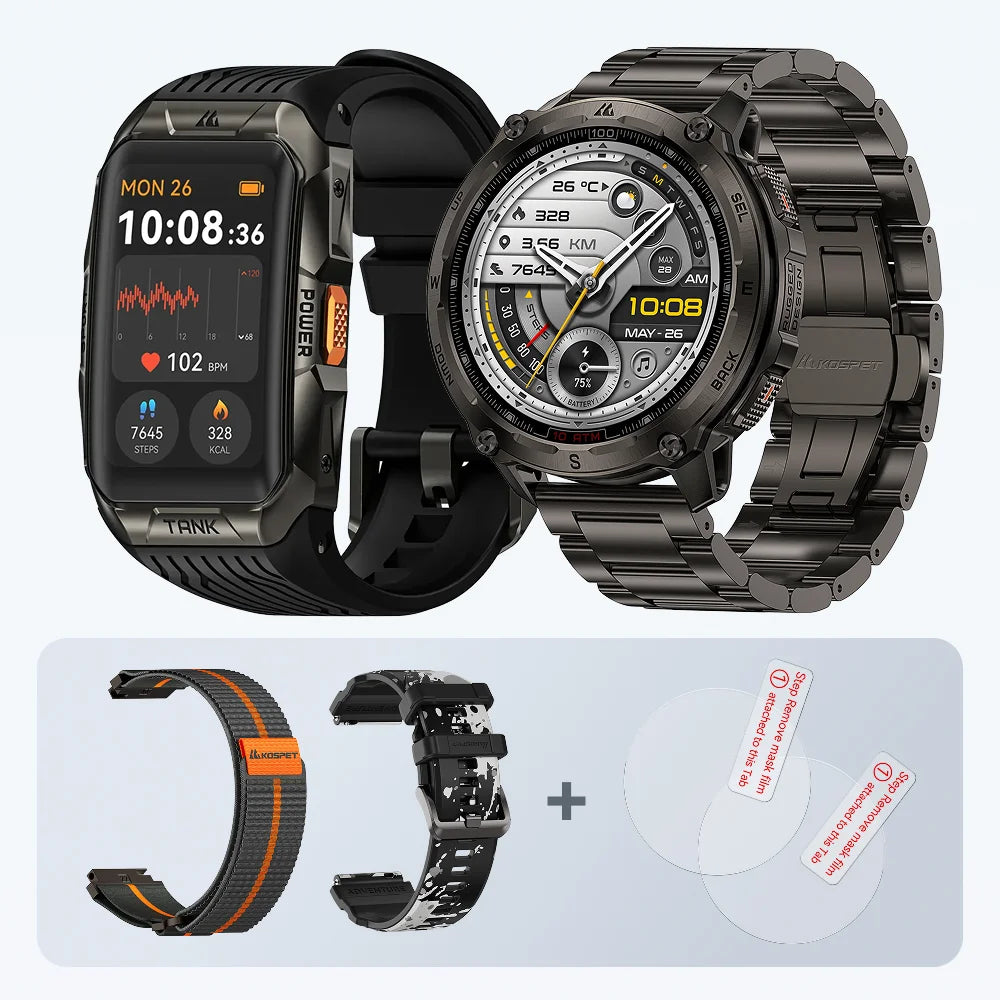
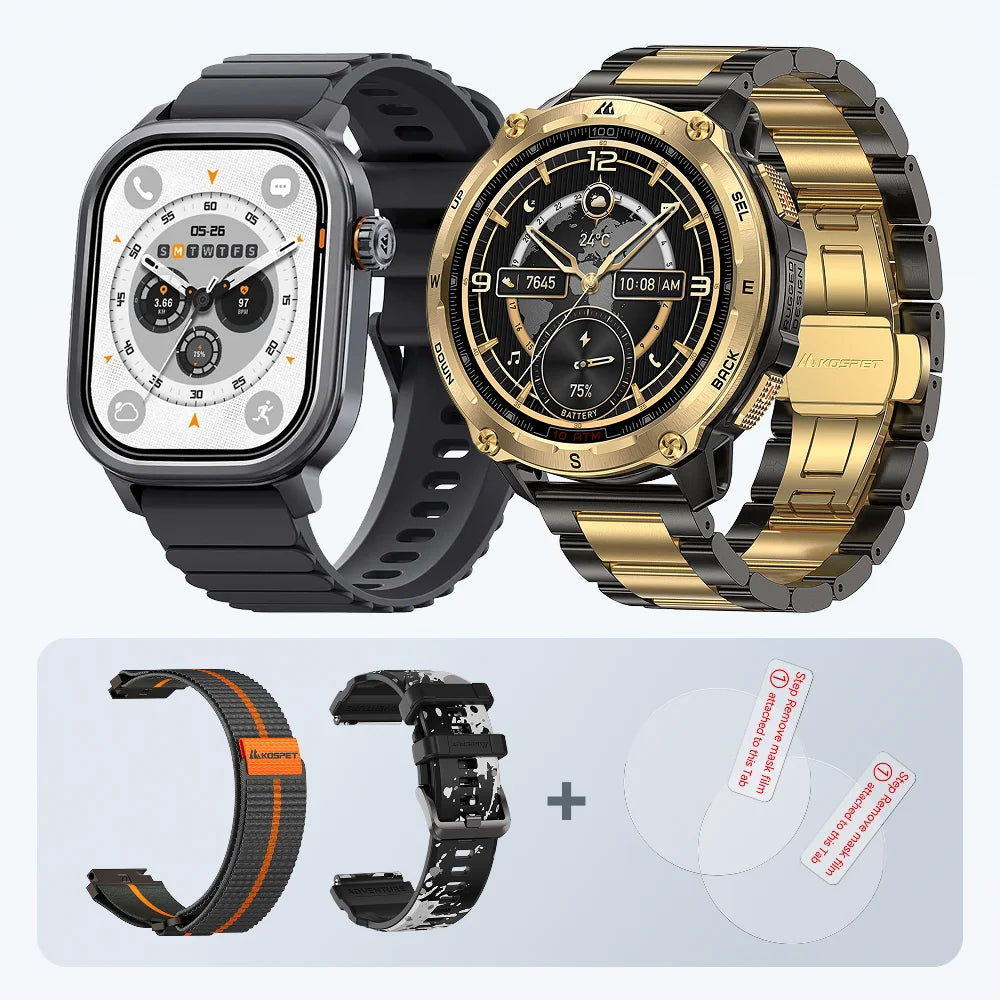
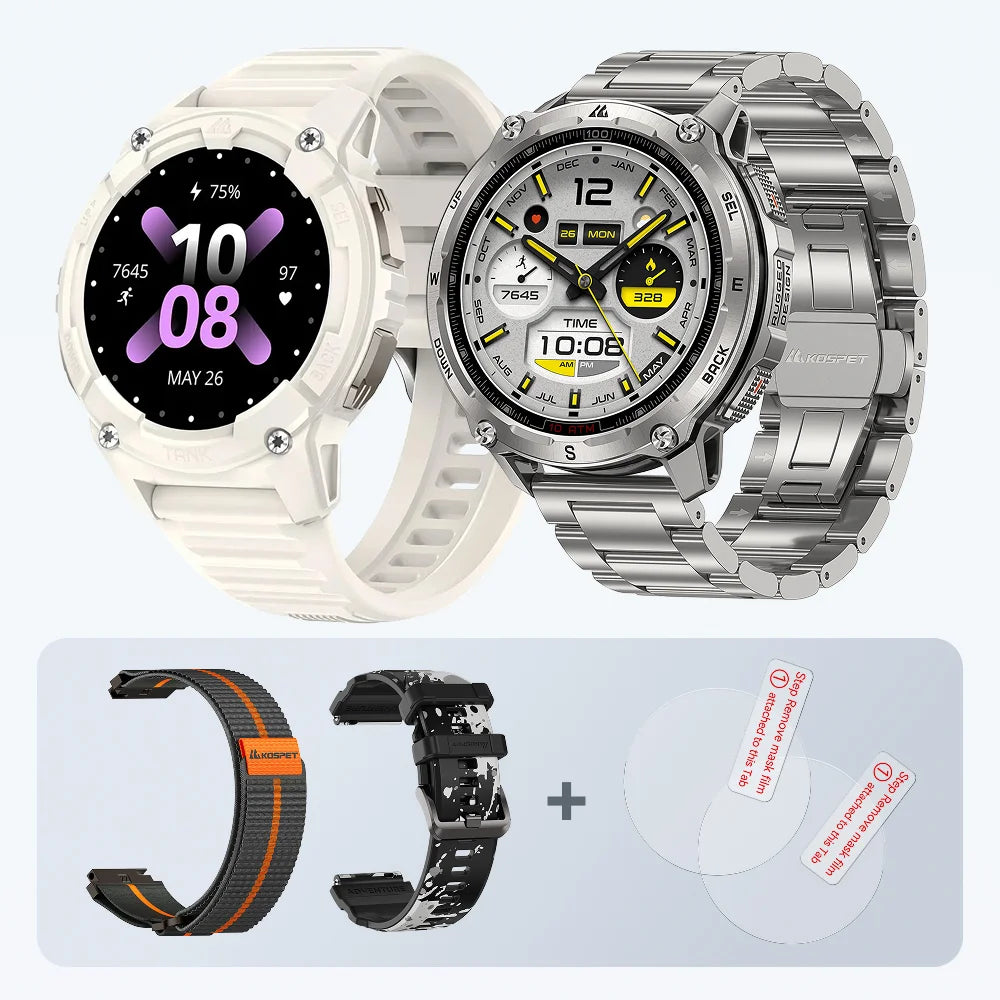
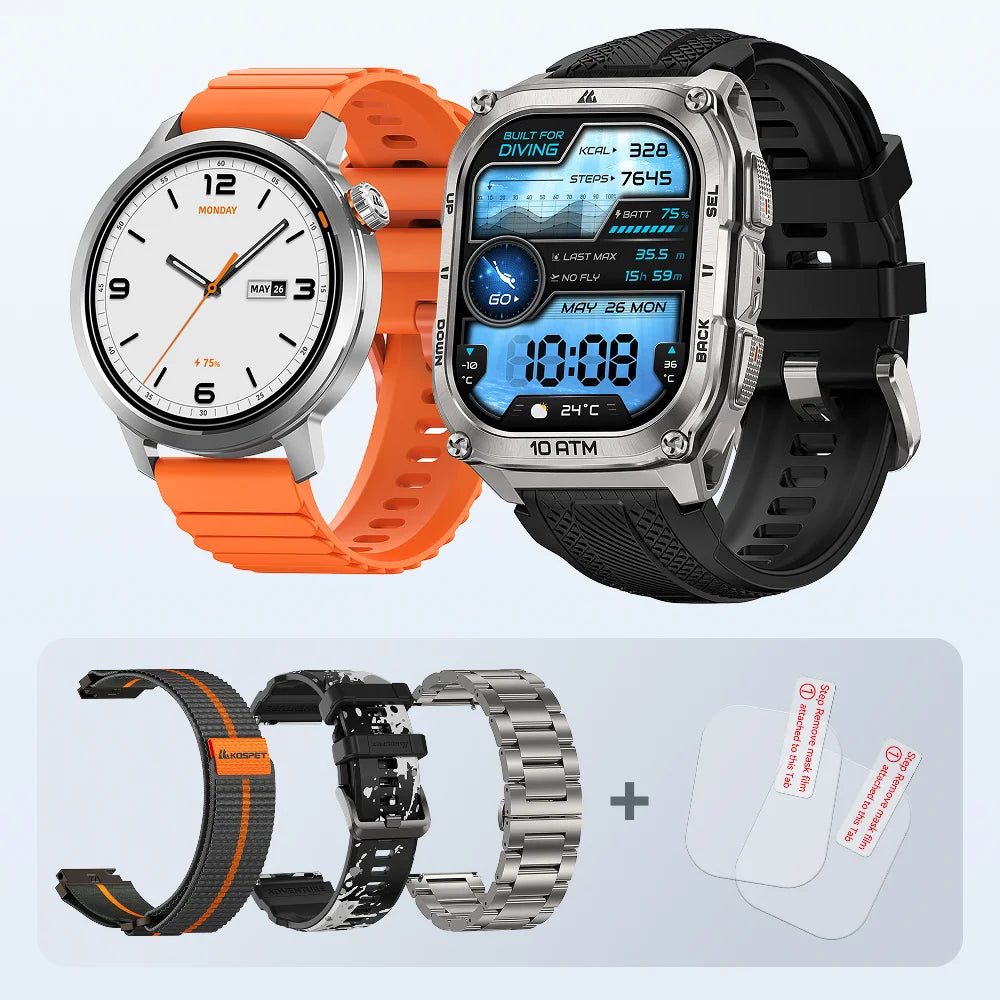
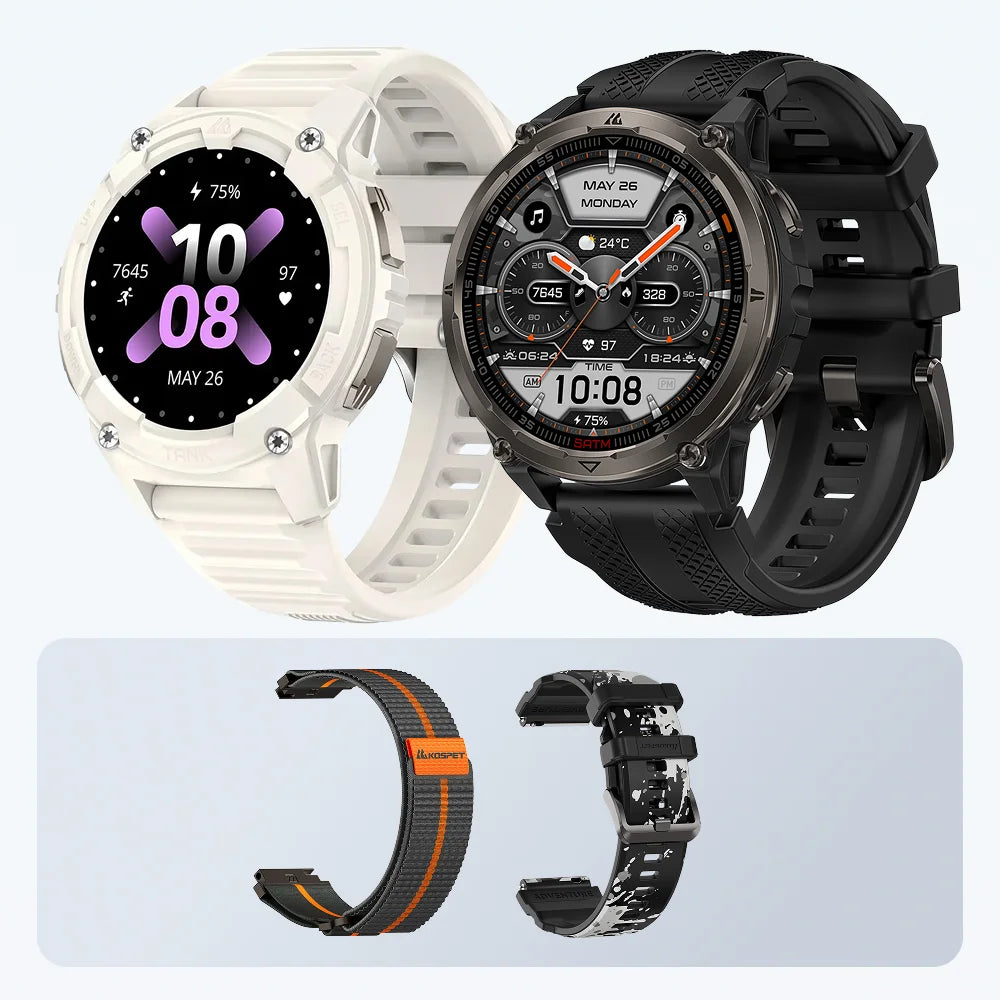
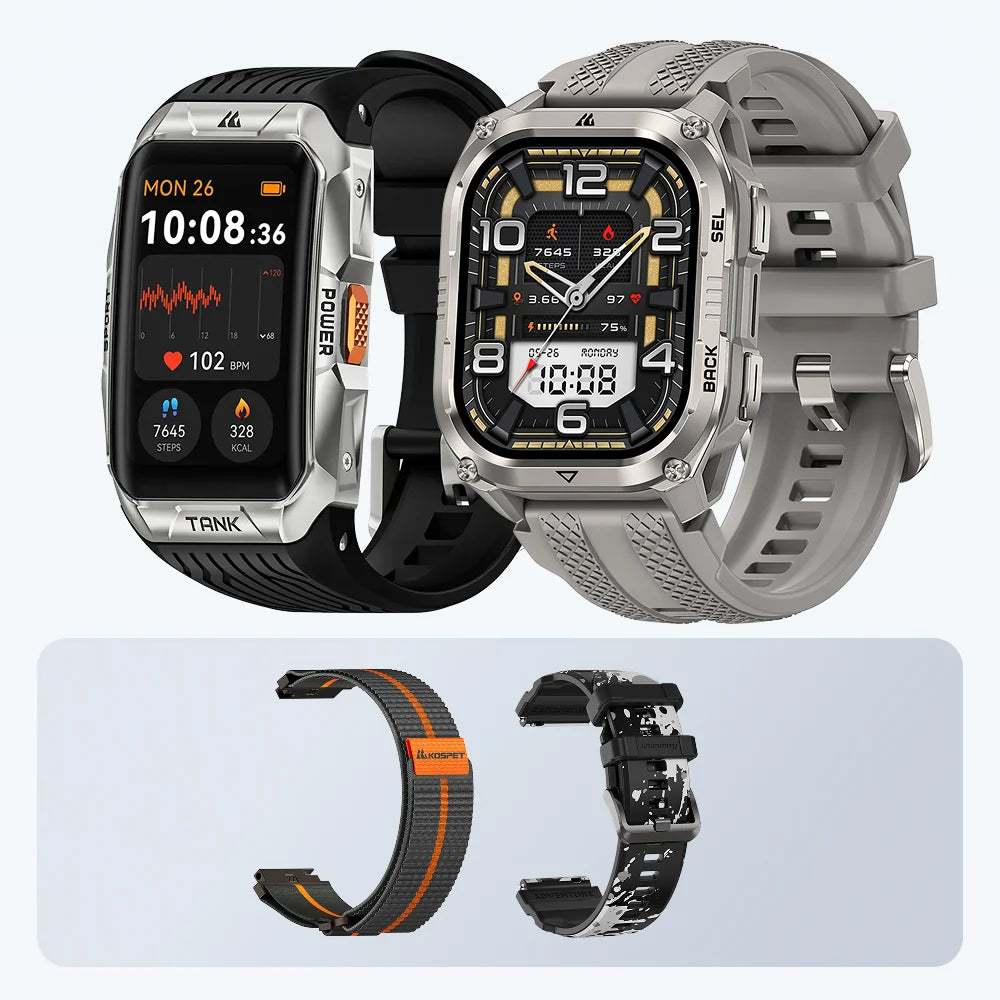
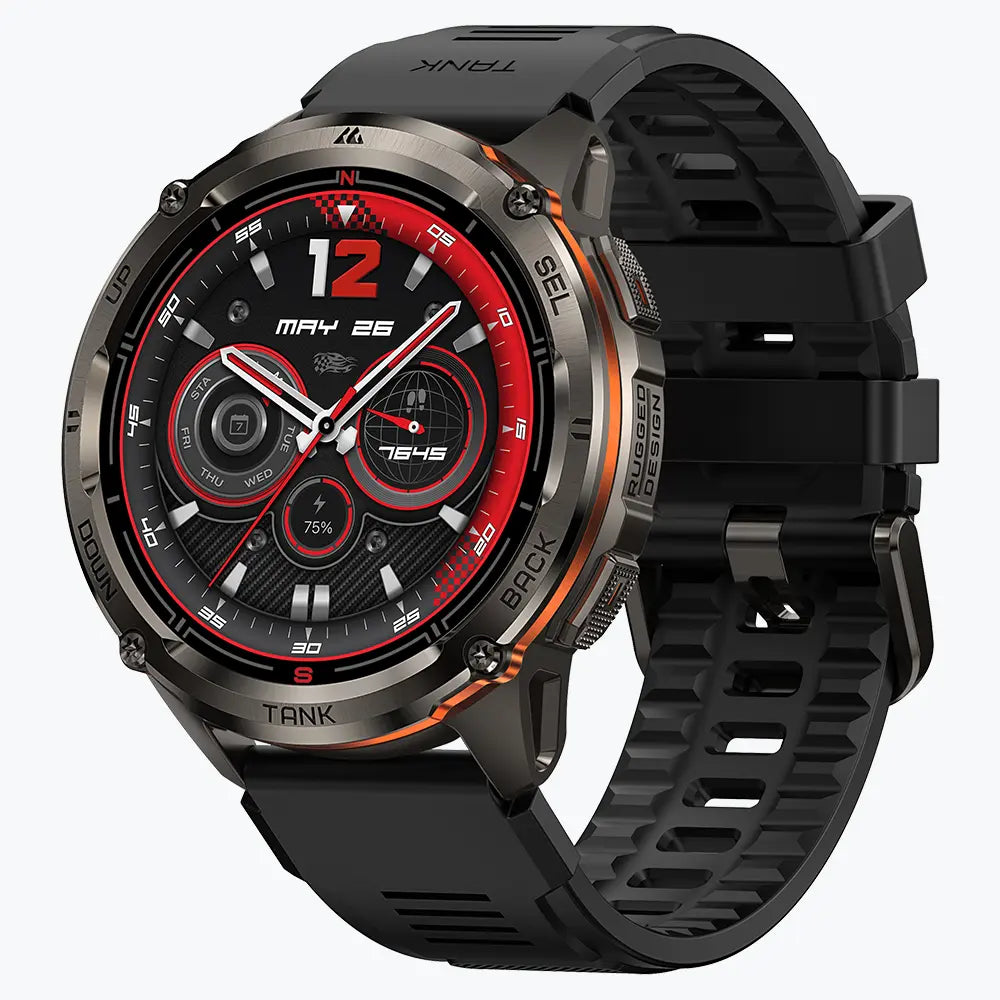


For construction, maintenance, warehouse, and other hands-on jobs, the KOSPET TANK T4 is the best overall choice. Its reinforced stainless-steel body, 10 ATM and IP69K ratings, and long battery life make it better suited to everyday knocks, dust, rain, and mud.
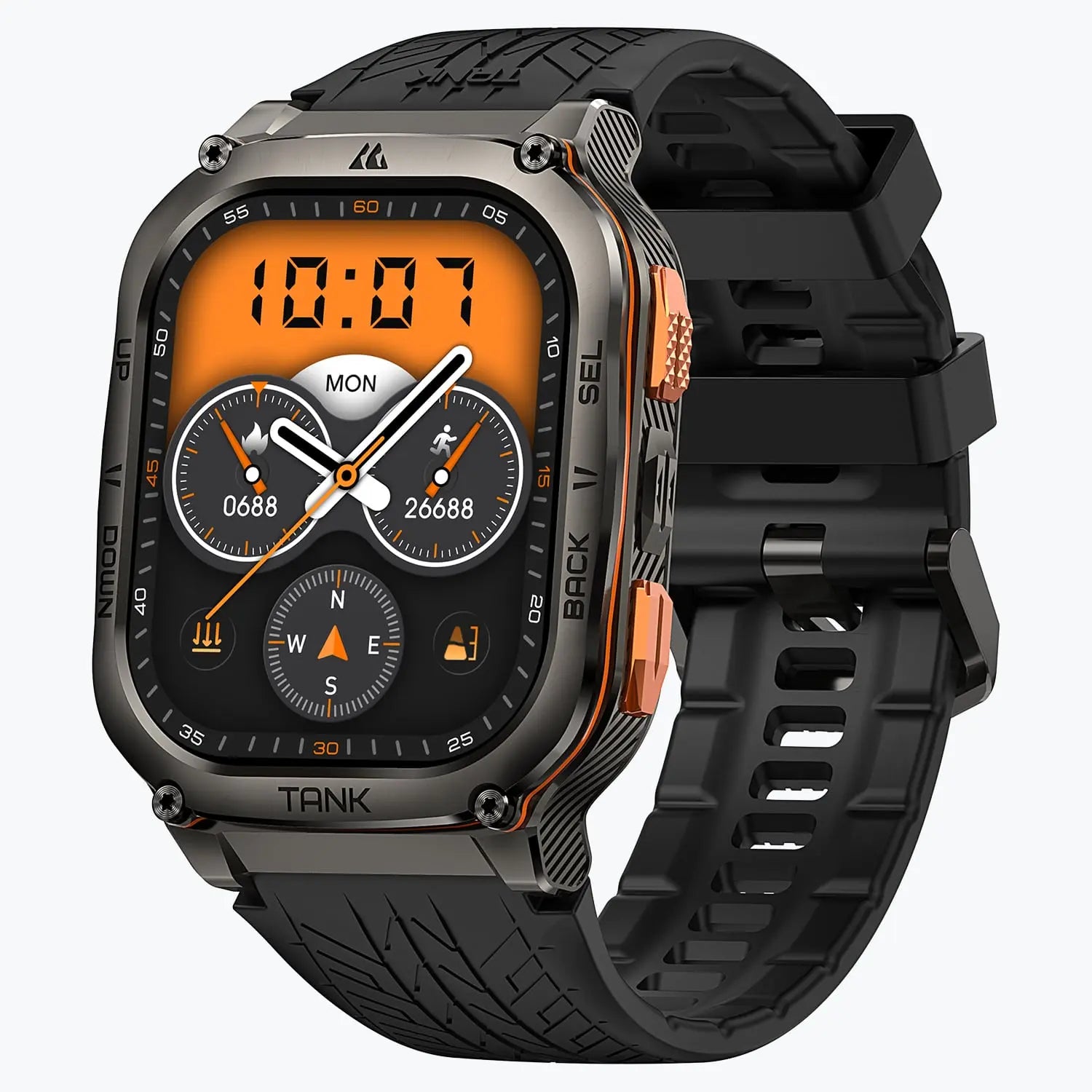
Workers who need a built-in flashlight may prefer the TANK T4C, while those who want a larger, easier-to-read display may find the TANK M4C more practical.

Who Needs a Rugged Smartwatch for Manual Labor?
A rugged smartwatch is most useful for workers whose wrists are regularly exposed to hard surfaces, dust, mud, rain, vibration, gloves, and long shifts. This includes construction workers, mechanics, warehouse staff, landscapers, farmers, plumbers, maintenance technicians, delivery drivers, and outdoor utility crews.
A work smartwatch may be a practical choice if you regularly:
- Carry materials past concrete, steel, shelving, or machinery.
- Work in dusty workshops, warehouses, farms, or construction areas.
- Encounter rain, mud, sweat, water spray, or frequent handwashing.
- Wear gloves that make touchscreen controls difficult.
- Need notifications without repeatedly taking out your phone.
- Work long or remote shifts with limited charging access.
- Need GPS, a compass, a flashlight, or short-range team communication.
A rugged watch is not automatically suitable for every task. Work involving rotating machinery, exposed electrical equipment, or strict PPE rules may require all wrist-worn devices to be removed.
What Usually Damages a Smartwatch During Manual Work?
Smartwatches used for manual labor are most often damaged by repeated knocks, abrasive dust, water ingress, exposed screens, loose straps, and unsuitable charging habits. The right design should address the hazards you actually encounter instead of simply looking rugged.
| Workplace hazard | How it can damage a smartwatch | Design feature to prioritize |
|---|---|---|
| Concrete, steel and tool edges | Chips, dents or a cracked display | Raised bezel and reinforced case |
| Sand, sawdust and fine debris | Blocked buttons or particles entering the case | Rated dust protection and sealed controls |
| Rain, mud and water spray | Moisture entering the case | Clearly stated IP and ATM ratings |
| Gloves and dirty hands | Difficult or inaccurate touchscreen operation | Accessible physical buttons |
| Outdoor sunlight | Information becomes difficult to read | High-brightness display |
| Long shifts and GPS use | Battery runs out before work ends | Published heavy-use battery estimate |
| Dark inspection areas | Phone must be removed to provide light | Integrated flashlight |
| Repeated wrist movement | Loose fit, discomfort or snagging | Secure strap and suitable case size |
No smartwatch is indestructible. However, choosing a design that matches these hazards can reduce unnecessary damage and make the watch more practical during a full workday.
Which Smartwatch Durability Features Matter Most for Manual Labor?
The most important durability features are a named environmental test standard, appropriate water and dust ratings, a protected case and screen, glove-friendly controls, and battery life measured under demanding use.
Does MIL-STD-810H Prove That a Smartwatch Is Tough?
MIL-STD-810H provides a recognized framework for testing equipment against environmental stresses such as vibration, shock, rain, dust, humidity and temperature changes. It is more useful than an unsupported “military-grade” label because the manufacturer can identify the test methods applied to the product.
However, MIL-STD-810H does not mean a smartwatch cannot be damaged. The U.S. Defense Logistics Agency describes it as an environmental engineering and laboratory test-method standard whose methods are tailored to specific equipment and conditions.
For users, the useful questions are:
- Does the manufacturer state how many methods were used?
- Does it identify the testing organization?
- Are the tested conditions listed?
- Does the physical design also protect the display and controls?
How Much Water and Dust Resistance Does a Work Smartwatch Need?
Workers exposed to dust, rain, mud or water spray should look for both an IP rating and an ATM water-resistance rating.
An IP rating describes the enclosure’s protection against solid particles and water ingress. An ATM rating relates to the pressure-based water-resistance testing used for watches. IEC explains the IP rating system, while ISO 22810:2010 specifies requirements and test methods for water-resistant watches.
These ratings do not make a smartwatch resistant to every liquid or condition. Hot showers, saunas, steam, solvents, fuel, oils and cleaning chemicals can affect seals or surface materials.
Why Do Case Shape, Buttons and Display Brightness Matter at Work?
A work smartwatch should protect the screen without becoming difficult to use or easy to snag. A raised bezel helps keep the display from making direct contact with flat surfaces, while a reinforced case spreads impact around the watch body.
Physical buttons are helpful when gloves, mud, sweat or rain make touchscreen gestures unreliable. Screen brightness also matters outdoors: a durable watch provides little value if the user cannot read a notification, timer or navigation prompt in direct sunlight.
Before choosing a large watch, check whether it fits comfortably under gloves, jackets and protective sleeves.
Which Battery-Life Figure Matters for Manual Workers?
The heavy-use battery estimate is more useful than the standby figure. GPS tracking, an always-on display, frequent notifications, Bluetooth calls and flashlight use can reduce operating time substantially.
A suitable work smartwatch should complete several normal shifts without requiring daily charging. Manufacturer battery figures should still be treated as estimates because brightness, temperature, signal strength, enabled features and usage frequency all affect real runtime.
Which KOSPET Smartwatch Is Best for Manual Labor?
The KOSPET TANK T4 is the best overall choice when case protection and water resistance are the main priorities.
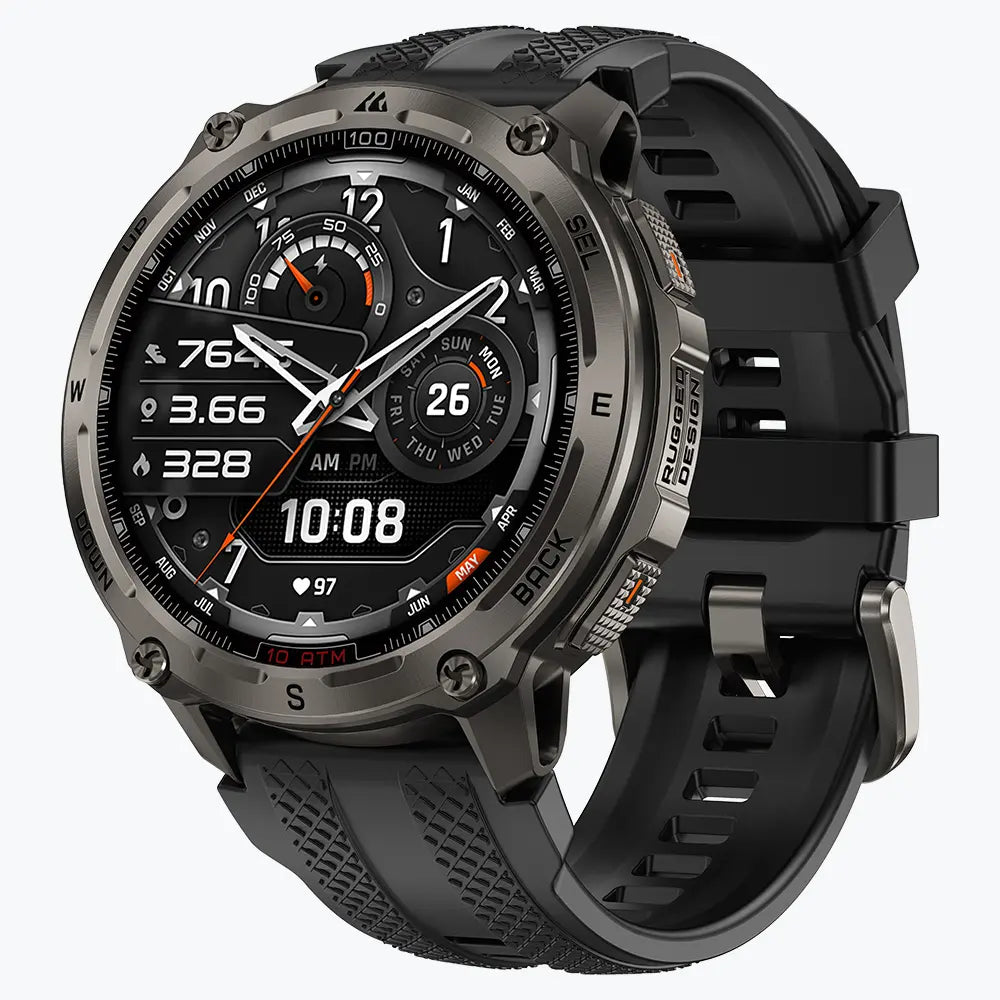
KOSPET TANK T4 Smartwatch
$209.99 USD
The TANK T4C is better suited to workers who prefer a round design with a built-in flashlight, while the TANK M4C offers the largest display and slightly longer published heavy-use battery life.
| Feature | KOSPET TANK T4 | KOSPET TANK T4C | KOSPET TANK M4C |
|---|---|---|---|
| Best suited to | Wet, dusty and demanding outdoor work | Construction and maintenance work requiring a flashlight | Mechanics, warehouse work and low-light tasks requiring a larger display |
| Durability design | Stainless-steel Inox shield structure; SGS testing across 20 MIL-STD-810H methods | Reinforced round construction designed for shock, rain, dust, vibration and temperature changes | 15-test military-grade construction |
| Water and dust ratings | 10 ATM and IP69K | 5 ATM and IP69K | 5 ATM and IP69K |
| Display | 1.43-inch AMOLED, up to 1,000 nits | 1.5-inch AMOLED, up to 1,000 nits | 1.96-inch AMOLED, up to 1,000 nits |
| Useful work features | Offline maps, 32GB storage, dual-band GNSS and short-range walkie-talkie | Five-level flashlight, dual-band GPS and short-range walkie-talkie | Five-level flashlight, dual-band GPS and short-range walkie-talkie |
| Published heavy-use battery | Up to 9–10 days | Up to 10 days | Up to 11 days |
| Published typical-use battery | Up to 14–15 days | Up to 15 days | Up to 16 days |
| Main consideration | Smaller display than the T4C and M4C | Lower ATM rating than the T4 | Largest case; check wrist and cuff clearance |
The battery figures above are KOSPET laboratory estimates. Actual performance varies with display settings, GPS use, calls, notifications, flashlight use, temperature and operating conditions. Use the KOSPET smartwatch comparison page to check current models and specifications before ordering.
What Smartwatch-Buying Mistakes Cause Problems at Work?
The most common mistake is choosing the watch with the most impressive specifications instead of the one that fits the user’s job, wrist and daily hazards.
Choosing features that do not match the job
Offline maps may be valuable for remote outdoor work, while a flashlight may be more useful to a mechanic or maintenance technician. Start with the problems encountered during a normal shift.
Ignoring wrist, glove and sleeve clearance
A larger screen is easier to read, but a larger case can catch on narrow spaces or interfere with gloves and protective clothing. Check the case dimensions against the PPE worn at work.
Comparing standby battery figures
Standby mode does not represent GPS tracking, calls, notifications, high brightness or flashlight use. Compare heavy-use estimates and allow extra capacity for long shifts.
Assuming accidental damage is included in the standard warranty
Standard warranty coverage and accidental-damage protection are different. Check the current KOSPET warranty policy and the terms of KOSPET Care before buying, especially if the watch will be exposed to frequent collisions or liquid contact.
When Should You Remove a Smartwatch at Work?
Remove a smartwatch whenever wearing it creates an entanglement, electrical, contamination or PPE-compliance risk. A rugged construction does not override workplace safety rules.
Do not wear the watch when:
- Working close to exposed rotating shafts, lathes, belts or other moving components.
- A wrist strap or watch case could become caught in equipment.
- Working near energized electrical parts where conductive items are prohibited.
- Site hygiene or contamination rules prohibit wrist-worn devices.
- The strap, buckle, case or battery is damaged.
- A supervisor, risk assessment or equipment manual requires its removal.
OSHA notes that hands, clothing and jewelry can be caught and pulled into rotating lathe components. OSHA guidance also addresses the electrical risks associated with conductive items near energized equipment. Follow the rules for the specific machine and workplace rather than relying on the durability rating of the watch. See OSHA’s lathe safety guidance and electrical apparel guidance.
FAQs
Can a KOSPET Smartwatch Work Without a Phone?
Yes. Several functions can continue without a constant phone connection.
The TANK T4 can use GPS, previously downloaded offline maps, stored music, workout modes and locally recorded health data. The TANK T4C and TANK M4C can use GPS, the flashlight, short-range walkie-talkie and local activity tracking.
Phone notifications, Bluetooth calling, app synchronization and some setup or download functions still require a paired smartphone. Offline maps and routes must also be prepared before the phone is unavailable. See KOSPET’s guide to phone-independent rugged watch features.
Can the Built-In Smartwatch Flashlight Replace a Professional Work Light?
No. The flashlight on the TANK T4C or TANK M4C is intended for quick, close-range tasks such as checking beneath equipment, reading a label or finding an object in a dark area.
It should not replace an approved task light, emergency light or hazardous-location light. Jobs involving explosive atmospheres, traffic control or formal illumination requirements need equipment certified for that environment.
Is a Silicone or Metal Strap Better for Manual Labor?
A silicone strap is usually the more practical option for manual labor because it is flexible, relatively light and easier to clean after exposure to sweat, dust or mud. It can also be more comfortable during repetitive wrist movement.
A metal strap can be durable, but it adds weight and may conduct electricity. The safest choice is a secure strap that fits under required PPE and complies with workplace rules.
When Should a Rugged Smartwatch Be Replaced?
There is no fixed replacement schedule. Stop using the watch and arrange inspection or replacement if you notice:
- A cracked case or deeply damaged display.
- Moisture appearing beneath the screen.
- Loose strap lugs or a buckle that no longer closes securely.
- Buttons that stick or fail to respond.
- Unusual heat, swelling or separation around the battery area.
- Battery life that can no longer complete a normal shift.
Do not charge a watch that shows battery swelling, severe impact damage or internal moisture. Contact KOSPET Support for the appropriate next step.