


Carregar um relógio todas as noites parece um fardo pesado. Muitos usuários temem que seu dispositivo esteja com defeito ou que simplesmente tenham azar com a tecnologia. Essa frustração é comum, mas a curta duração da bateria é, na verdade, padrão para essa categoria de produto.
O problema não é a má fabricação. É uma escolha de design deliberada. Os engenheiros projetam a maioria dos smartwatches para funcionar como computadores de pulso completos e em tempo real. A bateria não está sendo ignorada. Ela está sendo sobrecarregada pela demanda por funcionalidades.
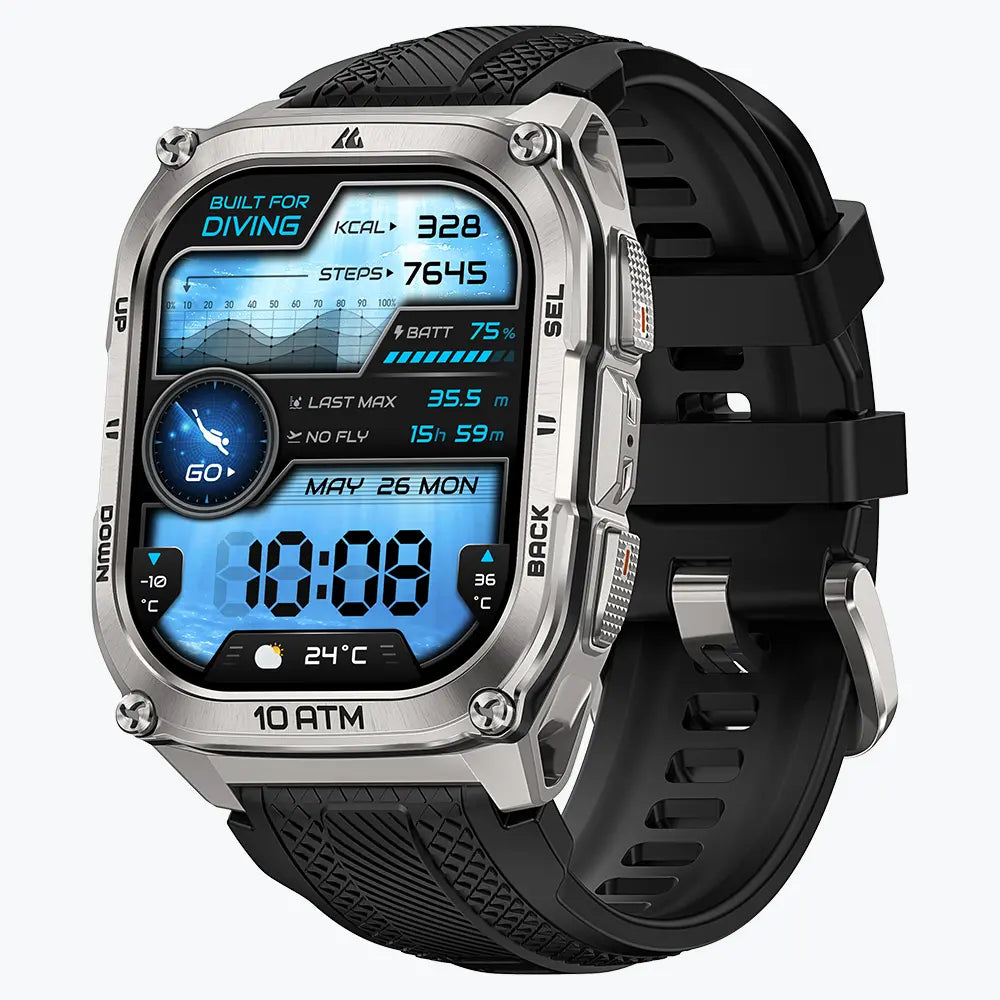
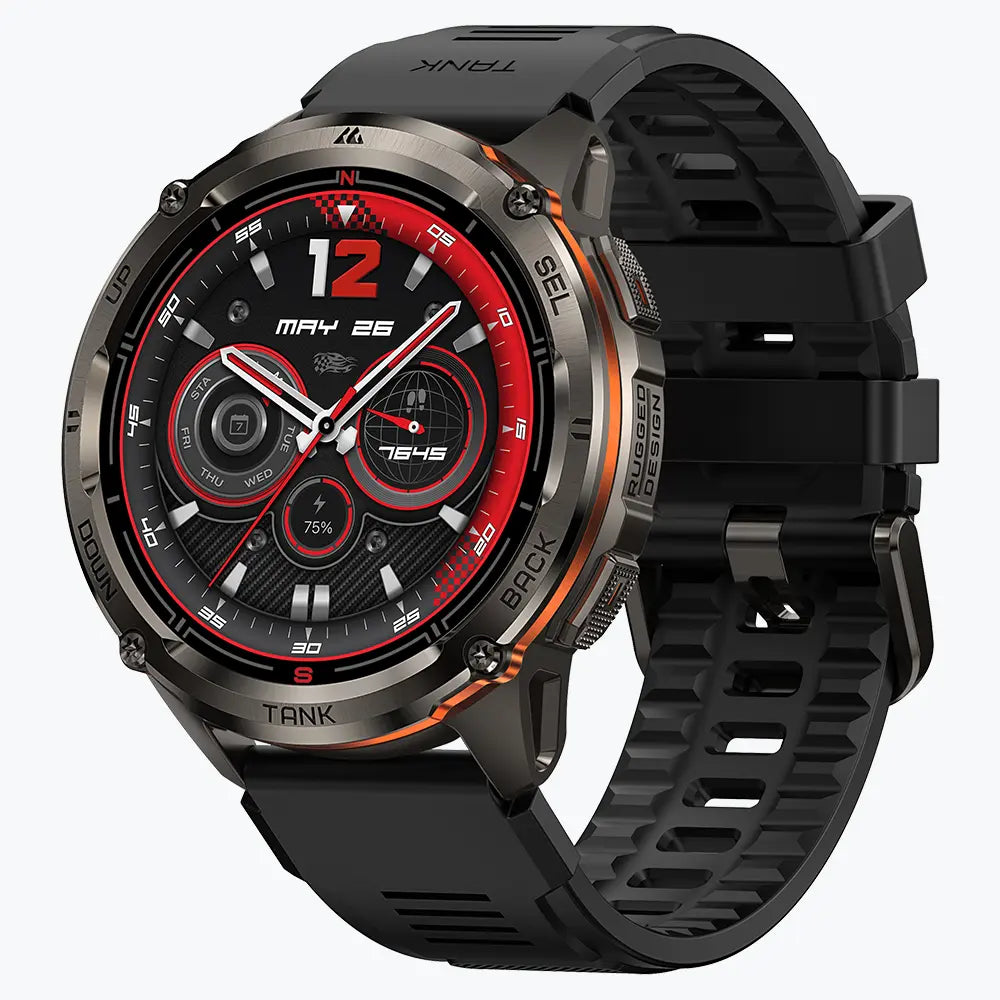
UM smartwatch com bateria de longa duração Ele foi projetado para realizar menos processamento e menos atualizações de tela, e é exatamente por isso que pode funcionar por dias ou semanas com uma única carga.
O monitoramento contínuo da saúde e as notificações instantâneas consomem, naturalmente, uma quantidade significativa de energia. O usuário deve compreender que o rápido consumo de energia não é um defeito, mas sim o custo inevitável do alto desempenho.
O que consome a bateria rapidamente em um smartwatch?
Precisamos desmembrar o conceito vago de consumo de bateria em fontes tangíveis. Três sistemas específicos consomem a maior parte da energia e limitam estruturalmente a duração da bateria de um relógio.
O tecnologia de exibição Atua como o principal consumidor de energia. Telas brilhantes e de alta resolução requerem energia sempre que um pixel é aceso.
Recursos como a tela sempre ativa obrigam o dispositivo a fornecer energia à tela constantemente. Optar por priorizar uma tela vibrante e com qualidade cinematográfica significa aceitar o carregamento diário.
A conectividade contínua também tem um custo elevado. Um smartwatch mantém uma ligação constante com o telefone e verifica frequentemente os sinais de Wi-Fi ou GPS. Cada sincronização de notificação e atualização meteorológica utiliza a antena e esgota a bateria.
Usuários que exigem um dispositivo que substitua completamente um smartphone não podem esperar a mesma durabilidade de um cronômetro dedicado.
A atividade dos sensores em segundo plano aumenta a carga. Sensores ópticos de frequência cardíaca emitem luzes contra a pele e acelerômetros rastreiam movimentos mesmo quando a tela está escura.
Essas tarefas cumulativas em segundo plano garantem que a bateria se esgote de forma constante ao longo do dia. O monitoramento contínuo e em tempo real da saúde da bateria impede, inerentemente, que ela dure várias semanas.
O que significa, de fato, uma bateria de longa duração para um smartwatch
Os consumidores precisam entender que a longa duração da bateria não é um número fixo nem um padrão universal. A autonomia é o resultado direto de escolhas específicas de projeto.
Uma duração de bateria de um ou dois dias representa um design focado em aplicativos robustos e animações fluidas. Uma duração de bateria de duas semanas indica um design focado em monitoramento de atividades físicas e notificações eficientes.
O usuário precisa entender que sacrificar certos recursos não significa uma regressão. Trata-se de uma escolha consciente para priorizar a confiabilidade. A decisão de abrir mão da tela mais brilhante ou da interface de aplicativo mais fluida é uma decisão de se tornar independente da tomada.
A longa duração da bateria não é um recurso extra adicionado ao relógio. É um reflexo daquilo que o relógio deliberadamente exclui. Essa mentalidade muda o foco da ausência de recursos para a obtenção de uma experiência perfeita.
Autonomia da bateria de smartwatches: comparação entre o que foi anunciado e o que realmente aconteceu.
Frequentemente, existe uma discrepância significativa entre os números oficiais de duração da bateria indicados na caixa e a experiência real no dia a dia. Isso ocorre porque os fabricantes testam os dispositivos em condições controladas de laboratório.
Os laboratórios testam os relógios com o brilho da tela configurado para baixo e limitam rigorosamente o número de notificações recebidas. Eles desativam recursos que consomem muita energia, como o GPS, para obter a pontuação máxima possível em desempenho da bateria.
O uso real envolve exposição à luz solar externa, que exige alto brilho da tela e centenas de alertas vibratórios.Essas tarefas ativas consomem energia muito mais rapidamente do que os modos de espera usados nos testes.
Os usuários devem entender que os dados oficiais não são enganosos. Eles representam o teto de desempenho absoluto, e não a linha de base diária.
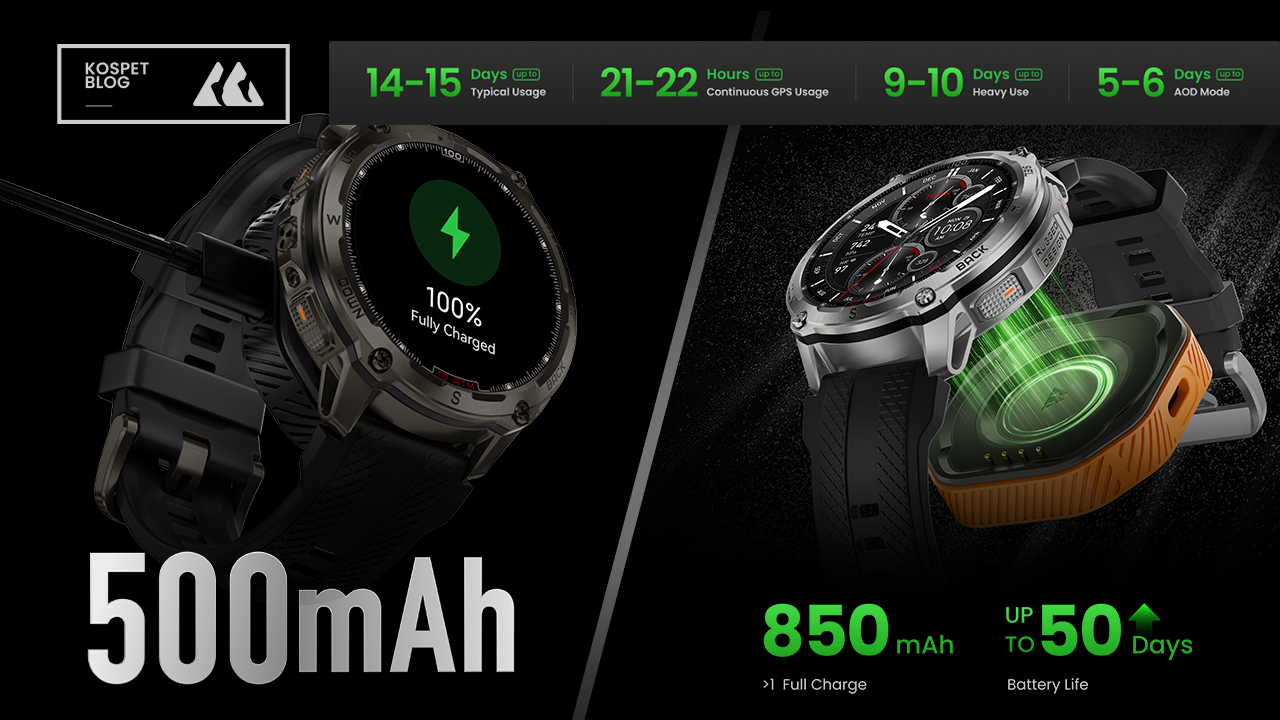
Nota: Alguns relógios para atividades ao ar livre oferecem modos de baixo consumo de energia específicos. Por exemplo, o KOSPET
Quais tipos de smartwatches têm maior duração de bateria com uma única carga?
É mais eficaz selecionar uma categoria de relógio do que um modelo específico. Categorias diferentes possuem capacidades de bateria distintas.
Os smartwatches com extensão priorizam a integração com aplicativos e o celular. Esses dispositivos utilizam processadores potentes e sistemas operacionais complexos. Normalmente, precisam ser carregados diariamente.
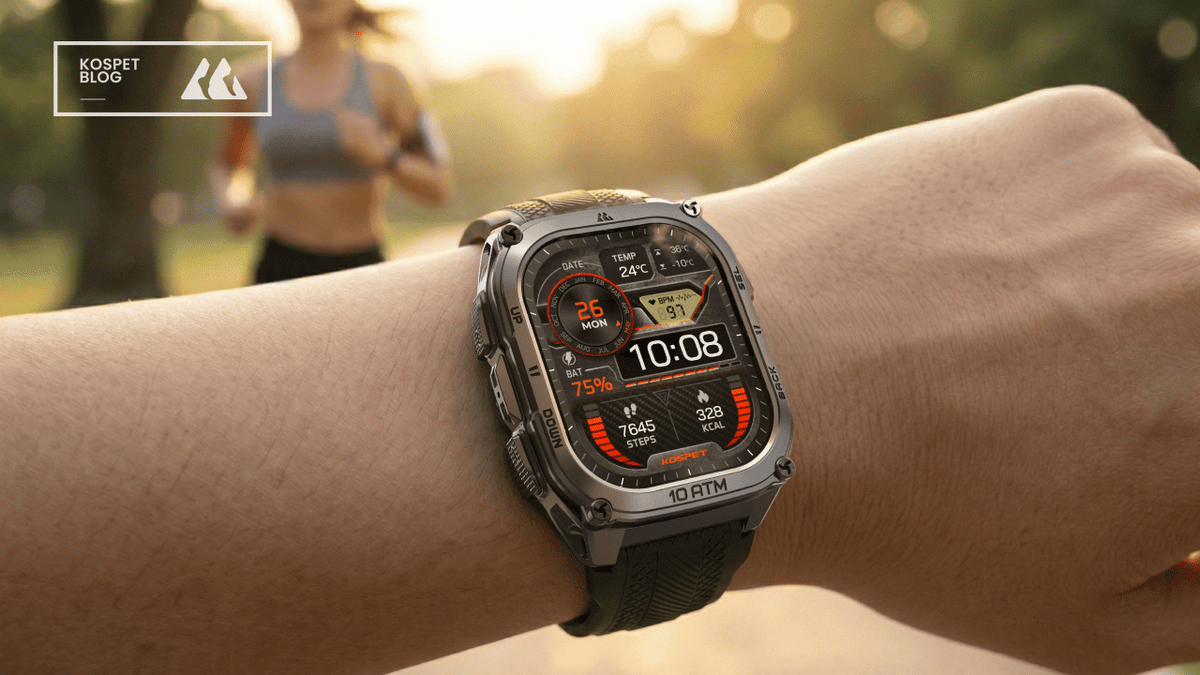
Relógios inteligentes para esportes e atividades ao ar livre priorizam Precisão do GPS e métricas de saúde. Esses dispositivos geralmente usam telas com baixo consumo de energia e software simplificado. Em geral, a bateria dura semanas com uma única carga.
Os smartwatches híbridos priorizam estilo e durabilidade. Esses dispositivos não possuem tela totalmente digital e utilizam ponteiros físicos ou tinta eletrônica. Eles oferecem a maior duração de bateria, podendo funcionar por meses.
Como avaliar a duração da bateria antes de escolher um smartwatch
Os compradores podem avaliar a potencial durabilidade de um relógio antes da compra, analisando as especificações técnicas.
Primeiro, examine a relação entre o tipo de tela e o tamanho da bateria. Uma tela grande e brilhante combinada com uma bateria pequena sempre resultará em uma autonomia curta. Segundo, verifique a classificação de duração da bateria com o GPS ativo. Esse número revela a verdadeira eficiência do sistema sob carga.
Uma alta classificação de bateria do GPS geralmente indica um bom desempenho geral da bateria. Por fim, considere o sistema operacional. Um relógio que permite a instalação de aplicativos de terceiros consome mais energia do que um relógio com um conjunto fixo de recursos.
Quem realmente precisa de um smartwatch com bateria de longa duração?
Nem todos os usuários precisam de um smartwatch com bateria que dure semanas. A necessidade de longa duração da bateria depende inteiramente do estilo de vida.
Um trabalhador urbano que se desloca diariamente para o trabalho sentado pode facilmente carregar um relógio todos os dias, juntamente com o celular. Esse usuário obtém mais valor de recursos inteligentes avançados do que de uma bateria de longa duração.
Um usuário focado no monitoramento da saúde precisa usar o relógio enquanto dorme. Essa necessidade dificulta o carregamento diário. Um dispositivo com bateria de longa duração é essencial para permitir o monitoramento do sono.
Aventureiros e caminhantes enfrentam um problema de segurança. Um relógio sem bateria significa perder mapas e dados em meio à natureza. Esses usuários precisam, sem dúvida, de uma bateria de longa duração para garantir que o dispositivo funcione durante toda a viagem.
Conclusão
Escolher o smartwatch certo exige uma compreensão clara das necessidades pessoais, em vez da busca por um milagre tecnológico. Alto desempenho requer potência, enquanto autonomia exige simplicidade. A duração ideal da bateria é simplesmente aquela que suporta a rotina diária sem causar preocupação.
Os compradores devem ignorar a propaganda e focar na realidade prática de sua própria rotina. Um relógio é uma ferramenta e serve ao usuário, e não o contrário.
Perguntas frequentes
O que é considerado uma longa duração de bateria para um smartwatch?
De modo geral, considera-se que um smartwatch tem bateria de longa duração se ela durar pelo menos uma semana com uso diário regular. Qualquer duração superior a duas semanas geralmente significa que o relógio foi projetado com menos recursos inteligentes para economizar energia.
Por que a maioria dos smartwatches dura apenas um ou dois dias?
A maioria dos smartwatches descarrega rapidamente porque executam sistemas operacionais completos, usam telas brilhantes e mantêm conectividade constante. Esses recursos exigem energia contínua, tornando a curta duração da bateria uma consequência do projeto, e não um defeito.
Os relógios inteligentes com bateria de longa duração sacrificam recursos inteligentes?
Sim. A longa duração da bateria é alcançada limitando os aplicativos em segundo plano, a atividade da tela e as funções em tempo real. Quanto maior a duração da bateria, mais seletivo o relógio precisa ser em relação ao que faz.