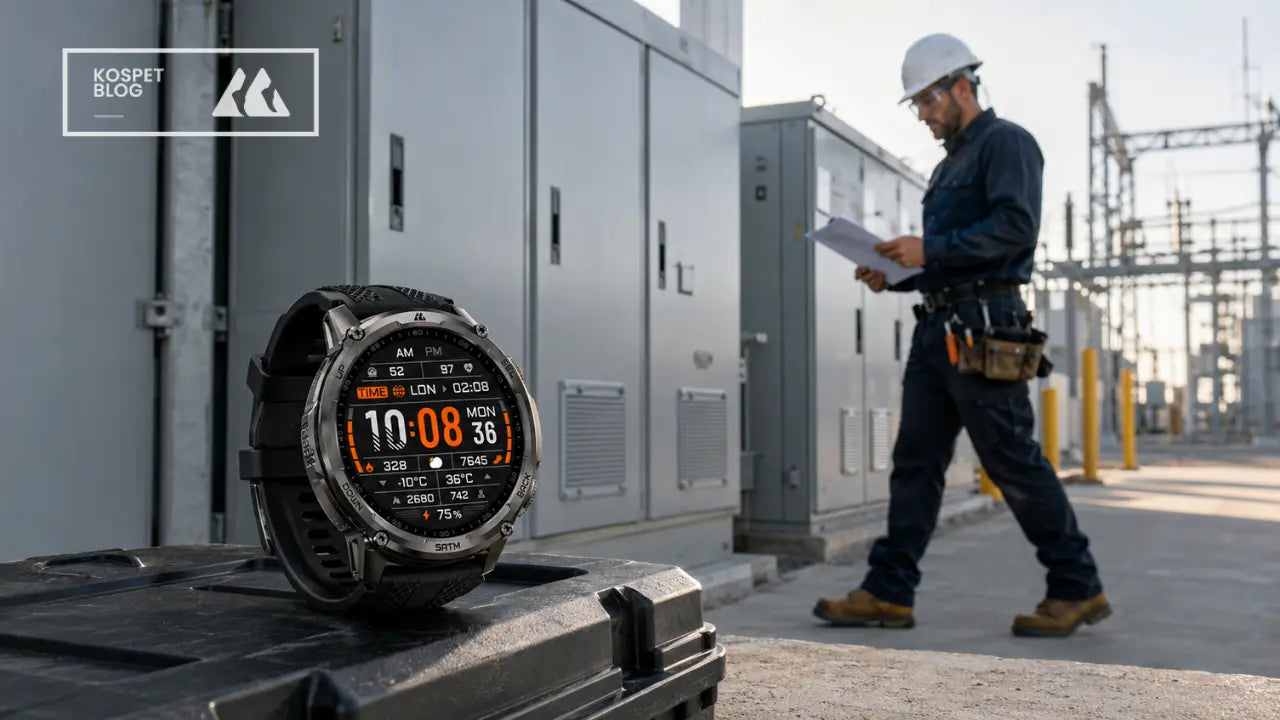



Choose a rugged smartwatch by matching its durability, functions and active-mode battery life to your main activity. Prioritize navigation for hiking, verified water support for swimming or diving, and impact and dust protection for work. Do not rely on a rugged-looking case, ATM rating or standby claim alone.
Who Needs a Rugged Smartwatch?
Rugged smartwatches suit people who regularly encounter impact, dust, water, harsh weather or limited access to charging. Hikers, campers, trail runners, swimmers, divers and field workers often need protection or outdoor functions that standard smartwatches do not prioritize.
Daily notifications, indoor workouts and basic health tracking rarely require maximum protection. A regular smartwatch often provides a lighter design and a broader app ecosystem for those routines. The added size, weight and cost of a rugged smartwatch create value only when they solve a real problem.
How Do You Choose the Right Rugged Smartwatch?
- Define the main activity. Unfamiliar trails, underwater use and construction work create different requirements.
- Choose the essential function. Navigation, diving support, relevant durability or active-mode endurance becomes the first buying boundary.
- Verify the evidence. Published test details and operating limits carry more value than broad marketing labels.
- Compare the correct battery mode. Daily use, AOD, continuous GPS and map navigation produce different runtimes.
- Review ownership factors. Phone compatibility, app support, charging access, wrist fit and budget complete the decision.
Display readability, control access and case size also affect practical use. A bright screen loses value when wet hands or gloves block operation, while a large case can interfere with sleeves or protective equipment. The guide to lightweight and heavy-duty rugged smartwatches explains these trade-offs in detail.
What Durability Ratings Does a Rugged Smartwatch Need?
No single rating covers every hazard. The useful evidence comes from tests that match the expected environment.
| Rating or Evidence | What It Establishes | Main Limit |
|---|---|---|
| MIL-STD-810H test information | Selected tests for shock, vibration, humidity, temperature or other conditions | The label alone does not reveal which tests were completed |
| IP rating | Tested protection against dust and water ingress | It does not confirm swimming or diving support |
| ATM rating | Resistance to water pressure under defined conditions | The number does not establish the same diving depth |
| Impact and operating-range data | Protection against specified impacts and normal operation within a stated temperature range | Results only apply to the published test conditions |
Construction work gives greater weight to impact, vibration and dust. Desert use adds heat and sand exposure, while cold-weather activities require a published operating range. More certifications do not automatically create a stronger choice; relevant testing matters more than the number of badges.
The rugged smartwatch durability ratings guide covers MIL-STD-810H, IP and ATM ratings in greater detail.
How Much Water Resistance Does an Outdoor Smartwatch Need?
Choose water protection by activity and operating depth rather than by the largest rating number.
| Water Use | What to Confirm |
|---|---|
| Rain, sweat and hand washing | Stated daily water resistance and care instructions |
| Pool or open-water swimming | Explicit activity support, available swim data and control restrictions |
| Freediving or scuba diving | Published operating depth, dedicated dive modes and underwater controls |
| Saltwater, hot water or steam | Written usage limits, cleaning requirements and material guidance |
A 5 ATM rating does not establish diving support at 50 meters. IP69K covers specific high-pressure and high-temperature water tests, not underwater activity approval. The exact smartwatch instructions set the final boundary.
Controls deserve attention after the activity requirement is met. Touchscreens can lock or respond poorly underwater, so swimmers and divers need an operating method designed for the supported use. The guide to water-resistant and waterproof smartwatches provides a fuller comparison of IP, ATM, swimming and diving limits.
Which GPS and Navigation Features Matter in a Rugged Smartwatch?
Built-in GPS records location, but it does not guarantee route guidance or offline maps. Route complexity determines the navigation level that belongs on the shortlist.
| Navigation Level | What It Provides | Suitable Use |
|---|---|---|
| Activity recording | Stores the path already travelled | Running, riding and familiar routes |
| Route Back | Guides the user along a recorded path in reverse | Direct out-and-back activities |
| Breadcrumb navigation | Displays a prepared route line and current position | Planned routes with multiple turns |
| Offline maps | Adds surrounding roads, trails or geographic context | Unfamiliar areas and complex junctions |
Satellite hardware and navigation software solve separate problems. Multi-band GNSS can improve positioning in challenging terrain, but it cannot add route import, off-course guidance or map storage. Before purchase, confirm the supported route format, download process and navigation runtime.
GNSS continues recording beyond cell coverage. Live calls, messages, map downloads and route transfers keep their own phone or network requirements. Compare the navigation levels in the guide to Route Back, breadcrumb navigation and offline maps, then review outdoor smartwatch use without cell service for offline preparation.
How Much Battery Life Does a Rugged Smartwatch Need?
Battery life must cover the longest-running feature used during the activity. Typical-use days describe daily ownership; continuous-GPS hours determine outdoor tracking endurance.
| Usage Pattern | Relevant Battery Figure |
|---|---|
| Daily wear | Typical-use or heavy-use days |
| Always-On Display | AOD runtime |
| Hiking, running or riding | Continuous-GPS hours |
| Multi-day trips | Total planned GPS hours across the trip |
| Offline map navigation | GPS runtime with extra margin for display and map use |
A three-day trip with six GPS hours per day creates an 18-hour tracking requirement. Screen brightness, notifications, maps and environmental conditions reduce the remaining reserve. The published GPS figure therefore needs comfortable headroom above the planned total.
Battery capacity alone cannot predict runtime because the display, sensors, positioning frequency and software also consume power. Standby claims provide even less guidance for an active outdoor session. The rugged smartwatch battery life guide separates daily use, AOD, GPS and offline-map demands.
Which KOSPET Rugged Smartwatch Fits Your Needs?
KOSPET smartwatches follow different activity priorities. Use the essential function to narrow the options.
| Main Requirement | KOSPET Smartwatch to Compare | Main Buying Reason | Main Limitation |
|---|---|---|---|
| Offline maps and unfamiliar routes | TANK T4 | Offline maps, route import and dual-band GNSS provide surrounding route context | Full map capability adds less value on familiar routes |
| GPS tracking and longer active endurance | TANK T3 ULTRA 2 | Dual-band GNSS, Route Back and longer GPS endurance support extended tracking | It lacks the same offline-map context as TANK T4 |
| Swimming and diving | TANK M4 | A published operating depth and dedicated dive modes support underwater use | Dive capability adds little value to dry-land routines |
| Rugged work without offline maps | TANK T4C or TANK M4C | Durable construction, long battery life and daily smart functions suit field work | Complex route navigation is not their main purpose |
| Lighter outdoor fitness and daily wear | Orb 2 | Dual-band GNSS and a lighter design fit running, walking and regular activity | Demanding work and diving require a more specialized smartwatch |
The first requirement determines which KOSPET smartwatches enter the comparison. Secondary functions, comfort and price then separate the remaining options. Compare KOSPET rugged smartwatches after identifying the activity and acceptable trade-off.
FAQs
Is MIL-STD-810H Enough for a Rugged Smartwatch?
No. MIL-STD-810H contains separate environmental test methods, so the label alone does not show which conditions a smartwatch has faced. Compare the completed tests with the impact, dust, vibration, temperature or humidity expected during regular use.
Is 5 ATM Enough for Swimming or Diving?
The rating alone confirms neither activity. Swimming needs explicit activity support, while diving also requires a published operating depth, dedicated functions and clear underwater-use instructions.
Can a Rugged Smartwatch Work Without a Phone?
Built-in GNSS records location without a phone’s GPS. Route Back, transferred routes and offline maps also work beyond cell service on supported smartwatches, while downloads, calls, messages and synchronization retain separate phone or network requirements.