


A running smartwatch with music should make running feel easier, not more complicated.
Most runners searching for this type of watch want a simple setup: shoes, earbuds, a watch, and music. The phone is the problem. It may bounce in a pocket, feel bulky in a belt, or become one more thing to carry.
Before buying, the key question is not “Does this watch have music?”
The better question is: Can this watch play music when my phone is not with me?
Quick Takeaway
| Running situation | Better choice |
|---|---|
| Phone stays with you on most runs | Music control |
| Phone stays at home | Music storage |
| Treadmill or gym running | Music control |
| Outdoor road running without pockets | Music storage |
| Long runs with music and GPS | Music storage with strong GPS battery |
| Budget-first buyer | Music control may be enough |
| Runner who wants fewer devices | Music storage |
Music control is about convenience.
Music storage is about phone-free running.

Music Storage vs Music Control: Key Differences for Runners
Takeaway: music control manages phone audio; music storage plays audio from the watch.
Many smartwatches use the word “music,” but the feature behind that word can be very different.
Music control works like a remote. The phone plays the audio. The watch only helps you pause, skip, or change volume.
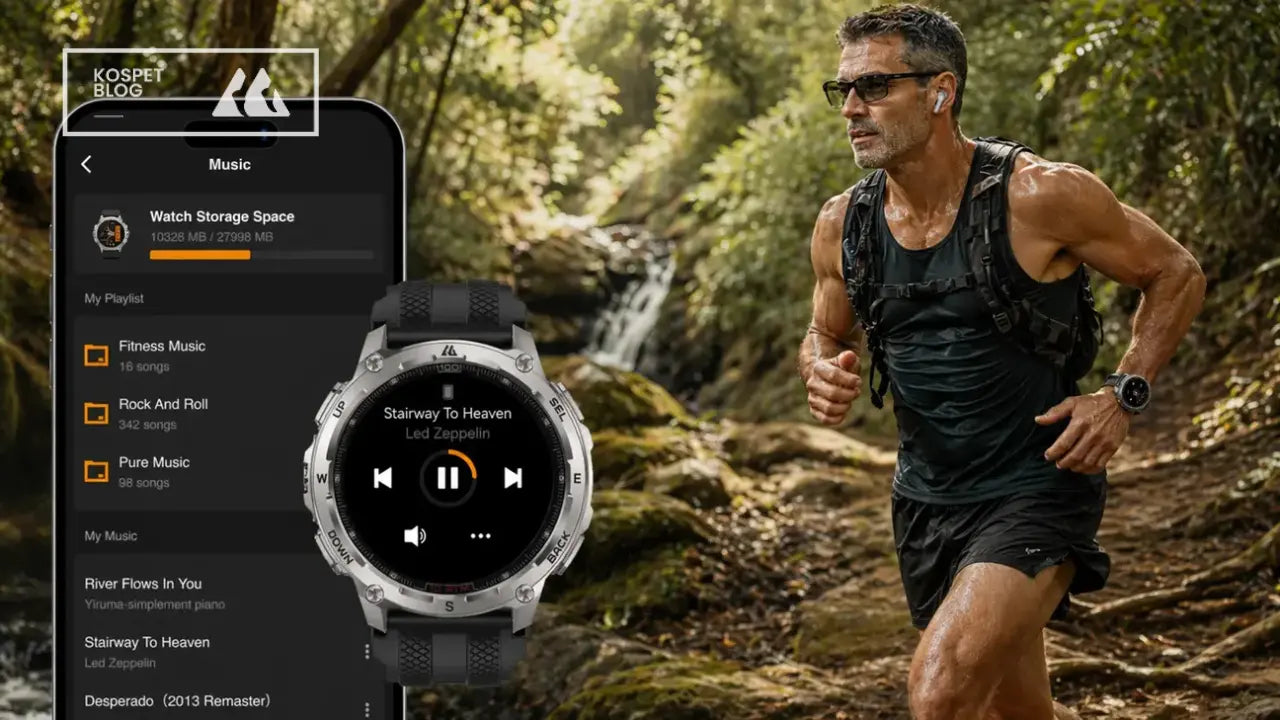
Music storage is different. The watch keeps music, playlists, or audio files on the device. Bluetooth earbuds connect to the watch, so the runner can listen without carrying a phone.
| Comparison point | Music control | Music storage |
|---|---|---|
| Main function | Controls phone music | Plays music from the watch |
| Phone needed | Usually yes | No, for stored music |
| Best use | Short runs, gym, treadmill | Outdoor runs, phone-free runs |
| Earbuds connect to | Usually the phone | The watch |
| Setup style | Watch + phone + earbuds | Watch + earbuds |
| Battery impact | Lower | Higher |
| Main risk | Mistaking control for playback | Not checking storage or app support |
| Best buyer | Runner who carries a phone | Runner who wants fewer devices |
Before buying, look for clearer phrases:
- Music storage
- Offline playback
- Local music files
- Downloaded playlists
- Bluetooth headphone support
- Play music from the watch
Those words are closer to what runners usually mean by running smartwatch with music.
Which Music Feature Fits Your Running Style and Stage?
Takeaway: choose by your real running setup, not by the feature name.
Different runners use music in different ways. The right choice depends on the place, distance, and reason for the run.
20-Minute Neighborhood Runs
A new runner doing short loops near home may not need full music storage.
The phone often comes along for safety, messages, maps, or a running app. In this case, music control can solve the main problem: changing songs without pulling out the phone.
This runner should care more about comfort, simple controls, basic GPS, heart rate tracking, and price.
Music storage becomes useful later, once phone-free running becomes a habit.
Treadmill Runs Before or After Work
The treadmill is a music-control-friendly place.
The phone can sit on the treadmill tray. The runner does not need to carry it. A watch only needs to handle play, pause, volume, or skipping tracks.
For this user, music storage is not the priority. Screen clarity, sweat-friendly controls, heart rate tracking, and workout modes matter more.
Music control is enough for many gym runners.
Outdoor Runs with No Good Place for a Phone
This is where music storage starts to matter.
Some running shorts have weak pockets. A phone may bounce. A belt may feel tight. An armband can feel awkward during faster runs.
Forum discussions show that runners often ask how to carry a phone because they want music but dislike holding the phone, using bulky belts, or dealing with armbands. Source
For this runner, music storage solves a physical problem. The watch carries the audio. The body carries less gear.
Weekend Long Runs
Long runs change the decision.
A 25-minute run and a 90-minute run do not ask the same thing from a watch. With GPS, Bluetooth earbuds, and music running together, battery life becomes more important.
This runner should not only ask whether the watch has music. The better question is:
Can the watch track GPS and play music for the full run?
Music storage makes sense here, but only when battery life can match the distance.
Race-Training Runs
A runner training for a 10K, half marathon, or marathon may use music with more purpose.
One playlist may support easy mileage. Another may fit tempo work. Podcasts may work for slow long runs. Higher-energy tracks may help with intervals.
Runner’s World notes that running playlists are often built around pace, distance, and workout type, and that the best playlist depends on what helps the runner’s own cadence and mood. Source
For this stage, music storage is useful, but it should not be the only reason to buy. The watch also needs reliable GPS, good battery life, readable data, and controls that work during hard efforts.
How Music Features Shape the Running Experience
Takeaway: the music feature changes how the run feels, not only how music plays.
This topic matters because runners are not only comparing specs. They are trying to remove friction from the run.
Carrying a Phone Is a Common Pain Point
Many runners bring a phone for music, safety, navigation, or emergencies. The problem is where to put it.
Running forums are full of practical questions about holding a phone, using belts, choosing armbands, and finding ways to play music without carrying a phone.
That shows the real demand behind this keyword.
Users are not only asking for “music.” They are asking for a lighter running setup.
Music Can Support Pace and Motivation
Music is not just background sound.
Runner’s World discusses playlists for different run types and notes that runners often choose songs by pace, effort, and mood. The article also points out that the best music is not only about BPM; it needs to be music the runner actually enjoys.
That makes music storage useful for runners who plan workouts around playlists, podcasts, or audio coaching.
Phone-Free Running Can Reduce Distractions
A phone brings music, but it also brings notifications.
Messages, calls, and app alerts can break the running flow. A watch with stored music keeps the audio while removing many phone distractions.
That does not mean every run should be phone-free. Safety still matters. SELF notes that runners may carry phones for safety, navigation, or unfamiliar routes, and then choose belts, pockets, clips, or other holders to manage the phone during the run.
The best setup depends on the route.
For a short daytime road run, music storage can make the run feel clean and light. For night runs, trails, or remote routes, carrying a phone may still be the smarter choice.
Best Smartwatch Picks by Music Feature and Runner Type
choose the watch that solves the main problem in your run, not the one with the longest feature list.
A runner searching for a running smartwatch with music is usually trying to remove one problem from the workout. For some runners, the problem is a phone bouncing in a pocket. For others, it is needing stronger training tools, smoother iPhone integration, or simple offline MP3 playback.
Outdoor Phone-Free Runs with Less Gear: KOSPET TANK T4
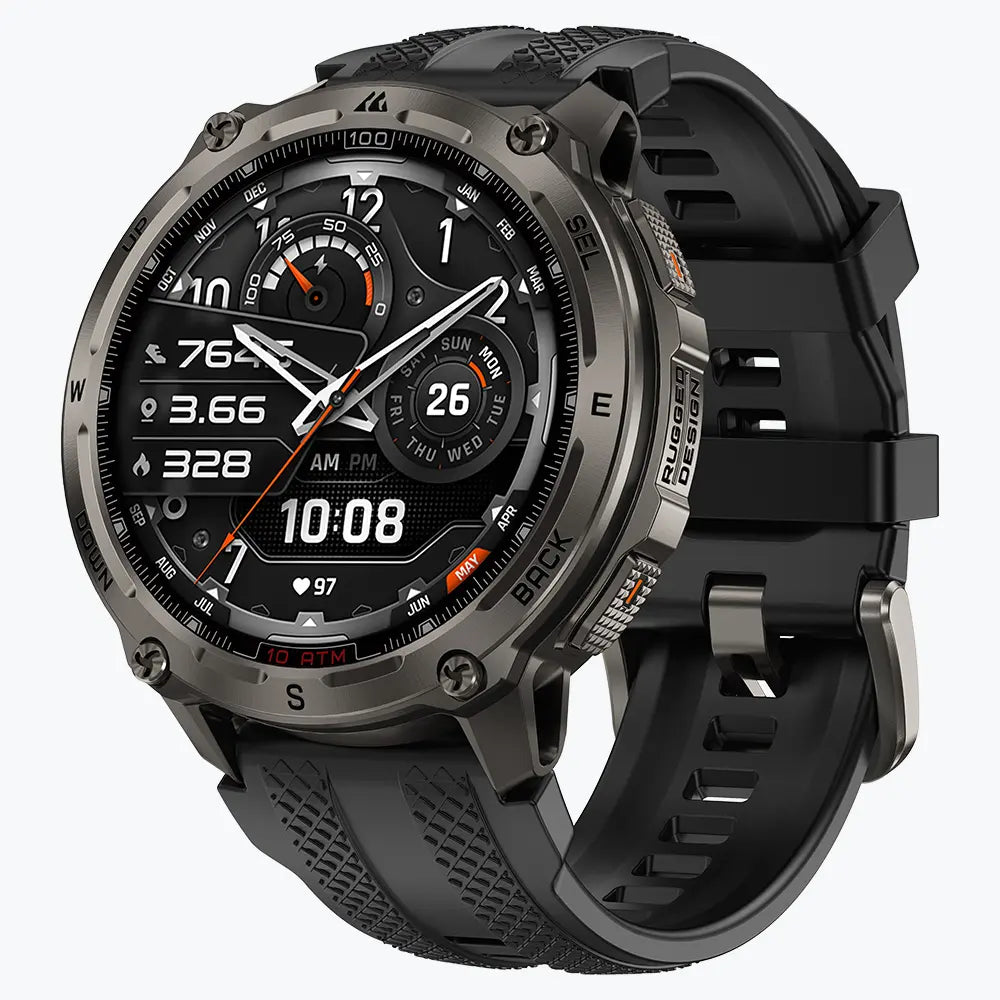
KOSPET TANK T4 is the main recommendation for runners who want to run outside without depending on a phone for music.
คอสเปต TANK สมาร์ทวอทช์ T4
$209.99 USD
This scenario is common: the runner wants music during outdoor road runs or park runs, but the phone becomes annoying. It may bounce in a pocket, feel bulky in a belt, or make an armband feel tight. In this case, music storage is not just a nice feature. It removes one device from the run.
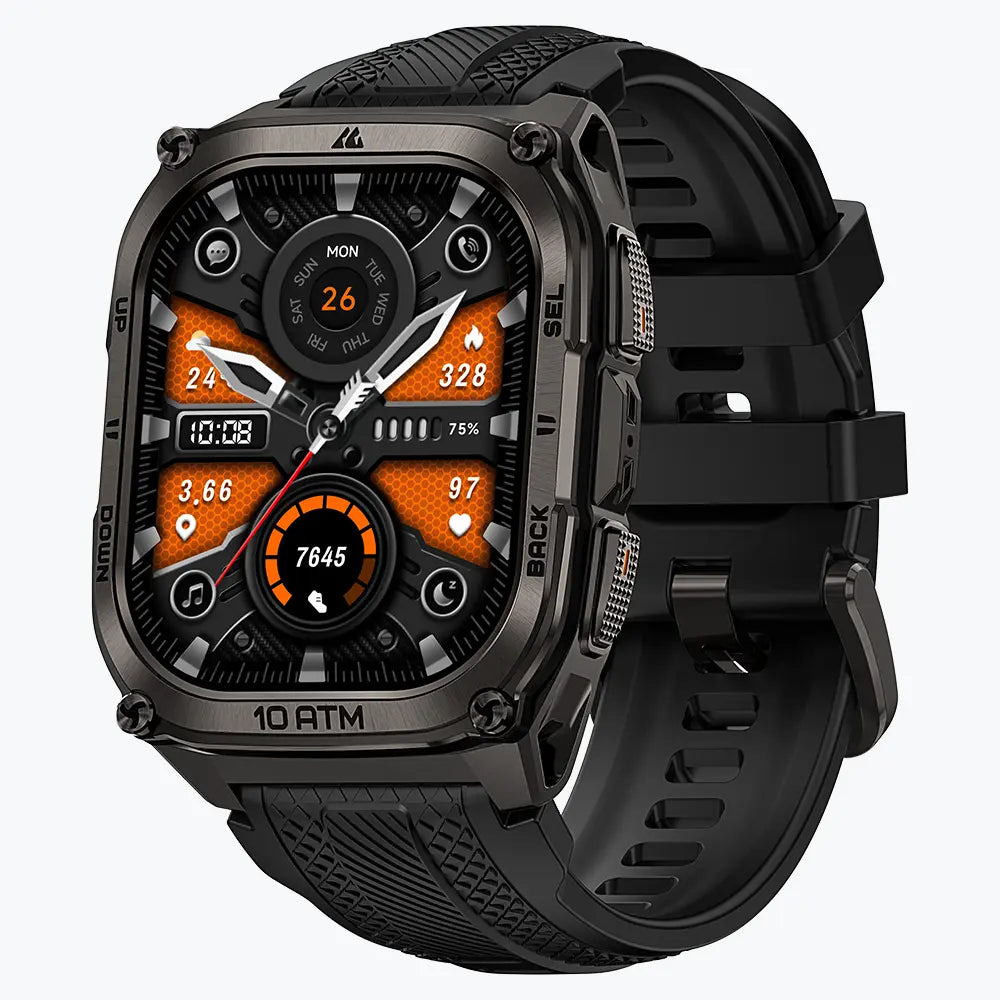
TANK T4 fits this pain point because it brings music storage and outdoor route tools into the watch. KOSPET describes the TANK T4 as a running sports watch for men with 32GB music storage, imported offline maps, dual-band GNSS, and up to 22 hours of GPS use.
The important point is not only that it stores music. The stronger value is that it supports a more independent outdoor run. A runner can use the watch for music and route support while carrying fewer things on the body.
KOSPET TANK T4 is a strong fit for runners who:
- often run outdoors
- want music without carrying a phone
- dislike armbands, belts, or bouncing pockets
- want offline route support on the wrist
- prefer a rugged watch for regular outdoor workouts
It is less necessary for runners who mainly use a treadmill or always keep a phone nearby. In those cases, music control may already solve the problem.
Race Training with Music and Deeper Running Tools: Garmin Forerunner 970
Garmin Forerunner 970 is better suited to runners whose main problem is not carrying the phone, but managing structured training.
This type of runner may be preparing for a 10K, half marathon, marathon, or triathlon. Music is useful, but it is only one part of the setup. Pace, recovery, workout structure, GPS accuracy, and training feedback may matter more.
Choose this model when the runner needs music, but also wants a serious training watch. For someone who mainly wants a rugged outdoor watch with music and offline maps, KOSPET TANK T4 is the more direct match.
iPhone Daily Use Plus Running Music: Apple Watch Ultra 3
Apple Watch Ultra 3 fits runners who want one watch for daily life and workouts.
This user may care about Apple Music, AirPods, calls, notifications, health tracking, and outdoor workouts in one device. The pain point is not only phone-free music. It is wanting the watch, phone, earbuds, and apps to work smoothly together.
This smartwatch makes sense for iPhone users who want a smartwatch first and a running watch second. Runners who care more about outdoor independence, offline maps, and rugged training use may still find KOSPET TANK T4 more aligned with the article’s core scenario.
Offline MP3 Playlists Without Streaming Apps: COROS PACE 3
COROS PACE 3 fits runners who already have local music files and do not want to depend on a streaming service.
This runner may have fixed MP3 playlists for easy runs, long runs, or gym sessions. The pain point is simple: he wants offline audio without managing Spotify, Apple Music, or another music app on the watch.
Choose this route when the runner wants a simple local-file setup. It is not the right pick for someone who expects streaming-app support directly on the watch.
| Runner Pain Point | Suggested Model | Why It Fits |
|---|---|---|
| I want to run outside without carrying my phone. | KOSPET TANK T4 | Music storage, offline maps, GPS, and rugged outdoor use match the phone-free running scenario. |
| I need music, but structured training matters more. | Garmin Forerunner 970 | Better for runners who want phone-free audio plus deeper training tools. |
| I use iPhone, AirPods, and Apple Music every day. | Apple Watch Ultra 3 | Fits users who want running music inside the Apple ecosystem. |
| I have MP3 files and do not need streaming apps. | COROS PACE 3 | Works for runners who prefer simple local music playback. |
FAQs
Is music control enough for running?
Yes, when the phone stays nearby. Music control works well for treadmill runs, gym sessions, and short runs where the phone is already with the runner.
Can a smartwatch play music without a phone?
Yes, but only when it supports music storage, offline playback, local files, or downloaded playlists.
Does music storage use more battery?
Yes. GPS, Bluetooth earbuds, screen brightness, and music playback all use battery. Runners should check workout battery life, not only daily smartwatch battery life.
Is music storage worth it for treadmill runners?
Usually, it is less important. The phone is often close on a treadmill, so music control can be enough.
Is music storage worth it for outdoor runners?
Yes, especially for runners who dislike carrying phones. Music storage helps create a lighter setup with only a watch and earbuds.