


Rock climbing places unusual demands on a smartwatch. The watch must handle contact with rock, remain comfortable through repeated wrist movement and support the parts of the day that happen away from the wall. Some climbers need detailed records of grades, attempts and pitches. Others mainly want offline maps, reliable route tracking and enough battery for a full outdoor trip.
The quick answer is:
- KOSPET TANK M4 is a value-focused rugged smartwatch for outdoor climbers who prioritize offline maps, route access and all-weather durability over climbing-specific analytics.
- Garmin fēnix 8 makes more sense for indoor climbers who want to record grades, completed routes, attempts and falls.
- COROS VERTIX 2S is the stronger match for climbers who want dedicated bouldering, single-pitch and multi-pitch activity tracking.
- Suunto Vertical 2 focuses on long approaches, remote locations and multi-day outdoor navigation.

What Should Rock Climbers Look for in a Smartwatch?
A smartwatch for rock climbing needs to match the type of climbing it will support.
Climbing-specific tracking matters most for structured training. A dedicated mode may record grades, attempts, completed routes, falls, rest periods or total vertical distance. This data helps climbers review training volume and project progress. General outdoor watches usually capture time, heart rate, movement and GPS activity without describing what happened on each route.
Maps and positioning become more useful outdoors. The watch can support the approach to a crag, help follow a prepared trail and provide a reference during the return. Offline access carries greater value in areas with poor mobile coverage.
Durability must be balanced with wrist comfort. A protected case and secure strap help around abrasive rock, dust and sudden contact. A large case may still restrict wrist movement or strike the wall during crack climbing. Shape, weight and fit matter as much as toughness.
Battery claims need context. Daily-use figures do not show how long a watch lasts while GPS, maps and a bright display remain active. Continuous GPS runtime provides a more useful reference for outdoor climbing trips.
Physical controls can simplify operation. Chalk, gloves, rain and accidental contact can make touchscreens less dependable. Buttons, screen locks and clear on-screen data reduce unnecessary interaction during an activity.
Smartwatches for Different Rock Climbing Needs
The main difference between these watches is the problem each one solves. The table provides a quick comparison before the individual products are examined in more detail.
| Smartwatch | Main problem it solves | Climbing records | Maps and route support | Main compromise |
|---|---|---|---|---|
| KOSPET TANK M4 | Reaching outdoor crags with less dependence on a phone | General activity data | Offline maps plus GPX and KML route import | No grade, attempt, fall or pitch records |
| Garmin fēnix 8 | Turning indoor sessions into structured training logs | Grades, completed routes, attempts, falls and rest | Advanced outdoor navigation | Premium cost and a complex feature set |
| COROS VERTIX 2S | Keeping bouldering, single-pitch and multi-pitch activity organized | Dedicated climbing modes and route outcomes | Outdoor GPS tracking across the wider trip | More manual input and occasional false route detection |
| Suunto Vertical 2 | Navigating long approaches and multi-day outdoor routes | General sports and training data | Offline maps and long GPS endurance | Less emphasis on climbing-specific analysis |
KOSPET TANK M4 for Reaching Remote Crags Without Relying on a Phone
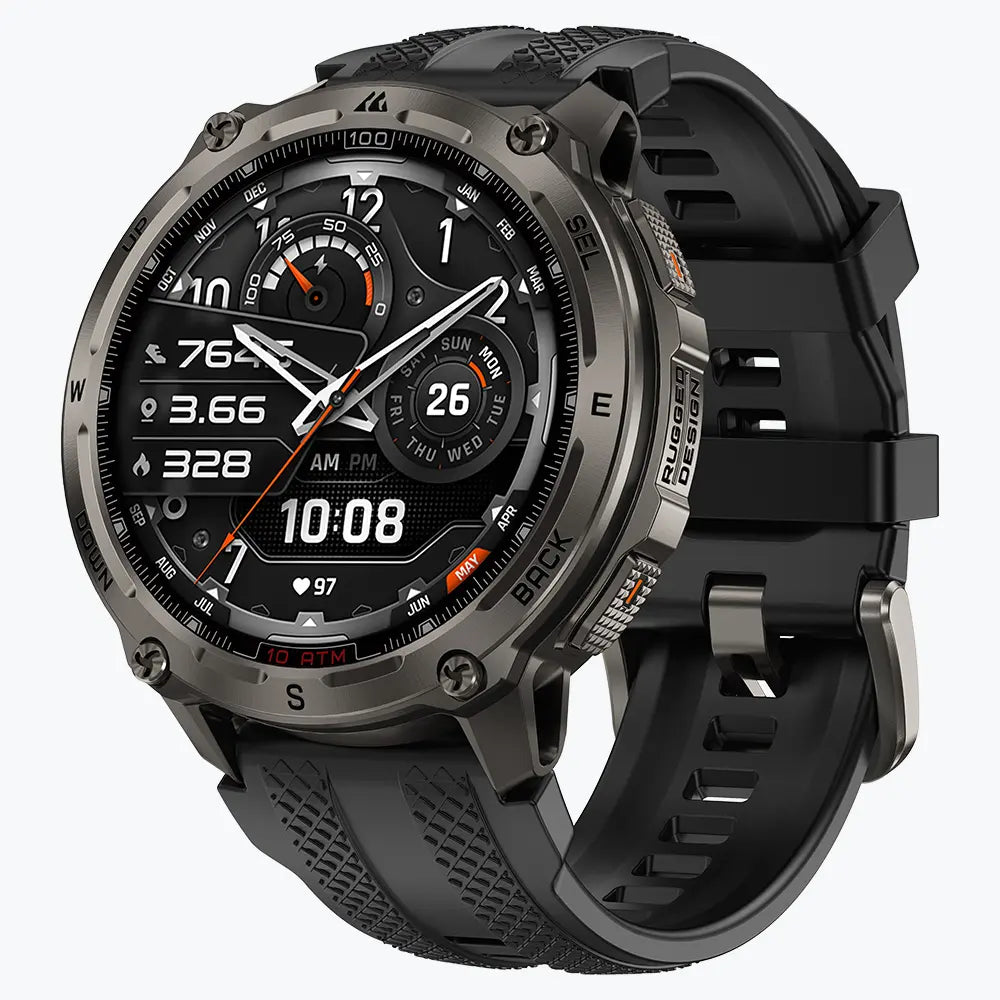
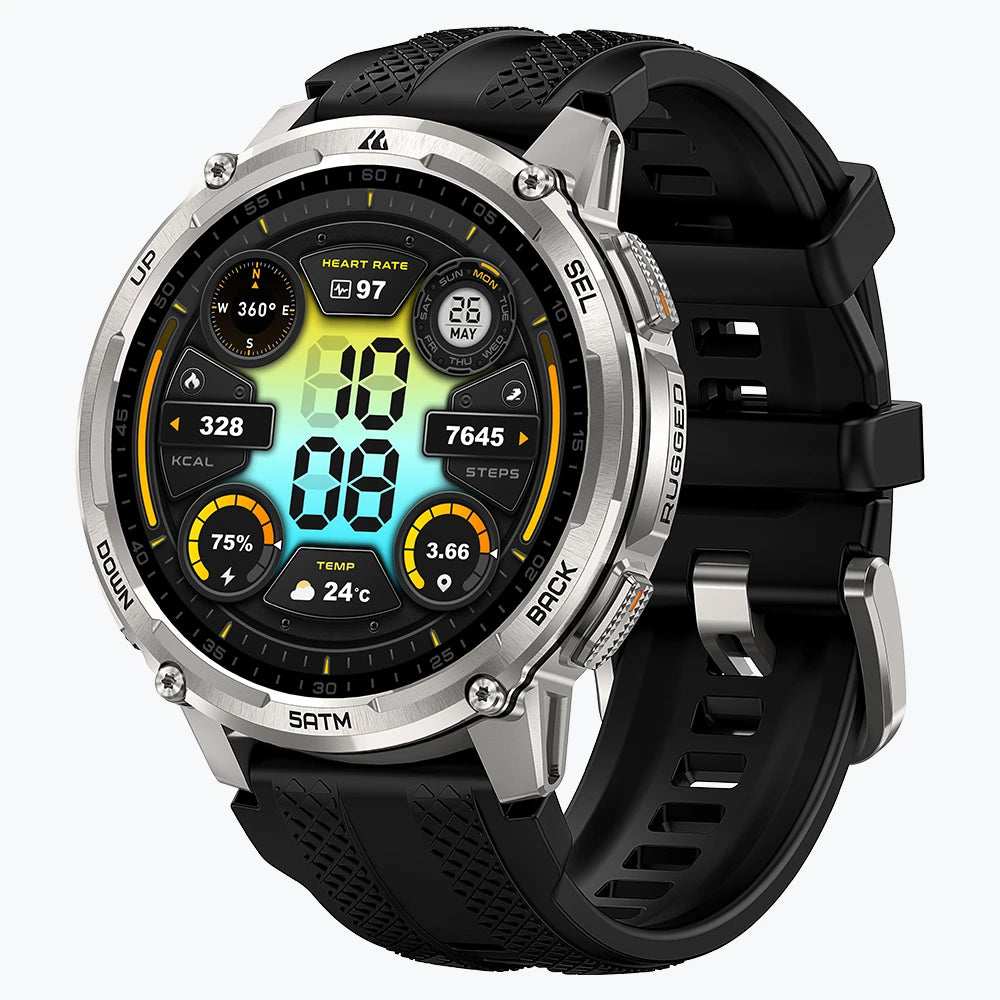
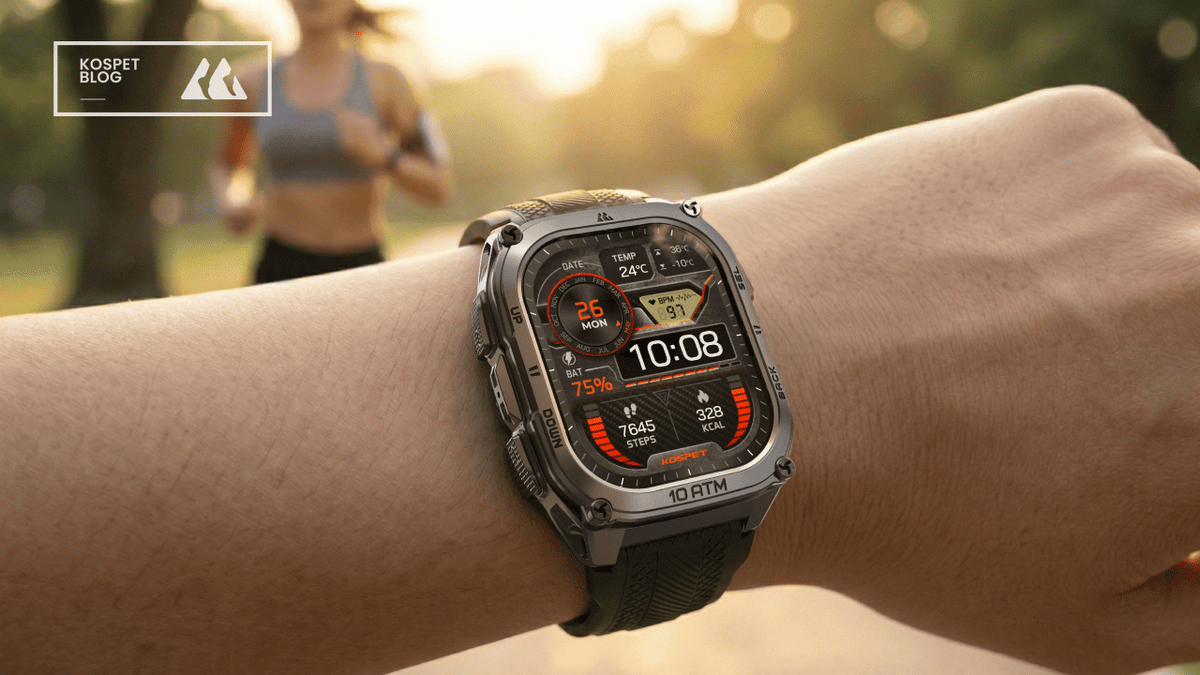
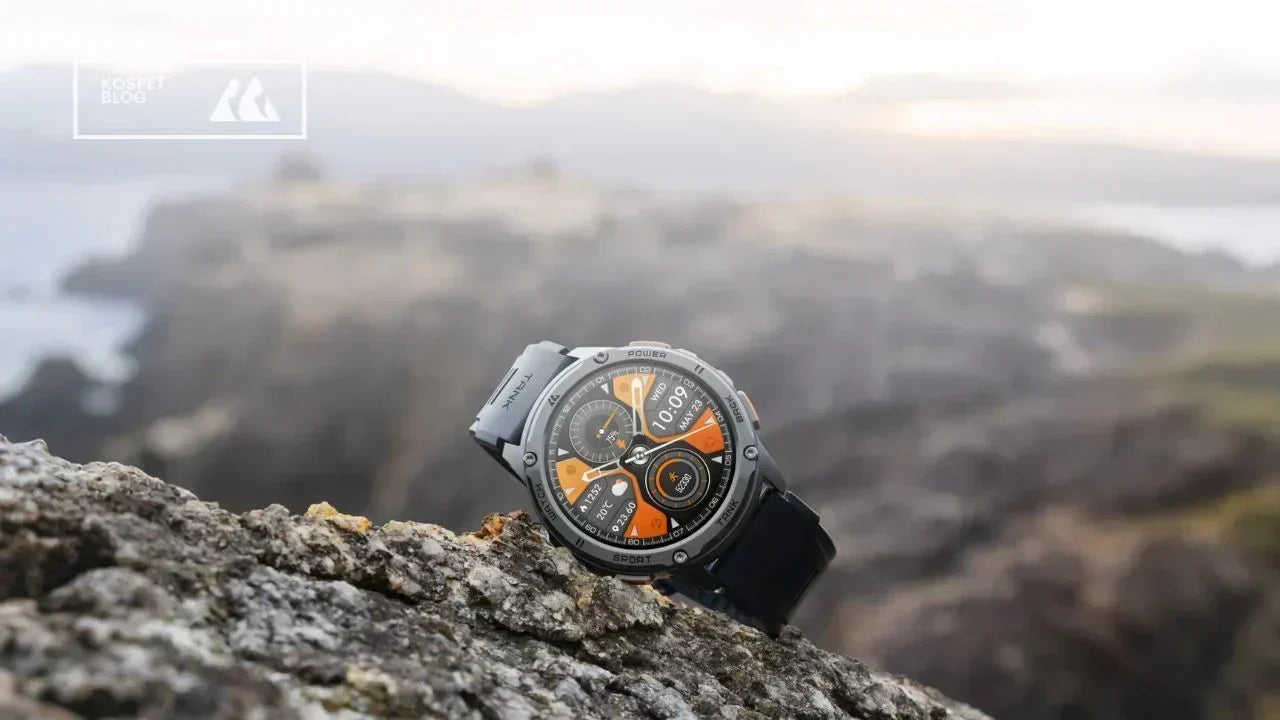
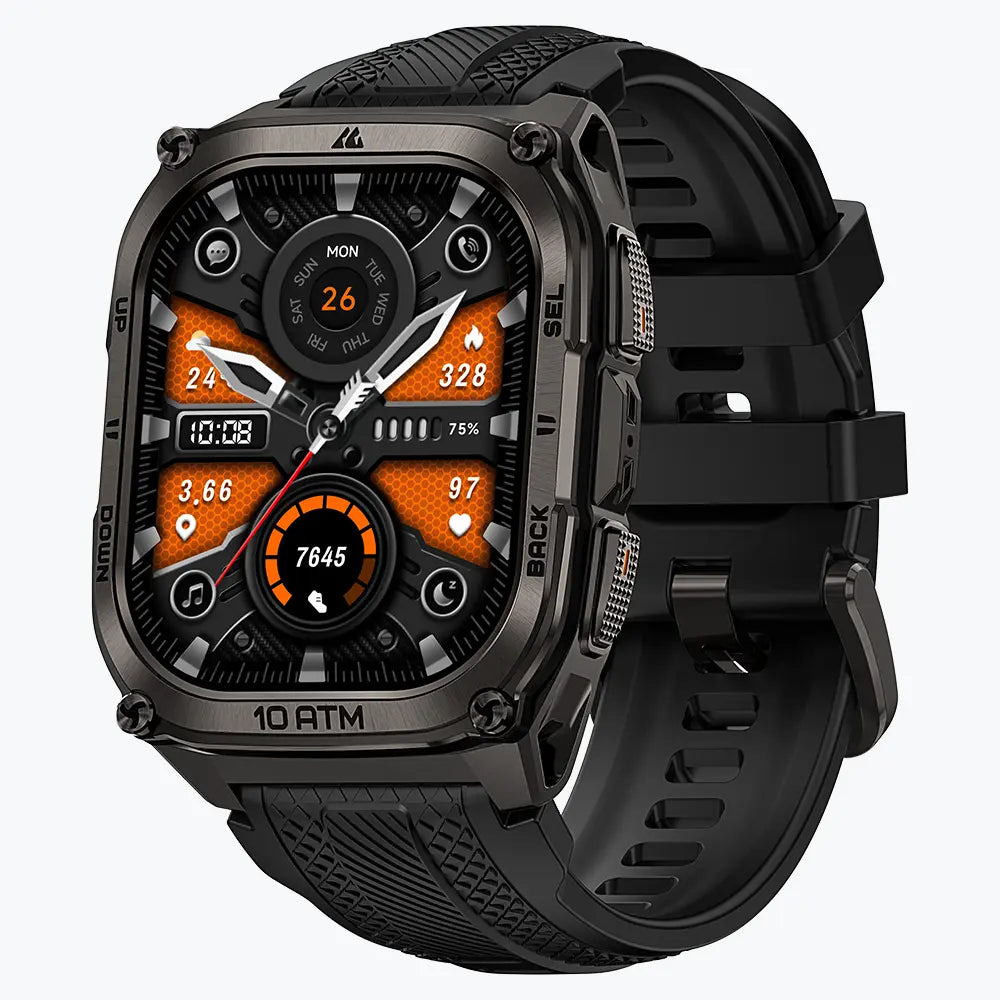
Remote climbing areas create two common problems: mobile coverage becomes unreliable, and equipment faces dust, rain and repeated contact with hard surfaces. KOSPET TANK M4 addresses both without positioning itself as a specialist climbing computer.
কসপেট TANK এম৪ স্মার্টওয়াচ
$209.99 USD
Climbers can import GPX or KML routes through the Apexmove App and store offline maps on the watch. This supports preparing an approach before leaving mobile coverage and checking the route during the walk to or from the crag. Dual-band, six-system satellite positioning helps maintain the wider activity record across wooded trails and other challenging environments.
The stainless-steel structure has passed 20 MIL-STD-810H tests covering conditions such as shock, dust, rain, temperature changes and vibration. That protection is relevant to outdoor climbers who spend more time around rough terrain than on a controlled gym floor. Up to 21–22 hours of continuous GPS use also gives the watch enough range for most single-day climbing trips.
TANK M4 works particularly well for climbers who combine climbing with hiking, camping, swimming or other outdoor activities. Its value comes from navigation, construction and versatility rather than route-grade analysis.
- Choose it for: offline maps, imported routes, rugged outdoor use and a more accessible purchase.
- Main trade-off: it does not provide dedicated records for climbing grades, attempts, falls or pitches.
Garmin fēnix 8 for Turning Indoor Sessions into Useful Training Records
Indoor climbers often finish a session knowing they climbed hard without having a clear record of the routes they attempted, completed or fell on. Garmin fēnix 8 turns those details into a structured activity log.
Its indoor climbing mode lets the user select a grading system and enter the difficulty of each route. At the end of a climb, the result can be saved as completed or attempted, followed by the number of falls. Rest timing begins after the climber returns to the ground, creating a clearer picture of both work and recovery across the session. The watch also locks its buttons during a route to reduce accidental input. These functions are documented in Garmin’s fēnix 8 climbing guide.
That level of detail is valuable for regular gym climbers, athletes following a training plan and multisport users who want one system for climbing, running, strength work and outdoor activities. Casual climbers may find the setup and post-route input more involved than necessary.
- Choose it for: indoor route logging, grade tracking and a broad multisport platform.
- Main trade-off: the price and feature depth exceed the needs of many recreational users.
COROS VERTIX 2S for Keeping a Multi-Pitch Day in One Activity
A multi-pitch outing includes more than upward movement. The day may involve an approach, several pitches, transitions, rappels and a hike back. Splitting those stages into unrelated recordings makes the final activity difficult to understand.
COROS VERTIX 2S offers climbing modes that cover bouldering, indoor or single-pitch climbing and larger outdoor objectives. Bouldering sessions can include the grade and result of each attempt. Indoor climbing records routes, sends, falls, difficulty and total height. Outdoor climbing mode keeps the approach, climbing stages, descent and return within a more coherent record.
That structure addresses the needs of climbers who care about training volume and the full shape of a mountain day. A climber-focused review of the VERTIX 2S also notes an important limitation: sensitive automatic detection can occasionally create false route starts on uneven ground. Pausing the activity between routes may still be necessary.
-
Choose it for: bouldering analysis, single-pitch records and multi-pitch activity structure.
-
Main trade-off: specialist functions demand more interaction and carry a premium price.
Suunto Vertical 2 for Long Approaches and Multi-Day Objectives
Some climbing trips are shaped by the journey to the wall. Long approaches, changing weather and limited charging opportunities place navigation and endurance ahead of route-by-route statistics.
Suunto Vertical 2 concentrates on that wider expedition. Offline maps and improved navigation support travel beyond marked trails, while buttons allow operation with gloves. The integrated flashlight adds a practical tool for predawn starts and late returns. Suunto states up to 65 hours in its most accurate GPS mode, giving the watch more room for long days and multi-day plans. These features appear on the official Suunto Vertical 2 page.
The watch also uses a rugged steel or titanium construction, but its primary advantage for climbers remains navigation over distance. Users focused on sends, attempts and route grades receive more relevant data from Garmin or COROS.
- Choose it for: extended GPS use, offline navigation and remote outdoor objectives.
- Main trade-off: climbing-session analysis is not its central strength.
What Can a Smartwatch Realistically Do While Rock Climbing?
A smartwatch contributes at three stages of a climbing day.
Before the climb, it can support route preparation, track the approach and provide location, distance and elevation context. Downloaded information becomes particularly useful around remote crags with limited mobile coverage.
During the session, a general outdoor watch records time, movement and basic fitness data. A climbing-specific model can add route grades, attempts, sends, falls, height or activity phases.
After the climb, the recorded activity helps review training volume, rest patterns, time spent moving and progress across repeated sessions. The usefulness of this record depends on whether the watch captures general workout data or route-level climbing information.
Two accuracy limits deserve attention:
- GPS tracks can become less stable near cliffs, inside narrow valleys and beneath heavy tree cover.
- Wrist-based heart-rate readings may become less consistent during hard gripping, repeated wrist flexion and strong forearm contractions.
A smartwatch also remains separate from the climber’s safety system. It cannot replace ropes, protection equipment, anchors, a trained partner or established rescue procedures. GPS positioning alone does not provide emergency communication; calls and messages require cellular, satellite or paired-phone connectivity supported by the device.
FAQs
Can chalk and rock dust damage a smartwatch?
Fine particles can collect around buttons, bezels, speakers and charging contacts. Brush away loose chalk after a session, then clean the watch according to the manufacturer’s care instructions. Fresh water may be appropriate for a water-resistant model, followed by complete drying before charging. Solvents and sharp cleaning tools can damage seals or surface coatings.
Can a climbing smartwatch be attached to a harness?
Some climbers place a compatible watch in a purpose-built carabiner holder to protect the wrist and screen. The holder should remain separate from life-support carabiners, belay devices and the rope path. Moving the watch away from the wrist also removes wrist-based heart-rate readings unless a separate sensor is connected.
Does an external heart-rate sensor work better for climbing?
An arm or chest sensor can reduce some of the interference caused by wrist flexion and gripping. Compatibility varies by watch, and the sensor position must remain clear of the harness and unrestricted during movement. Heart-rate data can add training context, but route difficulty, climbing volume and recovery time remain more relevant measures of climbing performance.