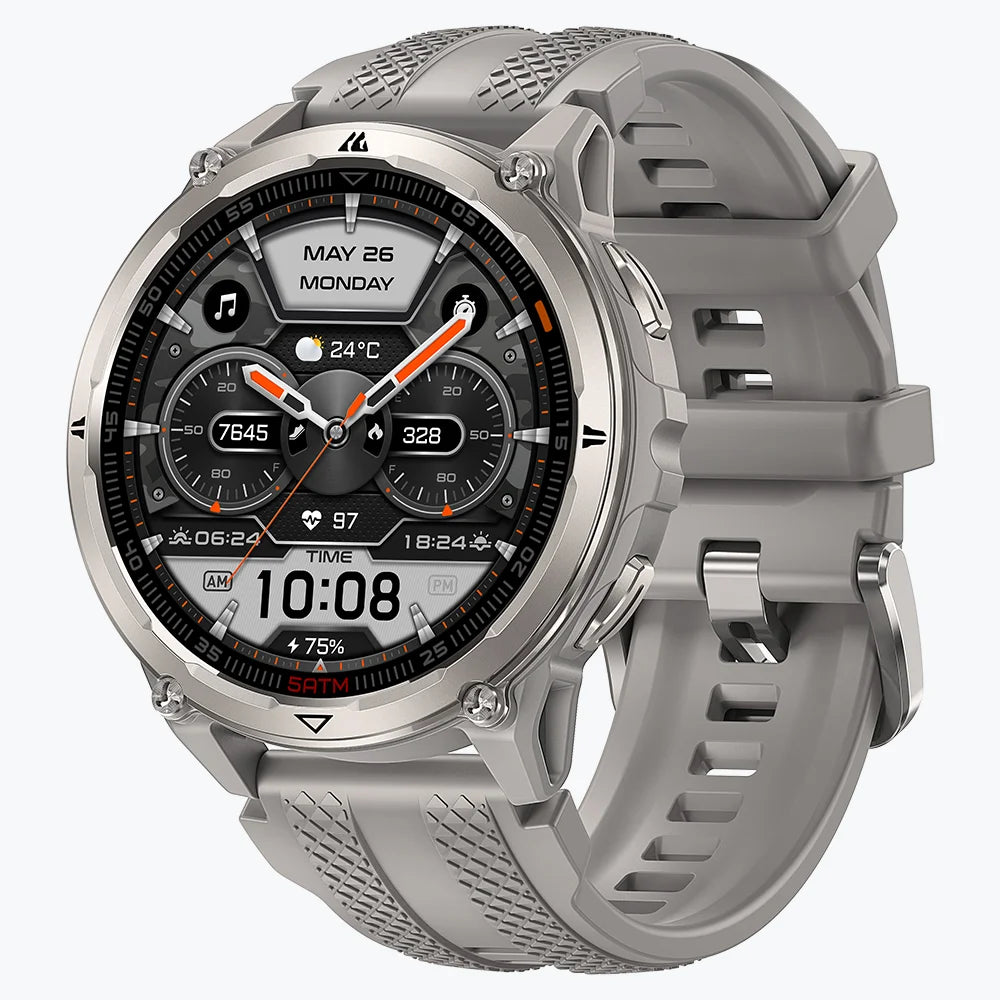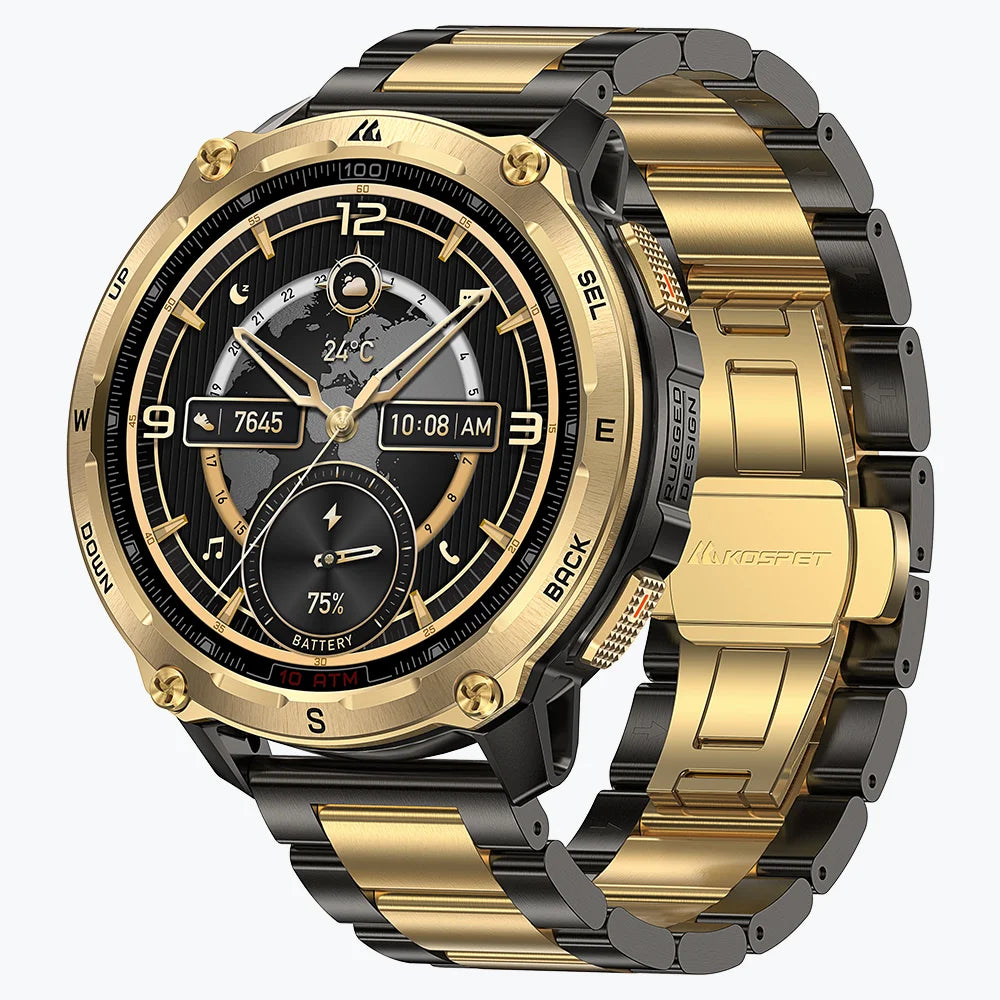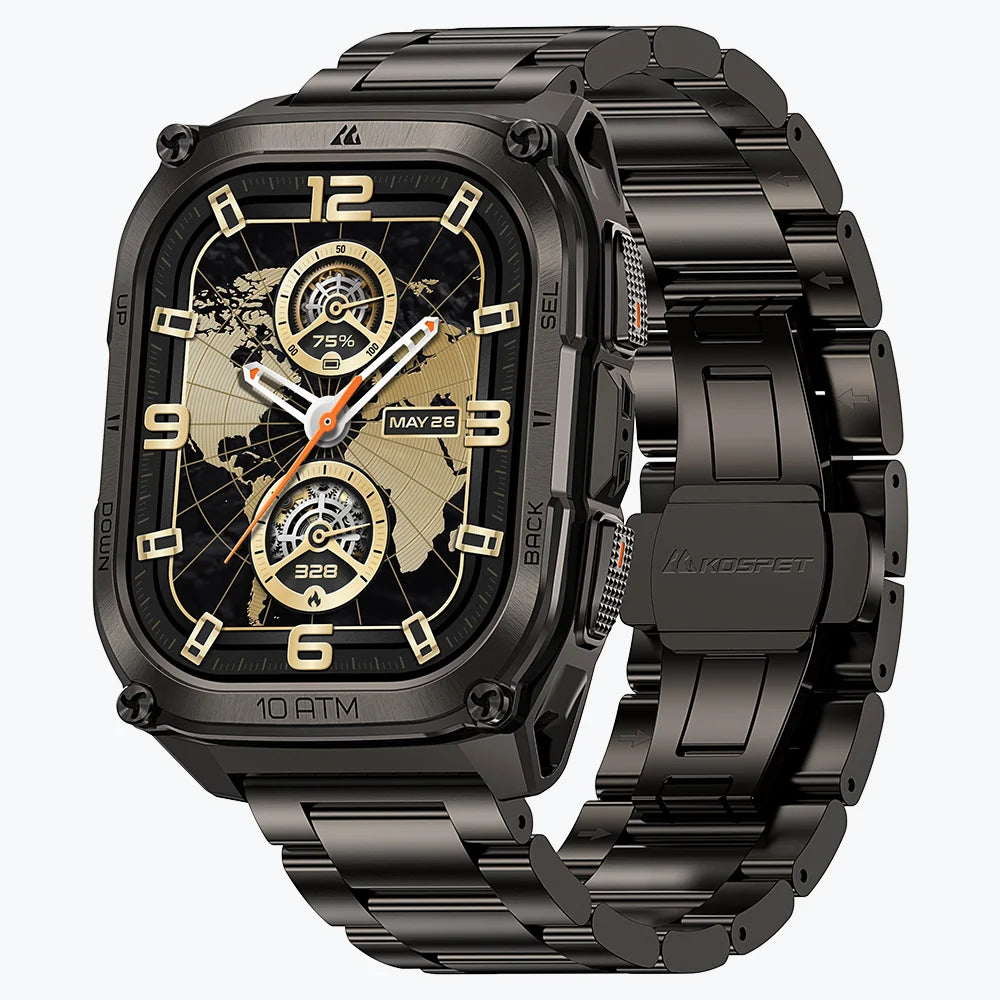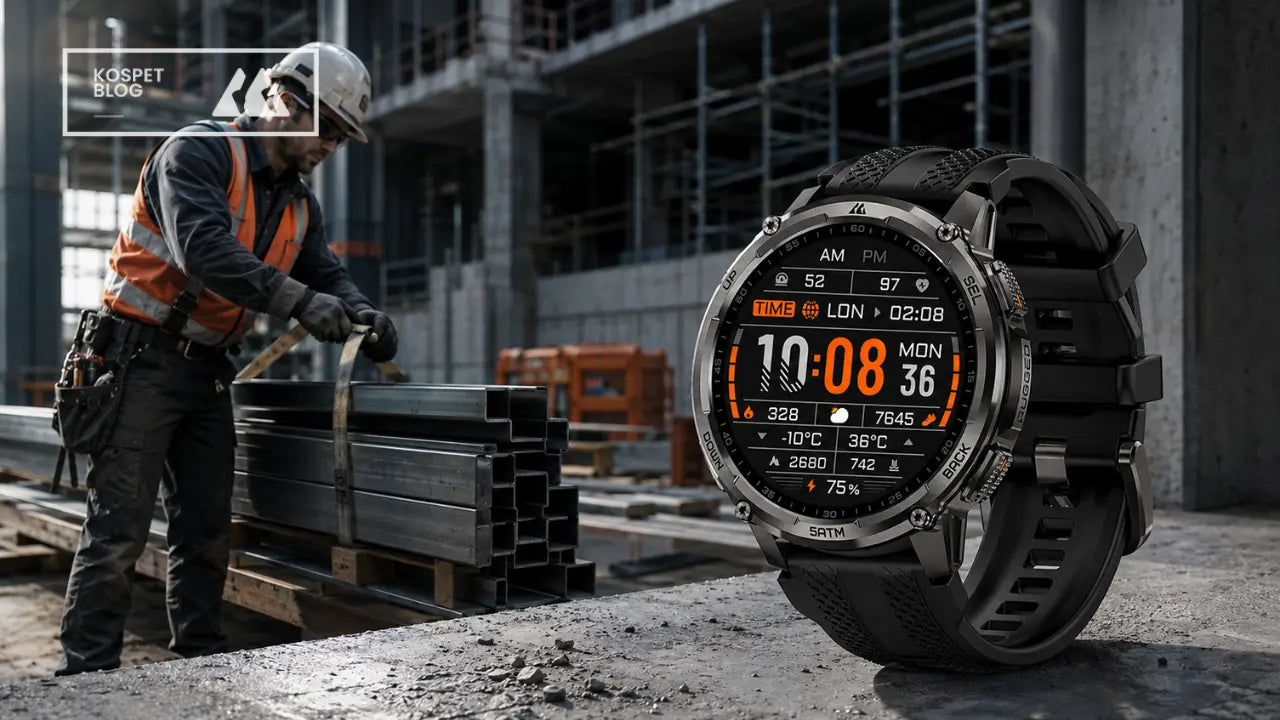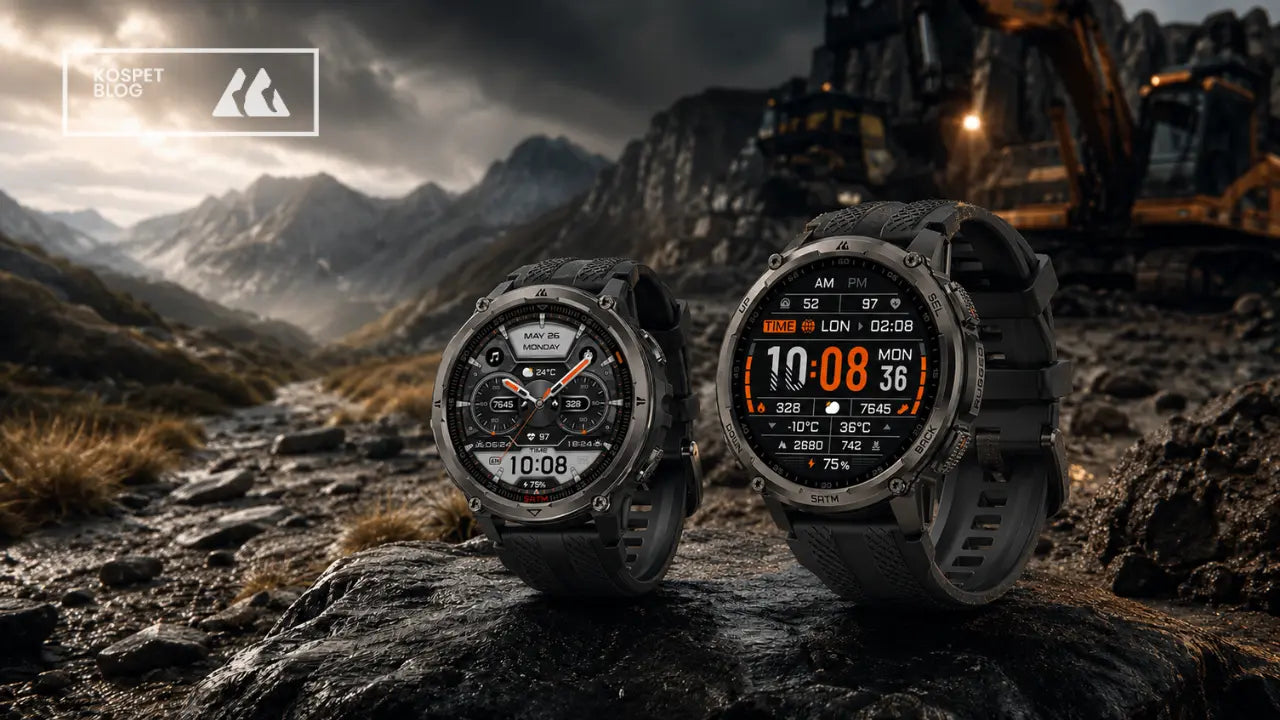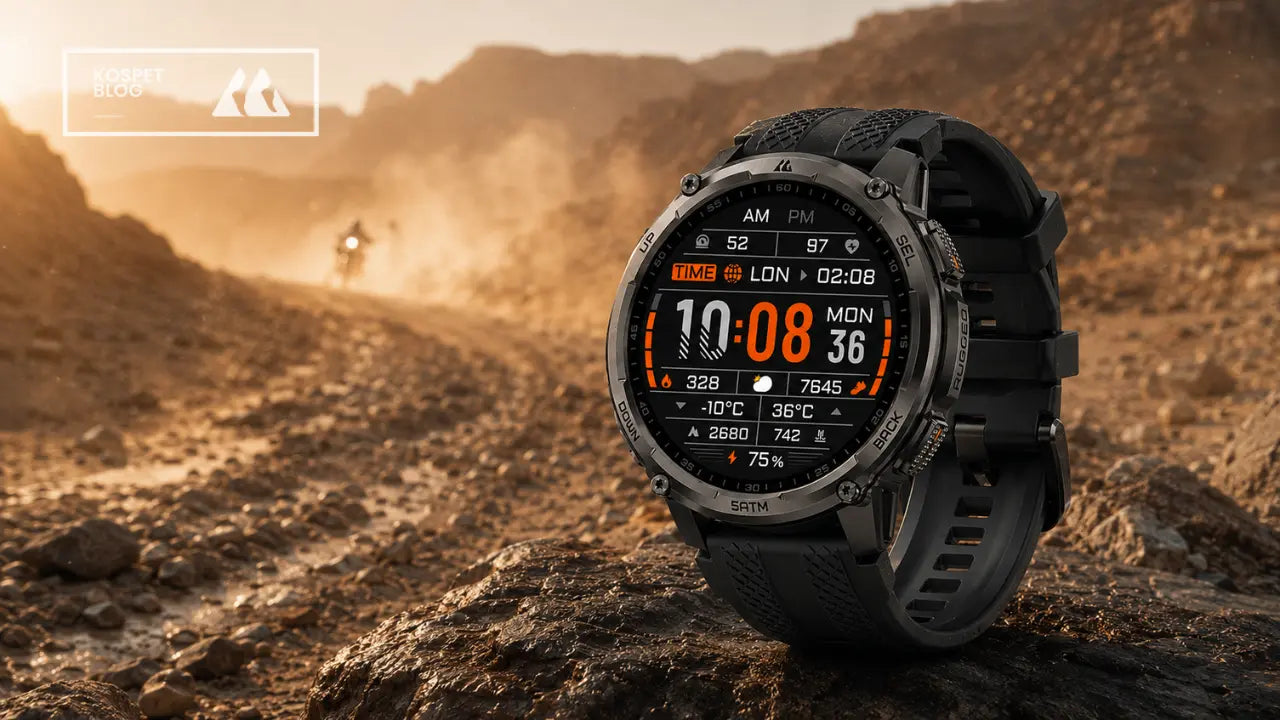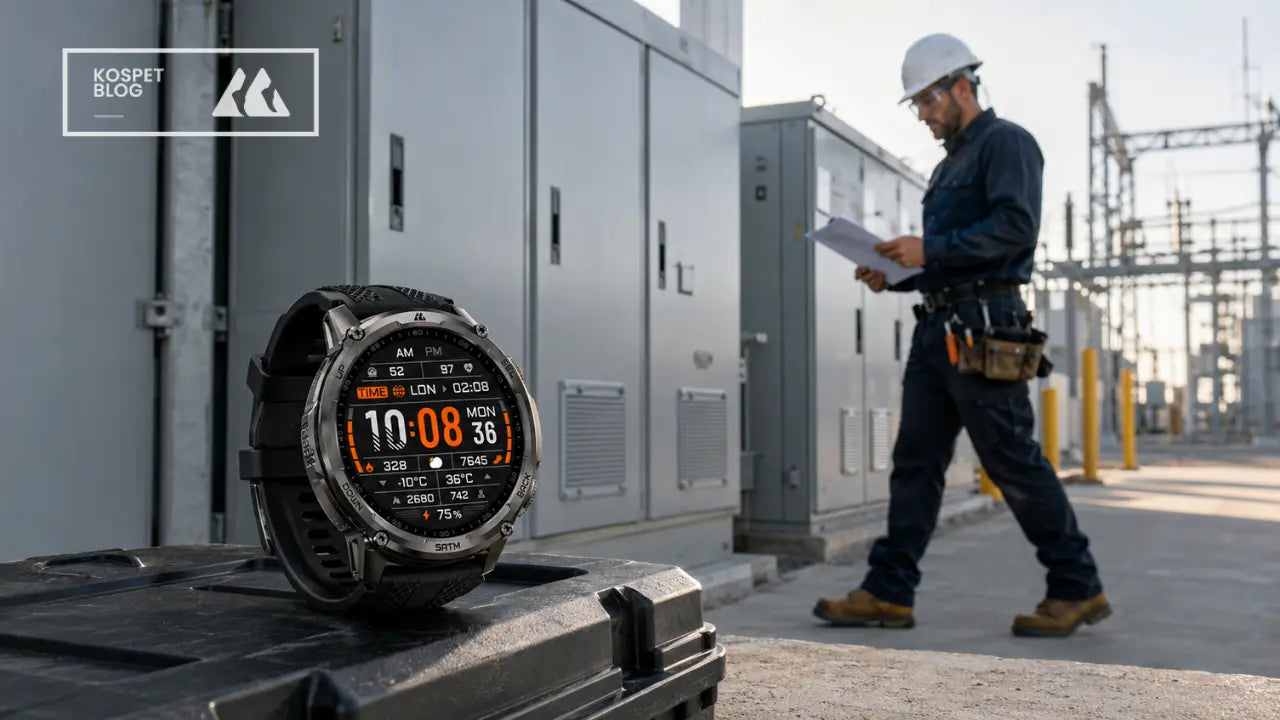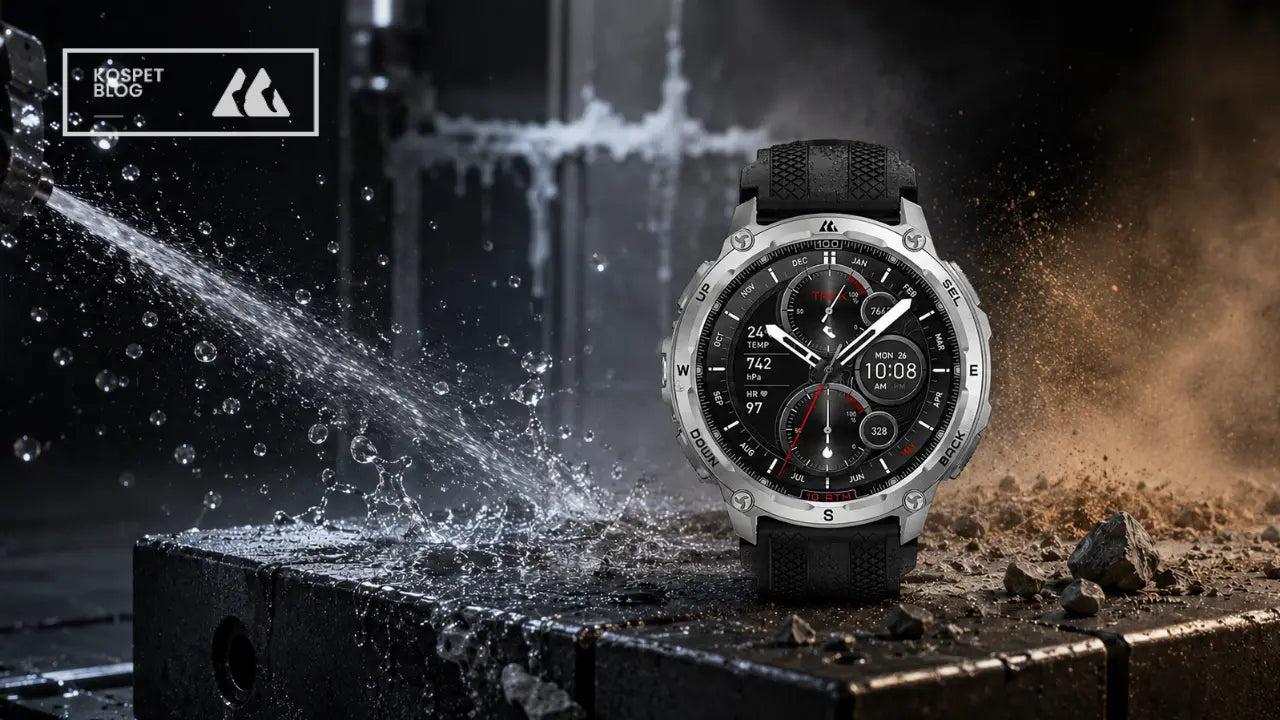



The KOSPET TANK T4C is the best overall smartwatch for most construction workers. It combines a compact round case with a built-in LED flashlight, short-range team communication, a bright display, and long battery life. The TANK M4C is the better choice for workers who want a larger screen.
A construction smartwatch still needs to match the task. Dust protection, glove-friendly controls, screen visibility, and active battery life matter, but workplace rules around electrical hazards, rotating machinery, and wristwear always take priority.

Best KOSPET Smartwatches for Construction Workers
| Smartwatch | Best for | Main advantage | Consider before buying |
|---|---|---|---|
| KOSPET TANK T4C | Best overall | Compact case with a built-in LED flashlight | Smaller display |
| KOSPET TANK M4C | Large-screen visibility | 1.96-inch display with a built-in LED flashlight | Larger square case |
| KOSPET TANK T4 Special Edition | Work and outdoor use | Round design, offline maps, and 10 ATM protection | No built-in LED flashlight |
| KOSPET TANK M4 Special Edition | Large-screen work-to-life use | Larger display, offline maps, and 10 ATM protection | Requires more wrist space |
KOSPET TANK T4C: Best Overall for Construction Work
The KOSPET TANK T4C is designed for practical tasks during a working day. Its five-level LED flashlight provides close-range illumination, while short-range communication between compatible devices supports nearby team coordination.
Its compact round case includes a 1.5-inch AMOLED display with up to 1,000 nits of peak brightness. KOSPET lists up to 10 days of heavy use and up to 5 hours of continuous flashlight use.
Best for: General construction crews, maintenance workers, and workers who regularly inspect dark spaces.
Consider before buying: The smaller display provides less room for messages and controls than the M4C.
{{product}}
KOSPET TANK M4C: Best for Large-Screen Visibility
The KOSPET TANK M4C uses a 1.96-inch AMOLED display with up to 1,000 nits of peak brightness. Its larger screen makes notifications, timers, and watch tools easier to read.
It also includes a five-level LED flashlight and short-range communication between compatible devices. KOSPET lists up to 11 days of heavy use and up to 5 hours of continuous flashlight use.
Best for: Equipment inspectors, maintenance workers, and users who prefer larger text and controls.
Consider before buying: The larger case may feel less convenient in narrow spaces or around close-fitting work clothing.
Other Options for Work and Everyday Use
The KOSPET TANK T4 Special Edition and KOSPET TANK M4 Special Edition suit buyers who want one durable smartwatch for work, outdoor activities, and daily wear.
Both provide dual-band positioning, downloadable offline maps, 10 ATM and IP69K ratings, and up to 15 days of typical use. Choose the T4 Special Edition for a round case or the M4 Special Edition for a larger display. Neither provides the built-in LED flashlight found on the T4C and M4C.
What Should Construction Workers Look for in a Smartwatch?
Safety and Case Fit
A large display is easier to read, while a compact case is less likely to feel restrictive around sleeves or narrow spaces. The strap should remain secure without interfering with gloves or work clothing.
Remove the smartwatch whenever site rules prohibit wristwear or the task involves exposed electrical components, rotating machinery, or snag hazards.
Controls and Outdoor Visibility
Physical buttons can make basic controls easier to reach with wet or covered hands. Their usefulness still depends on which functions they control.
Touchscreen performance varies by glove material and thickness. The guide to operating a smartwatch while wearing work gloves explains how button placement and glove type affect everyday operation.
Display brightness matters outdoors, while screen size determines how easily messages and tools can be read. Choose the T4C for a more compact case or the M4C for additional screen space.
Battery Life and Job-Site Tools
Battery claims should be compared by usage mode. Heavy-use, continuous GPS, Always-On Display, calling, and flashlight figures provide more useful information than standby time.
A built-in LED light helps during quick inspections, but it does not replace a certified work light. Short-range communication may support nearby coordination, but it should not replace required workplace communication or emergency equipment.
Different Trades Have Different Priorities
Construction-related trades do not all need the same smartwatch features:
- Electrical work begins with whether wristwear is permitted. Read more about smartwatch safety for electricians.
- Welding adds heat, sparks, slag, and grinding particles. See the guide to battery life and durability for welders.
- Equipment repair places more emphasis on case clearance, oil exposure, and repeated metal contact. Review the guide to choosing a rugged smartwatch for heavy-equipment mechanics.
- Plumbers, mechanics, and other workers can compare their priorities in the job-by-job smartwatch guide for tradesmen.
What Do IP68, IP69K, ATM, and MIL-STD Ratings Mean?
Water resistance, dust protection, and environmental testing describe different types of protection. None of these ratings proves that a smartwatch can withstand every scratch, chemical, or impact.
According to the IEC explanation of IP ratings, the first digit describes protection against solid objects, while the second part describes tested protection against water entering the enclosure.
| Rating | What it indicates | What it does not prove |
|---|---|---|
| IP68 or IP69K | Dust sealing and specified water protection | Scratch, chemical, or impact resistance |
| 5 ATM or 10 ATM | Water-pressure resistance | Protection from cement, oils, or solvents |
| MIL-STD-810H testing | Selected environmental tests | Survival in every accident or completion of every test |
MIL-STD-810H is a collection of test methods rather than one universal toughness certificate. The official U.S. Department of Defense document service provides the standard, but manufacturers still need to identify which tests apply to each product.
For construction work, IP68 or IP69K can provide evidence of dust sealing. Cement powder, sand, and metal particles can still collect around buttons or scratch the display, so the smartwatch should be cleaned according to its product-care instructions.
FAQs
What Is the Best Watch Strap for Construction Work?
A fitted silicone strap is usually easier to clean after exposure to sweat, dust, and mud. Metal bracelets may be unsuitable around electrical hazards or moving equipment.
Can Cement or Metal Dust Scratch a Smartwatch?
Yes. Dust protection does not prevent particles from scratching the screen or case. Remove loose material before wiping the smartwatch.
Can a Construction Smartwatch Make Calls Without a Phone?
Bluetooth calls normally require the paired phone to remain nearby. Short-range communication between compatible T4C or M4C devices is a separate feature and does not provide independent cellular calling.